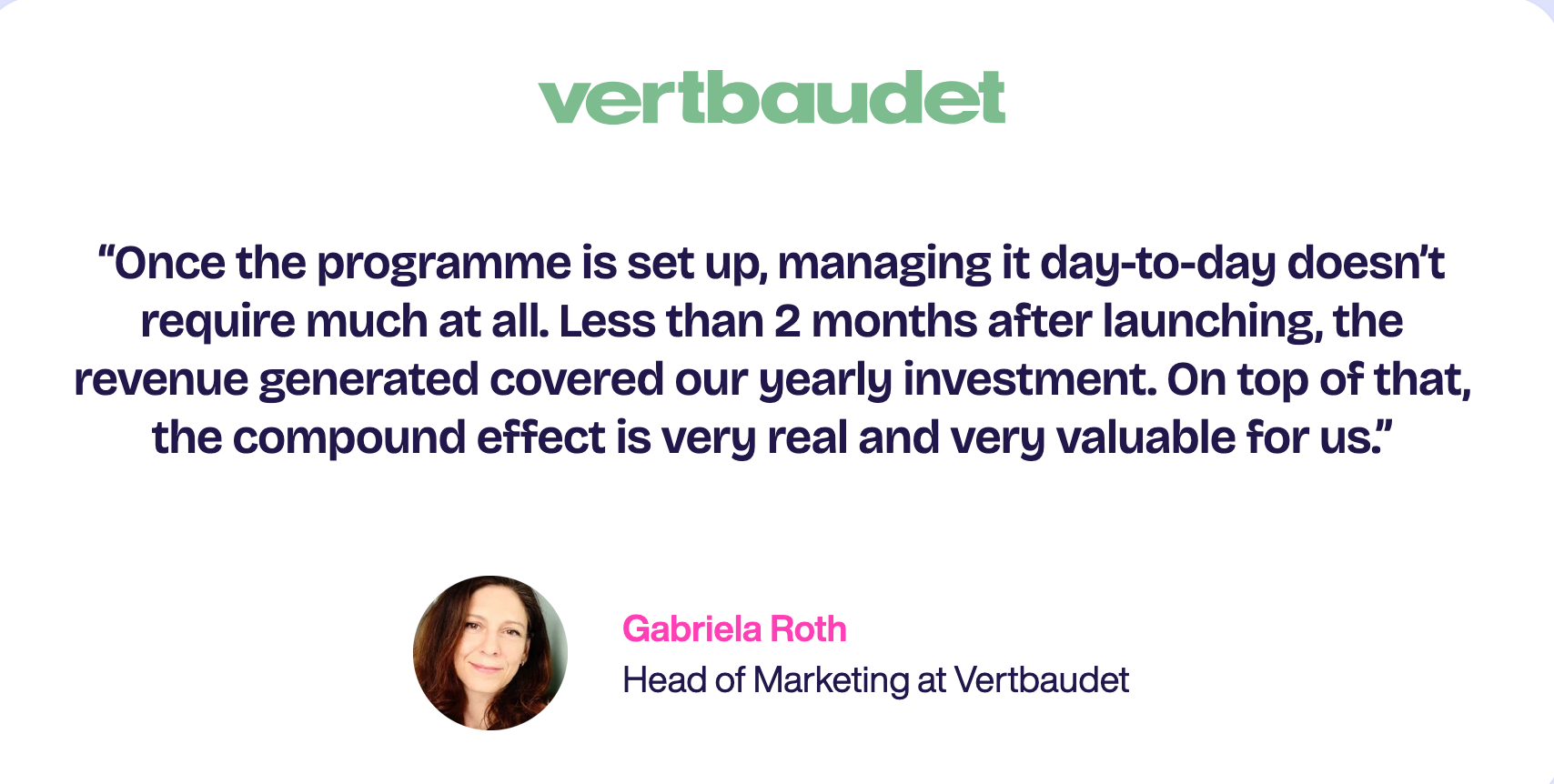


Setting up a referral program comes down to ten decisions, made in the right order. Get them right and your happiest customers bring in new customers who spend more and stay longer.
Skip one, and you can spend your first quarter patching holes in rewards, rules or tracking while the program underperforms.
This guide walks through every step, from setting goals to launch day, drawing on what we've learned running referral for 500+ brands.
How to set up a referral program in 10 steps
To set up a referral program, decide what success looks like, choose who to ask, pick a reward and set its value, give customers easy ways to share, choose referral software, write your terms, protect against fraud, set up your copy and touchpoints, then track results from launch and keep testing.
If you're after inspiration, we've collected 100+ referral program examples from brands of every size.
What is a referral program?
A referral program rewards existing customers for introducing new ones. Usually both people get something: the customer who shares (the referrer) and the friend who buys (the referee). Behind the scenes it needs a reward, a way to share, a set of rules and a way to track who referred whom.
We cover the benefits, the different types of program and how referral fits alongside your other channels in our guide to referral marketing strategy. This page sticks to the practical job of getting one live.
Before you start
You'll move faster if you have a few things to hand before step one:
- Proof that people already recommend you. Healthy NPS scores, strong reviews or customers saying "a friend told me" in post-purchase surveys are all good signs.
- Your unit economics. Average order value, gross margin, customer acquisition cost (CAC) by channel and customer lifetime value. You'll need these to set rewards in step four.
- An owner. Referral works best as an always-on channel with someone accountable for its numbers, so give it a home in your acquisition or CRM team.
- A way to tell new customers from existing ones. Every rule in this guide depends on it.
Step 1: Set goals and define a successful referral
Decide what the program has to achieve, then write down exactly what counts as a successful referral before you design anything else. For most consumer brands, a successful referral is a new customer who completes a first qualifying purchase and keeps it past the return window.
Pick one primary goal so every later decision has something to be measured against. The most common are:
- Share of new customers coming from referral
- Cost per referred customer compared with your paid channels
- Value of referred customers over 6 or 12 months
- Referral revenue as a share of total new customer revenue
Then define success precisely. A good definition answers four questions. Is the friend genuinely new, with no previous orders or accounts? What do they need to buy, and is there a minimum order value? How long must they keep it before rewards are released? For subscription businesses, does the referral count at sign-up or after the first paid billing cycle?
This definition does a lot of heavy lifting later. It becomes the core of your terms and conditions in step seven, the backbone of your fraud rules in step eight and the event you track in step ten, so it pays to agree it with finance and customer service now.
Step 2: Decide who to ask, and when
Ask customers at the moments they feel most positive about you, starting with the order confirmation page, and focus your effort on the customers most likely to bring in valuable friends.
Timing matters more than most brands expect. The strongest moments to invite a customer to refer are usually:
- The order confirmation page, while the excitement of buying is fresh
- The first email after delivery or first use, once they've experienced the product
- Straight after a 9 or 10 NPS score or a five-star review
- Loyalty milestones, renewals and anniversaries
- Inside the account area, for customers who come back to reorder
Not every customer is equally valuable as a referrer. Your best referrers tend to bring in friends who look like them, so it's worth putting extra effort into customers with high predicted lifetime value rather than treating your whole list the same.
Mention Me in practice: PUMA used Mention Me's Audience Builder to target ads at lookalike audiences built from its best referrers, and the program delivered a 6x ROI within six months.
Step 3: Choose your reward structure
Most consumer brands should start with a double-sided reward, where the referrer and their friend both get something. It gives the friend a reason to act now and lets the referrer feel like they're doing their friend a favor.
The main structures to choose from are:
- Double-sided: "Give $15, get $15." The most common starting point, because both people win.
- Referrer-only: only the existing customer is rewarded. Simpler, but the friend has less reason to buy today.
- Friend-only: the referrer simply gets to give their friend a discount. This can work surprisingly well for brands with passionate fans who enjoy being generous.
- Tiered: rewards grow as customers refer more friends, which keeps your keenest advocates sharing.
- Charitable: a donation is made for each successful referral, which suits mission-led brands.
Then choose what the reward actually is. Discounts and store credit are the most common in ecommerce. Free products, cash or gift cards, loyalty points and early access all have their place. The strongest rewards are tied to your product, which is why Dropbox's offer of extra storage for both sides became so famous: the reward made the product better.
Mention Me in practice: Huel runs a double-sided discount offer and has seen up to 22% of its customers refer friends, with referral revenue up 12% year on year.
Step 4: Decide how much to pay per referral
Work backward from what a new customer is worth and what you already pay to acquire one. The combined cost of both rewards for each successful referral should sit comfortably below your blended CAC from paid channels, then you test up and down from there.
Because rewards are only paid when a friend actually buys, your reward budget is effectively a cost per acquisition. A simple way to set your starting point:
- Work out your current blended CAC across paid channels.
- Work out the margin on a typical first order, plus the margin you'd expect from repeat orders over the next 6 to 12 months.
- Set your combined reward (referrer plus friend) below your CAC, leaving room for platform costs.
A worked example (hypothetical numbers): say your average first order is $80 at a 50% gross margin, and paid social costs you $45 to acquire a customer. A "give $15, get $15" offer costs $30 for every successful referral, which is a third less than paid social, and the friend's discount is only spent when they place an order.
A few things worth knowing when you set the number:
- Discounts and store credit cost you margin, not face value. A $20 credit spent on a product with a 50% margin costs you about $10, and some credit is never redeemed at all.
- Minimum order values protect your margin. Wayfair, for example, gives referred friends $10 off a first order over $50.
- Bigger is not automatically better. Beyond a certain point, extra reward value adds cost faster than it adds referrals. The only reliable way to find your sweet spot is to A/B test reward values with real customers.
- Match the reward to your price point. A $10 reward feels generous on a $40 product and stingy on a $2,000 one. Percentage rewards scale automatically if your basket sizes vary a lot.
Step 5: Pick how people will share
Give customers several ways to share, including the way most recommendations really happen: in conversation. Links and codes cover online sharing, while a name-based option such as Name Share® captures referrals made in person or in private messages.
The main sharing methods are:
- Unique referral links that customers can copy and paste anywhere
- Referral codes that friends type in at checkout
- Email invites sent from your platform on the customer's behalf
- Native mobile sharing straight into WhatsApp, iMessage or SMS
- Name Share®, where a friend simply types the referrer's name at checkout to claim their reward
The last one matters because so much word of mouth happens where links can't follow: over dinner, at the school gate, or in private chats that analytics tools can't see. We explain why in our guide to dark social. If your program only tracks links, those recommendations still happen, but you can't reward or measure them.
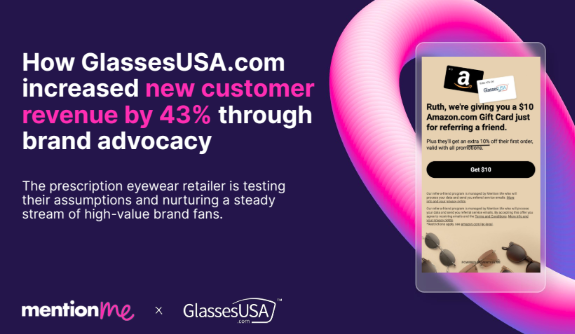
Mention Me in practice: GlassesUSA added Name Share® so customers could recommend the brand just by sharing their name. New customer revenue grew by 43% and new customer acquisition by 53%, and referred customers spent 13% more per order than other new customers. At Symprove, 51% of all referred customers now come through Name Share®.
Step 6: Choose your referral software
Use dedicated referral software to generate links and codes, track who referred whom, deliver rewards automatically and catch fraud. Look for a platform that integrates with your ecommerce stack and CRM, supports A/B testing, and can attribute referrals that don't come through a link.
When you compare platforms, check that they can:
- Integrate with your ecommerce platform or checkout, such as Shopify, Salesforce Commerce Cloud or a custom stack
- Track referrals across links, codes and offline conversations
- Fulfill rewards automatically once your success criteria are met
- Run A/B tests on rewards, copy and placement by customer cohort
- Flag and block suspicious referrals
- Pass referral data to your CRM and email platform, such as Klaviyo or HubSpot
- Report on the long-term value of referred customers, not just first orders
- Meet your privacy and security requirements, including GDPR and CCPA
If you're comparing vendors, our roundup of the best referral marketing software sets out the options side by side.
See how Mention Me sets up referral for you
Mention Me has powered more than 6 million referrals for 500+ brands, with Name Share®, cohort A/B testing and fraud protection built in. Our team helps you through every step in this guide, from reward modeling to launch. Live in 1 to 3 days.
Step 7: Write your rules and T&Cs
Publish clear terms that say who can take part, what counts as a successful referral, what each person gets and when, and what happens if something goes wrong. Show a one-line summary next to the share button and keep the full terms one click away.
Your referral program terms and conditions should cover:
- Eligibility: who can refer (for example, existing customers aged 18 or over in specific countries) and who can be referred (new customers only)
- Qualifying purchase: any minimum order value, excluded products and the return or cancellation window
- Rewards: what each person receives, when it's issued, how it's delivered and when it expires
- Limits: any cap on rewards per referrer, and whether rewards can be combined with other offers
- Self-referral and misuse: that referring yourself, using duplicate accounts or posting codes on coupon sites isn't allowed, and that you can withhold or cancel rewards if it happens
- Privacy: how you'll use the friend's details and what they've agreed to
- Disclosure: in the US, the FTC expects people who recommend a brand publicly in exchange for a reward to disclose that connection, so ask referrers to make it clear when they post on social media
- Tax: if you offer cash rewards, check with your tax advisor whether they need to be reported
- Changes: your right to change or end the program, and how you'll tell customers
Treat this as a checklist rather than legal advice, and ask your legal team to review the final wording. Regulated sectors such as financial services, insurance and pharmacy often have extra rules about incentives, so check those early.
Step 8: Build in fraud prevention
Most referral fraud comes from customers referring themselves or codes leaking onto coupon sites. You can stop the bulk of it by rewarding only verified new customers, releasing rewards after the return window, capping rewards per person and checking for duplicate details.
The most common types of referral fraud are:
- Self-referral: a customer creates a second account with a new email address to claim both rewards
- Coupon site leakage: referral codes posted on voucher sites, turning your referral budget into an untargeted discount
- Buy and return: a friend places an order to trigger the reward, then sends it back
- Fake accounts: batches of accounts created to farm rewards
Controls that work well:
- Match new customers against existing records using email, name, delivery address and payment details
- Release referrer rewards only after the return or cancellation window has closed
- Cap the number of rewards one customer can earn in a set period, and review anyone who hits the cap
- Monitor where referral traffic comes from and block known coupon sites
- Flag unusual patterns, such as many referrals sharing one address or device
Keep a sense of proportion. Rules that are too strict will block genuine friends and family who share a household, which frustrates your best customers. Automate the obvious cases and review the borderline ones by hand.
Step 9: Write your copy and set up touchpoints
Lead with the offer, explain it in a single sentence, and put it everywhere customers already look after they buy. Clear, specific copy such as "Give $15, get $15" consistently beats clever but vague wording.
Make sure the program appears in each of these places:
- The order confirmation page
- Post-purchase and delivery emails
- The customer account area and your app
- A dedicated referral landing page, linked from your site footer
- Packaging inserts and receipts
- SMS and loyalty communications
Write the copy for both sides of the journey: the invitation that persuades your customer to share, and the landing page that persuades their friend to buy. You'll find ready-to-use wording in our referral program templates below.
Step 10: Track, launch and optimize
Test the full journey before launch, then track share rate, friend conversion rate, cost per referred customer and referred customer value from day one. Launch to a segment first if you can, read the results after a few weeks, and A/B test one change at a time.
Before you go live, run through the journey as a real customer would. Make a referral using each sharing method, complete a purchase as the friend, check both rewards arrive at the right time, and confirm the referral shows up correctly in your reporting and CRM.
Then track these metrics from launch:
- Share rate: the percentage of customers who see the offer and share it
- Friend conversion rate: the percentage of referred friends who make a qualifying purchase
- Referral share of new customers: how much of your acquisition referral now drives
- Cost per referred customer: total reward and platform cost divided by new referred customers
- Referred customer value: order value, repeat rate and lifetime value compared with other channels
Once you have a baseline, start testing. Reward value, reward type, headline copy and placement are usually the biggest levers. Testing by cohort, so each customer sees one consistent version, gives you cleaner results than switching offers for everyone. For a deeper look at measurement, see our guide on how to measure referral program ROI.
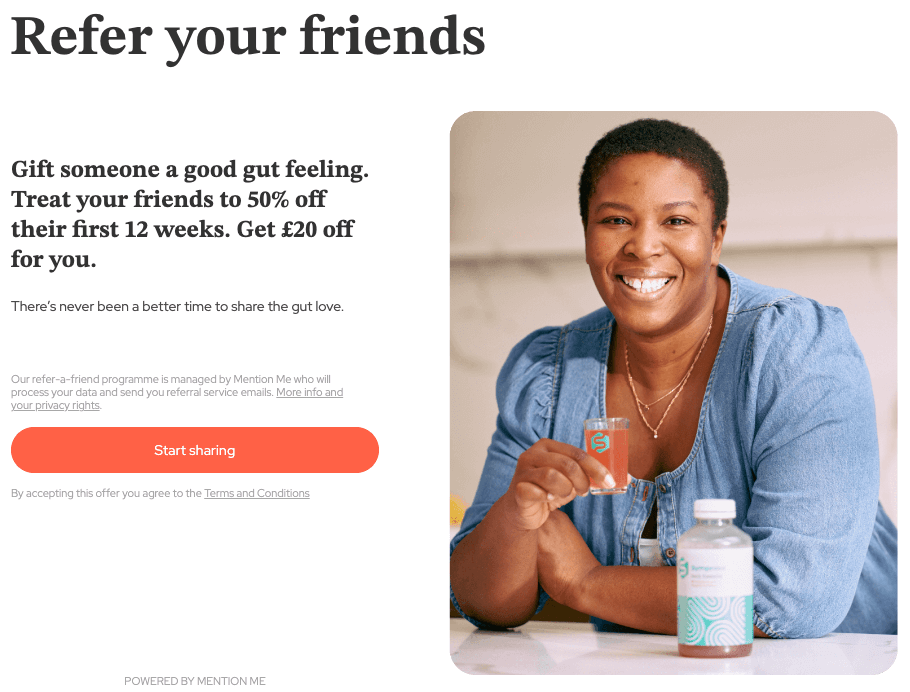
Mention Me in practice: Symprove connected its referral data to Klaviyo to build personalized referral email flows. Today 19% of its customers share the brand with friends.
How to set up a B2B referral program
A B2B referral program follows the same ten steps, with a few important changes. A successful referral is usually a qualified meeting or a signed contract, rewards are larger and often paid in stages, and your sales team needs to own the follow-up.
Here's what to adjust:
- Define success in stages. Many B2B programs pay a small reward for a qualified introduction and a larger one when the deal closes, which keeps referrers engaged through a long sales cycle.
- Set rewards against deal value. Rewards can be a fixed amount, a percentage of first-year contract value, account credit or a donation to charity. Software brands often scale the reward with the number of seats, as Google Workspace has done with its per-user referral rewards.
- Check gift and anti-bribery rules. Some companies don't let employees accept personal rewards from suppliers, so offer alternatives such as account credit or a charitable donation.
- Connect referrals to your CRM. Referred leads should arrive in Salesforce or HubSpot tagged with their source, with an owner and a response time agreed in advance.
- Extend your attribution window. A referral might take months to close, so make sure the referrer still gets credit when it does.
- Keep referrers updated. Letting them know their introduction has turned into a meeting or a deal is a reward in itself, and it encourages them to refer again.
For software businesses, our enterprise software referral program page explains how this works with Mention Me.
Referral program templates and wording
Use these templates as a starting point and swap in your brand voice. Wherever you can, put the reward in the headline and use real numbers rather than "a great reward".
Referral offer headlines
- Give $15, get $15
- Give your friends 20% off. Get $20 when they order.
- Share [Brand] with a friend and you'll both get [reward]
- Know someone who'd love [product]? Give them [reward] on us.
- Friends don't let friends pay full price. Give them [reward].
Order confirmation page
Headline: Thanks for your order, [first name]. Want to share the love?
Body: Give your friends [reward] off their first order, and we'll give you [reward] for every friend who buys. Just share your link, or tell them to enter your name at checkout.
Button: Share with friends
Share message (SMS, WhatsApp, iMessage)
Hey! I've been using [Brand] and thought you'd like it. Here's [reward] off your first order: [link]
Referral invite email
Subject line options: "[First name] sent you [reward] off [Brand]" or "A gift from [First name]"
Body: Hi there, [First name] thinks you'll love [Brand], so they've sent you [reward] off your first order. [One sentence on what makes your product great.] Your discount is waiting, but it won't wait forever: it expires on [date].
Button: Claim your [reward]
Friend landing page
Headline: [First name] has given you [reward] off
Body: Welcome to [Brand]. Your friend's discount is applied automatically at checkout on orders over [minimum].
Button: Start shopping
Reward confirmation email
Subject line: You've earned [reward]
Body: Good news, [first name]. Your friend just placed their first order, so you've earned [reward]. It's already in your account and you can use it until [date]. Know someone else who'd love [Brand]? Keep sharing and keep earning.
Reminder email
Subject line: Your friends are missing out on [reward]
Body: You still have [reward] to give away. Share your link with a friend and you'll get [reward] when they place their first order.
One-line terms summary
New customers only. Minimum spend [amount]. Rewards issued [number] days after your friend's order, once the return period ends. Full terms apply.
Referral program examples to learn from
The brands mentioned in this guide show different steps in action: GlassesUSA and Symprove on sharing, Huel on rewards, Wayfair on reward rules and PUMA on targeting. For more inspiration across ecommerce, subscriptions, finance, travel and software, browse our full list of referral program examples.
Once your program is running, our guide to referral marketing strategy covers how to grow it into one of your biggest acquisition channels.
Referral program FAQs
How do I set up a referral program?
Set clear goals and define what counts as a successful referral, then choose who to ask, pick a reward structure and value, decide how customers will share, choose referral software, write your terms, add fraud controls, set up your copy and touchpoints, and track results from launch. The ten steps above walk through each one.
How much should I pay for a referral?
Set your combined reward for the referrer and friend below what you currently pay to acquire a customer through paid channels, then A/B test from there. Many ecommerce brands start with a double-sided reward such as "give $15, get $15" or a 10% to 20% discount, but the right number depends on your margins and order values.
What is a good referral reward?
A good referral reward is valuable enough to prompt action, easy to understand and connected to your product. Discounts and store credit work well for repeat-purchase brands, free products suit brands with a hero item, and account credit or charitable donations often suit B2B.
Should both the referrer and the friend get a reward?
In most cases, yes. A double-sided reward gives the friend a reason to buy now and makes the referrer more comfortable sharing, because they're giving something as well as getting something. Testing a friend-only reward is worthwhile for brands with very loyal fans.
How long does it take to set up a referral program?
With referral software and a clear plan, many brands can launch within a few weeks. The tech integration is often the quickest part. Agreeing goals, rewards and terms internally usually takes longer, so start those conversations early.
How do you track referrals?
Referral software tracks referrals by giving each customer a unique link or code, or by matching a referrer's name entered at checkout, then connecting the friend's purchase back to the referrer. Make sure your platform can track every sharing method you offer, including referrals made offline.
Do referral programs need terms and conditions?
Yes. Clear terms protect you and your customers by setting out who's eligible, what counts as a successful referral, when rewards are paid and what happens if the program is misused. See step seven for a full checklist.
How do you stop referral fraud?
Reward only verified new customers, release rewards after the return window, cap rewards per person, check for duplicate names, addresses and payment details, and block coupon sites from using referral codes.
Do referral programs work for B2B companies?
Yes, although they need some adjustments. B2B programs typically reward qualified introductions or closed deals, offer larger rewards paid in stages, and route referred leads straight to sales through the CRM.
Where should I promote my referral program?
Start with the order confirmation page and post-purchase emails, then add the program to your account area, app, a dedicated landing page, packaging inserts and SMS. Customers are most likely to share soon after a great experience, so place the offer where those moments happen.
Ready to set up your referral program?
Every step in this guide is easier with a partner who has done it hundreds of times. Mention Me helps brands set goals, model rewards, launch quickly and keep improving with cohort A/B testing, while Name Share® makes sure the recommendations that happen in conversation are counted too.
Book a demo to see how Mention Me could work for your brand.
Dan Barraclough
Read more >
Share:





Table of contents
Share: