

.png?width=1200&height=344&name=cover%20(2).png)

Influencer marketing ROI measures the return you get from a creator campaign against every penny you put in. Simple enough in theory, but while most marketers understand why influencer marketing works, far fewer know how to actually measure it.
The true formula pits attributed revenue directly against total campaign cost. Everything else — brand equity, awareness, sentiment — sits on top of that foundation. But without tracking that core spread first, you've got no insight.
In this guide, we’ll walk you step-by-step through how to define, calculate, and optimise influencer ROI, so you can run better campaigns and prove their impact with confidence.
What is Influencer Marketing ROI?
At its simplest, influencer marketing ROI is the profit or value generated from an influencer campaign relative to its total cost. It’s also the ultimate reality check for your marketing spend—it tells you, in no uncertain terms, whether those creator partnerships actually paid off.
Recent data shows that brands typically get £6.50 return for every £1 spent on influencer marketing. But return is a loaded word.
It’s important to get one thing straight: ROI is not the same as ROAS (Return on Ad Spend). While ROAS only cares about the cash you put into a specific platform, a true ROI calculation accounts for all campaign costs. This includes product seeding, agency fees, and creator rates, not just your raw media spend.
To see the full picture, you need to look at the total overhead. Here's how to work it out for yourself:
.png?width=1452&height=818&name=im%201%20(1).png)
The Formula
To succeed, you need a standardised influencer marketing ROI calculation formula:
Influencer ROI = (Campaign Revenue – Campaign Costs) ÷ Campaign Costs × 100
For example, if you spent £10,000 on a campaign and generated £30,000 in sales, your ROI would be:
(£30,000 – £10,000) ÷ £10,000 × 100 = 200% ROI
In other words, you earned £2 back for every £1 you spent.
Before you present these figures, you need to know where you stand on a direct-return basis:
- Positive ROI: You’re in the green, the campaign was profitable.
- 0% ROI: You hit the break-even point, you got your initial investment back, but nothing extra.
- Negative ROI: The campaign lost money, at least on a direct revenue-to-cost basis.
But that’s just the high-level view. To calculate ROI properly, you need to go deeper—and take into account goals beyond just sales. Let’s break that down next.
How to Calculate Influencer Marketing ROI: Step-by-Step
ROI isn’t one-size-fits-all, which is why effective measurement starts with solid campaign planning and ends with precise reporting. Here’s how to do it right:
Step 1: Set Clear Goals
Before you can measure return, you need to know what "return" looks like. What’s your campaign trying to achieve?
It could be:
- Brand awareness for a new product range
- Click-throughs to a specific landing page
- Sales of a best-seller
- Growing user-generated content or community engagement
- Loyalty and retention through creator-led storytelling
Each objective requires a different lens on ROI—so align your measurement strategy from the start.
Step 2: Define Measurable Metrics
ROI isn't just about revenue. Different stages of the funnel demand different metrics. How you measure influencer marketing ROI depends entirely on your campaign objective and funnel stage. To get a clear picture of performance, you need to lean on influencer marketing analytics that track specific behaviors at every stage.
Here’s a breakdown by funnel stage:
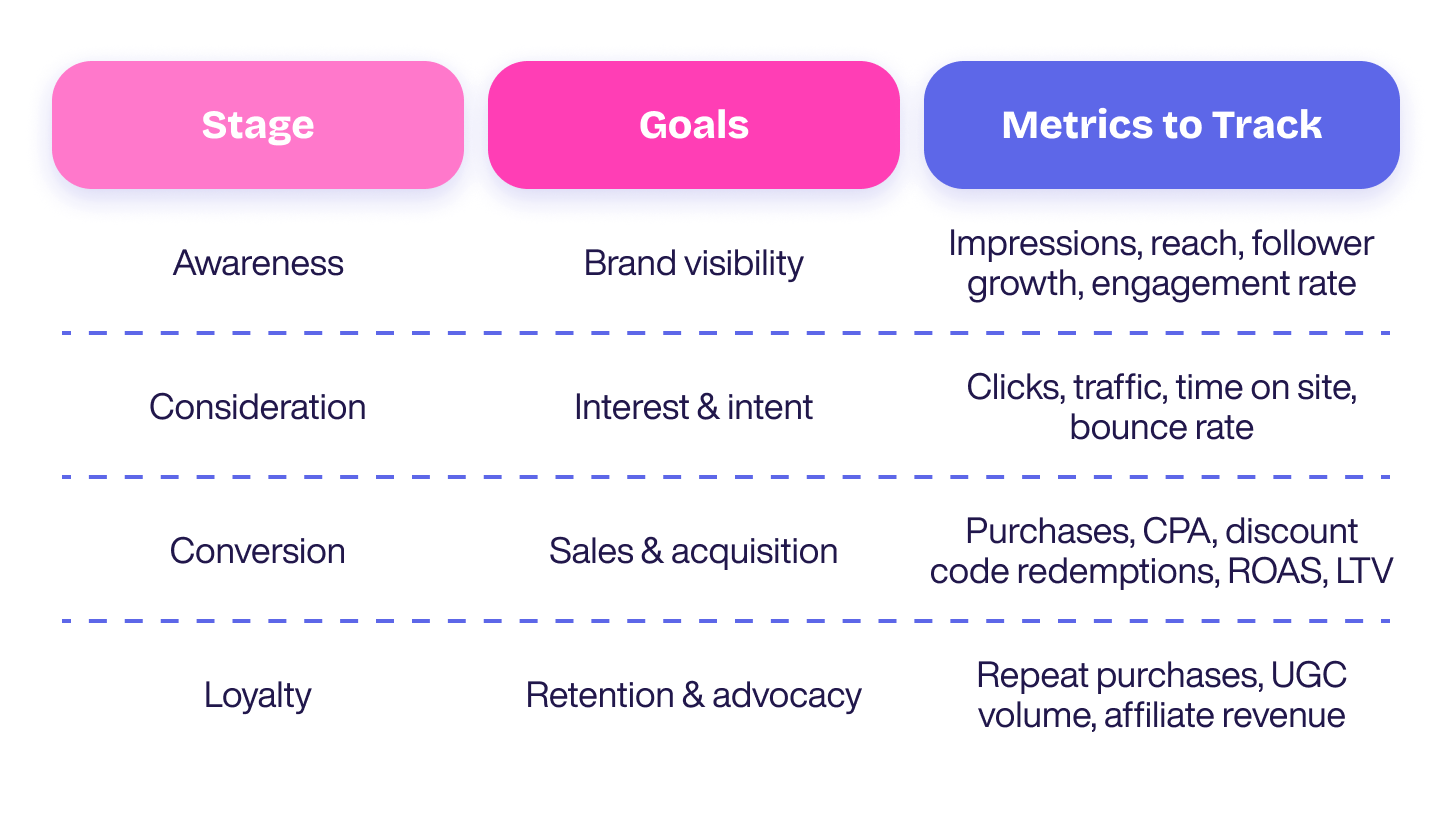
Example: A skincare brand partnered with 15 micro-influencers to push a new serum launch. The campaign goal was to drive first-time purchases from new customers. They tracked redemptions of influencer-specific discount codes, conversion rate on traffic driven from influencer content, and LTV of acquired customers over 90 days.
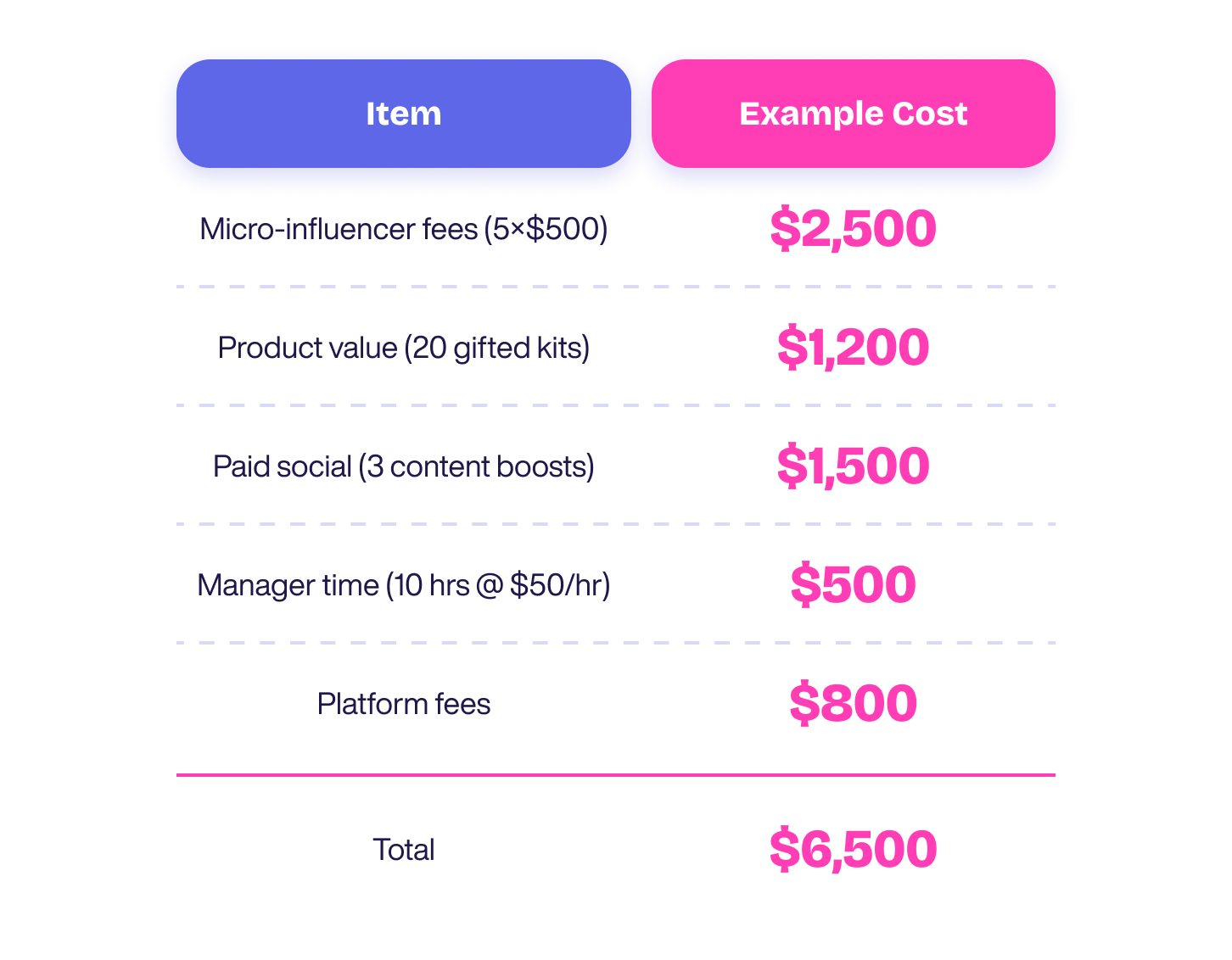
Step 3: Track Campaign Costs Accurately
To calculate ROI, you need to understand everything that went into the campaign—not just the influencer fee.
Here’s what to include:
- Influencer payments or gifted product value
- Agency or freelancer management costs, if applicable
- Influencer marketing platform fees
- Paid media spend (if you used Spark Ads, whitelisting or boosting influencer content)
- Internal time spent coordinating (assign a reasonable hourly rate)
Example Cost Breakdown:
Step 4: Attribute Revenue
Here’s where attribution matters. If you can’t see where sales are coming from, you can’t link them to your influencer efforts. The more accurate your attribution setup, the more reliable your influencer marketing ROI analysis will be.
Use a mix of methods for best results:
- Personalised UTM links for tracking traffic and conversions
- Discount codes to track redemption rates to specific influencers
- Affiliate tracking platforms for performance marketing or long-tail revenue
- Post-purchase surveys (e.g. "How did you hear about us?")
- Multi-touch attribution models to give proper credit over longer journeys
Which method you use depends on your tech stack and customer journey. But a combination often brings the most accuracy—particularly for longer cycles or multi-influencer campaigns.
Step 5: Do the Maths
Now bring it all together.
Use the ROI formula to calculate results:
ROI = (Attributed Revenue – Total Cost) ÷ Total Cost × 100
Example:
Revenue from influencer UTMs and discount codes: £19,500
Total campaign cost: £6,500
ROI = (£19,500 – £6,500) ÷ £6,500 × 100 = 200% ROI
This means the campaign generated £2 for every £1 you spent—not counting the boost in reach, awareness, and UGC that contributed to longer-term value.
What Is a Good ROI for Influencer Marketing?
There’s no universal gold standard for ROI because it depends entirely on your unit economics. A 500% ROI might be legendary for a high-margin fashion label, but a failure for a low-margin electronics brand once you factor in shipping and overheads.
What defines a successful ROI for influencer marketing depends on:
- The profit margins of your specific products
- Your overarching campaign goal (awareness vs. direct acquisition)
- The length of your sales cycle and how long it takes a customer to convert
- The tier of creators you’ve hired, from niche micros to broad-reach macros
- Whether you are strictly measuring direct sales or accounting for longer-term brand value.
Ultimately, a campaign can have a modest short-term ROI but still be strong if it drives high-LTV customers or reusable content assets. If a creator brings in customers who stay for years, or provides a library of UGC that lowers your future ad costs, the true value far outweighs the initial checkout data.
Common Challenges in Measuring Influencer Marketing ROI
If your tracking is weak, your influencer marketing ROI will almost always look lower—or more uncertain—than the true value. While influencer marketing presents huge opportunities, accurately measuring its performance doesn’t come without hurdles.
Many brands still struggle to prove the ROI behind their influencer strategies—not because the returns aren’t there, but because tracking and alignment are lacking. According to HubSpot, over one-third of marketers say they can’t measure the ROI of their activities. That’s a huge gap, and it means brands are essentially flying blind, unable to tell which creator partnerships are driving profit and which are just costing them money.
Here are some of the most common challenges we see:
Lack of Tracking
This is the most frequent culprit behind poor ROI visibility. A key driver of this problem is poor tracking infrastructure. 54% of marketers report that data fragmentation prevents them from building a unified view of performance (Salesforce).
If you're not using UTM parameters, unique promo codes, or affiliate links per influencer, it becomes almost impossible to tie results back to your campaign activity. You’re left guessing which creators drove outcome—which means you won’t know who to reinvest in.
Solution: Build tracking into your campaign from the beginning. Use properly tagged URLs, influencer-specific discount codes, and ensure your analytics are set up to track sessions, conversions, and referred revenue.
Influencer Fraud and Fake Engagement
Not all followers are created equal. Some influencers inflate their numbers with fake followers or purchased engagement, making it appear like a post is performing well when it’s not driving real value. A study by CHEQ revealed that marketers lose $1.3 billion to fake influencer followers.
Solution: Vet influencers beyond their follower count. Look for consistent post engagement, credible audience demographics, and authentic comment quality. Use platforms (like Mention Me Influencer) that prioritise advocacy over vanity metrics.
Dark Social & Indirect Conversions
Many conversations sparked by influencer content happen in private spaces—solo DMs, WhatsApp chats, or shared screenshots. To be exact, 84% of outbound sharing occurs via these private channels, according to The Light and Dark of Social Sharing report. These interactions drive real influence, but they don’t show up in your last-click attribution.
Solution: Rely on a combination of attribution methods. Consider running post-purchase surveys to ask how customers heard about you, and explore tech that supports multi-touch attribution if your sales cycle allows it.
Content Misaligned with Funnel Stage
Too often, brands commission content that doesn’t speak to where the buyer is in their journey. Think generic brand awareness content for audiences who are purchase-ready—or hard sale CTAs for viewers who’ve never heard of the brand before.
Solution: Match content type to campaign goals. Want awareness? Focus on inspirational or entertaining posts. Want conversions? Go for testimonials, demos, or limited-time incentives to drive urgency.
Undefined Goals from the Start
If you enter a campaign without knowing what success looks like, it’s no wonder ROI is hard to measure. A lack of clarity around what you're trying to achieve often translates into unclear briefs, vague content, poor tracking, and weaker results. The data backs this up: according to CoSchedule, marketers who set clear goals are 376% more likely to report success than those who don’t.
Solution: Set one or two clear goals per campaign and work backwards from there. Plan your influencer selection, tracking metrics, and content format accordingly.
How to Increase Influencer Marketing ROI
Now that we’ve covered the most common challenges, let’s focus on how to overcome them. To improve influencer marketing ROI, focus on better fit, better conversion paths, and more effective reuse of high-performing content. Here are the best ways to increase influencer ROI:
Choose the Right Influencers
It may sound obvious, but campaign success begins with choosing creators who genuinely align with your brand, your customers, and your campaign goals. These aren’t always the biggest names—but they’re often the most trusted ones.
Look for:
- Authentic audience engagement
- Content style that matches your brand’s tone
- Creators who are already using or loving your product
- Demographics that mirror your ideal customer
Try this checklist below to help find the perfect influencer for your brand:
.png?width=1452&height=1132&name=im%2012%20(1).png)
Align Content With Funnel Stage
The content your influencers produce should align with where their audience is in your funnel.
For example:
- Awareness: Entertaining videos, brand storytelling
- Consideration: Product walkthroughs, educational posts
- Conversion: Testimonials, comparison content, promo codes
- Retention: UGC, community-building, follow-ups
When influencer content resonates with the right audience at the right moment, ROI improves exponentially.
Create Clear CTAs and Incentives
The clearer the ask, the better the result. Don’t assume audiences will know what to do next. Whether it’s clicking a link, redeeming a code, or exploring a new collection, make the next step obvious.
Add urgency and value wherever you can:
“Use code LENA20 for 20% off”
“Only 100 units left – order now”
“Click to watch my full unboxing”
“Share your look with #MyBrandStyle to be featured”
The combination of clarity and incentive helps push action through the funnel.
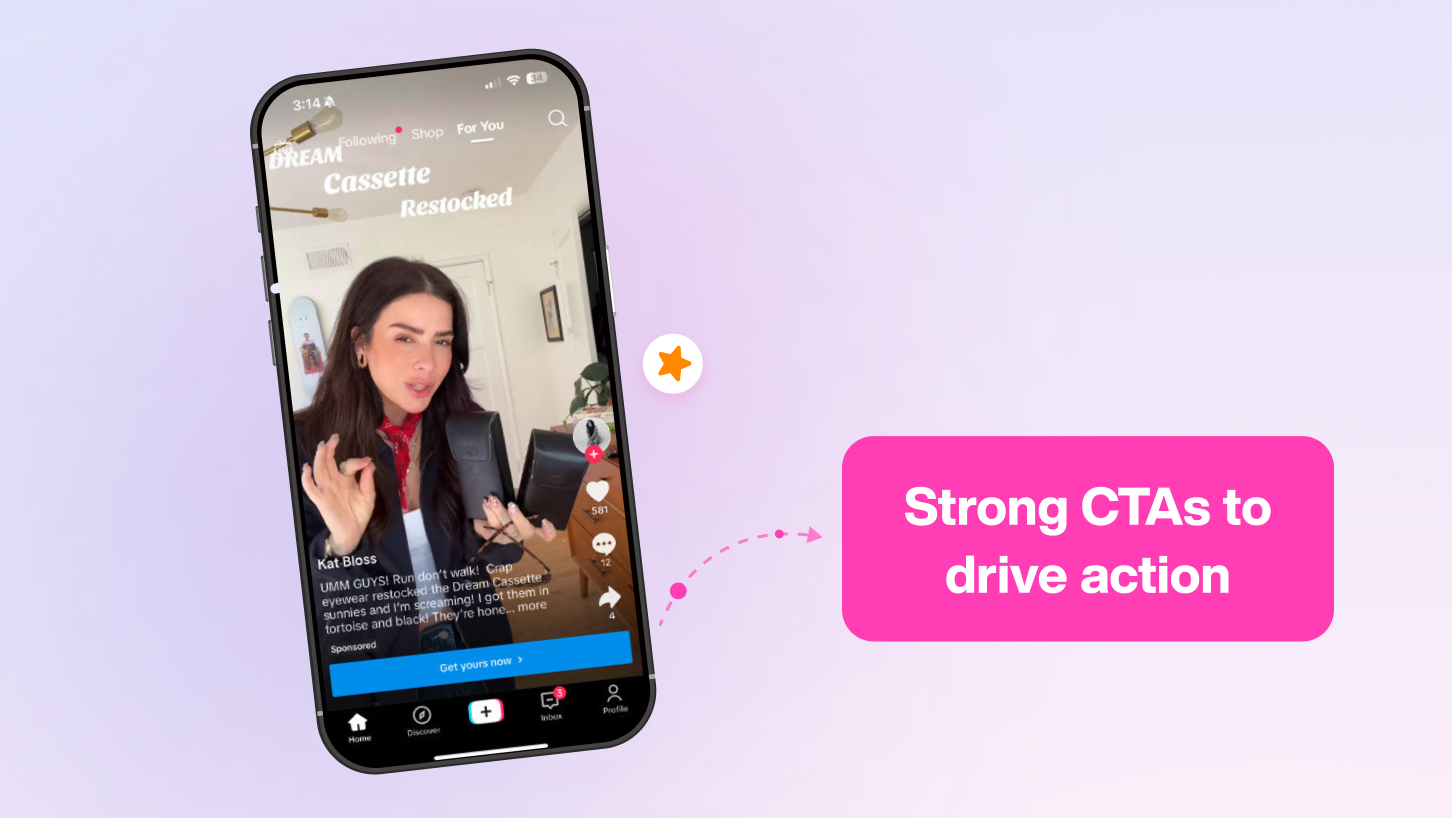
Use short, strong CTAs to drive action from your influencer posts
Use Affiliate Programmes and Performance-Based Deals
Affiliate programmes align influencer incentives with campaign performance. Influencers get compensated based on the sales they drive, and you retain full visibility on cost per acquisition.
Many brands now combine fixed fees with performance bonuses to encourage sustained effort.
Repurpose Influencer Content Across Channels
Squeeze every drop of value from great influencer assets by extending their life and reach.
Use top-performing content in:
- Paid social campaigns
- On-site product pages
- Post-purchase emails
- Organic social feeds
- Ambassador and referral campaigns
Just be sure to agree on usage rights up front. Repurposing turns influencer investment from a campaign cost into a long-term creative asset.
Run Long-Term Partnerships, Not One-Off Posts
Trust isn’t built overnight, nor are high-ROI campaigns. Long-term collaborations allow influencers to integrate your brand into their lifestyle, deepening trust with their audience.
Bonus: recurring partnerships provide more consistent content, stronger performance baselines, and clearer metrics over time. As influencer familiarity grows, so does message recall and conversion performance.
Pro tip: Think of these relationships more like an affiliate or ambassador programme—not just a media buy.
Influencer Marketing ROI Examples
Sometimes, the best way to understand how influencer marketing drives ROI is to see it in action. These brands have cracked the code—combining authentic creator relationships with data-driven execution to deliver strong performance and scale.
What do they have in common? Clear goals, audience alignment, consistent messaging, and a strategic approach to measurement.
Here’s how three standout brands have used influencer marketing to drive tangible results across awareness, traffic, and revenue.
Fashion Nova
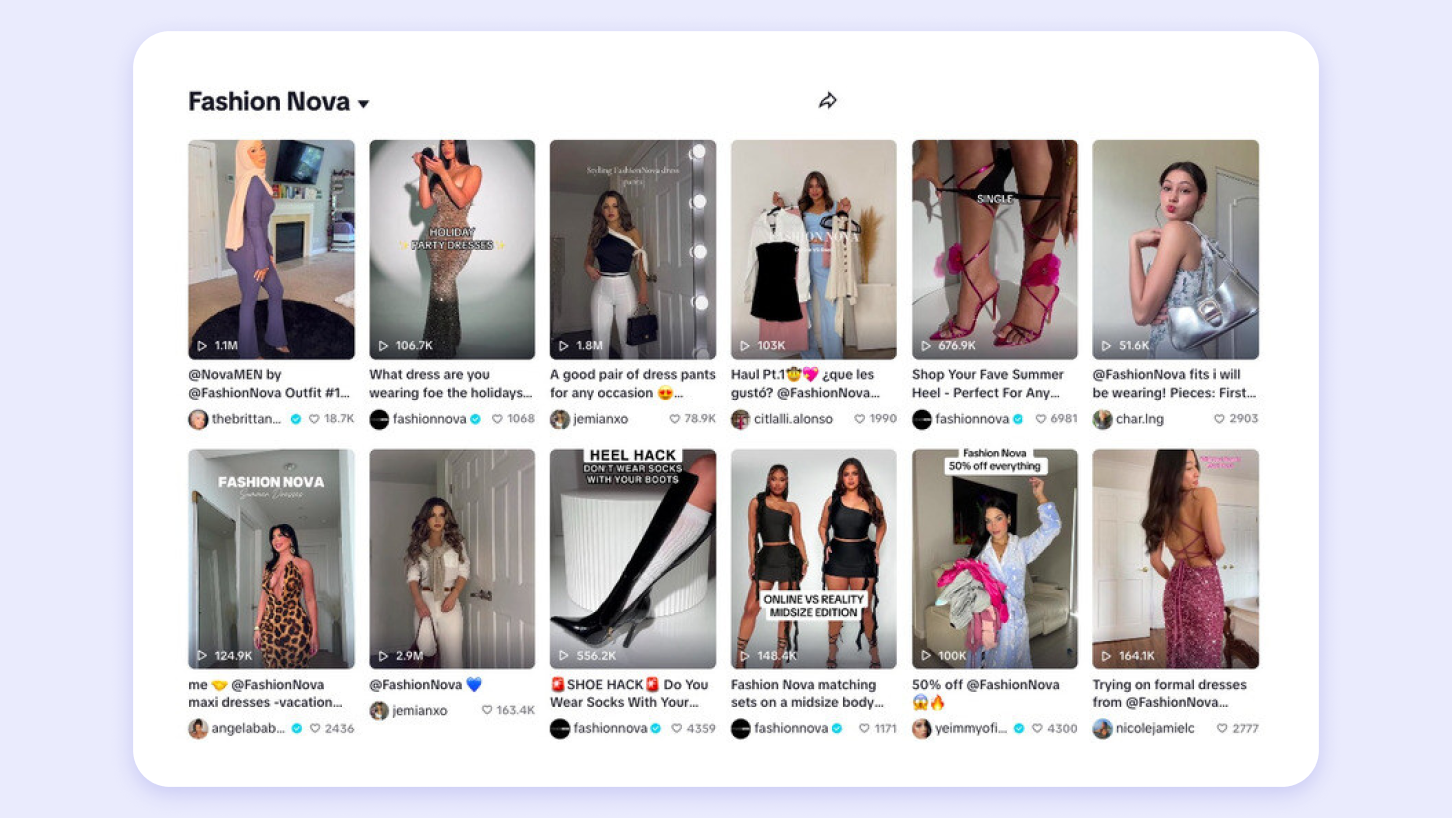
Fashion Nova is a go-to example of high-velocity influencer marketing and high-volume return. The brand is known for working with a massive network of micro- and macro-influencers across Instagram and TikTok—often reposting their content and treating them as extensions of the brand.
By partnering with fashion-forward creators who align with their edgy, trend-led aesthetic, Fashion Nova turns casual exposure into high-volume sales. They rely heavily on branded hashtags, discount codes, and daily UGC to shorten the path from discovery to purchase.
The reported ROI outcomes:
- ROAS regularly exceeds a 300% return on direct campaign spend.
- Creator content delivers a lower CPA than the brand’s own studio assets.
- Huge organic reach saves millions in traditional advertising costs.
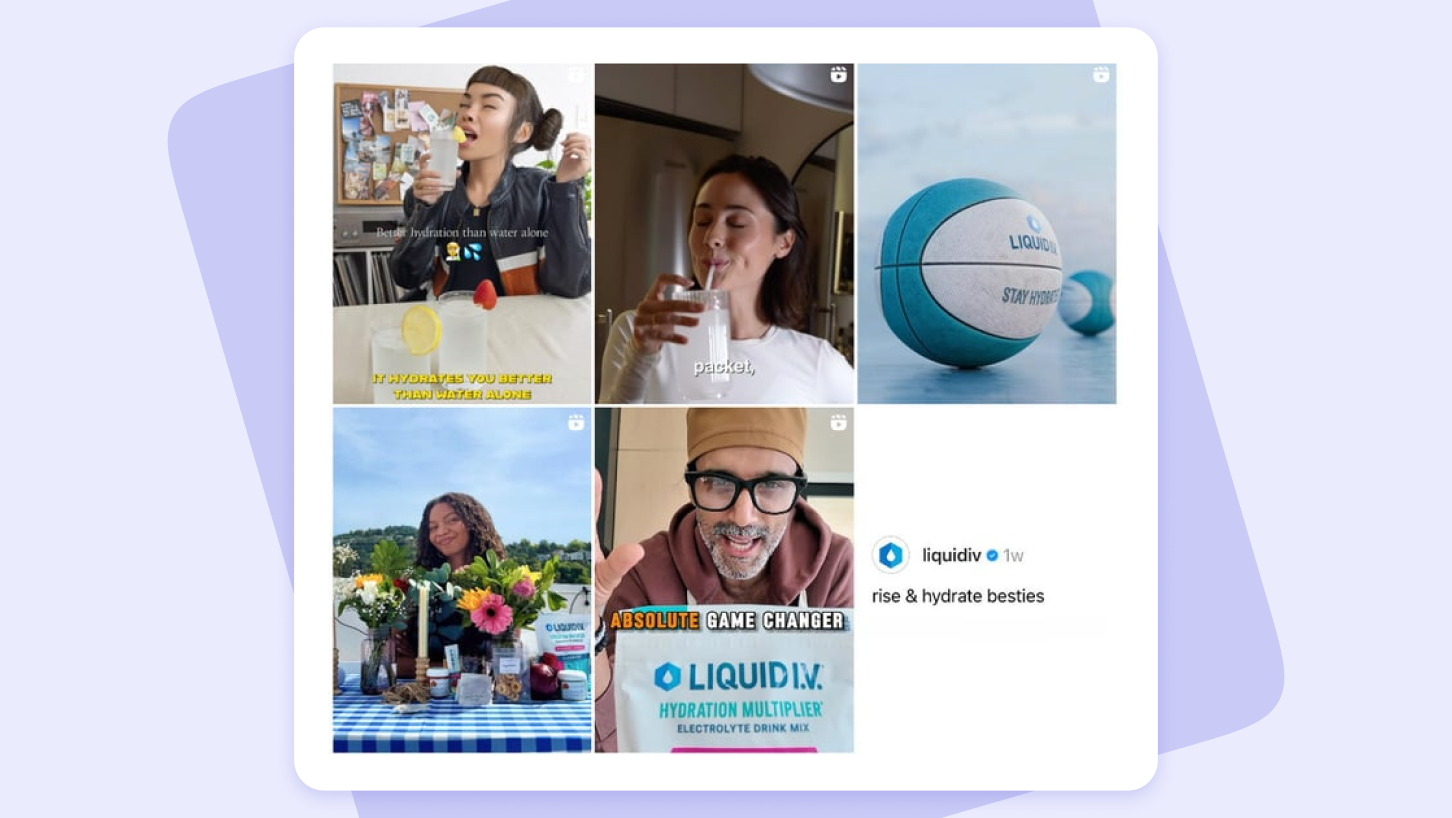
Liquid I.V.
Liquid I.V. has successfully scaled influencer marketing using a performance-first approach. They collaborate with health, wellness, and fitness creators who are genuinely using (and often loving) the product—which leads to more authentic testimonials and stronger affiliate revenue.
Their strategy is a masterclass in how to track and improve influencer marketing ROI:
- Unique promo codes ensure every single sale is perfectly tracked.
- Working with the same creators long-term keeps conversion rates rising.
- Product seeding keeps the cost-of-acquisition exceptionally low.
- Performance-based pay ensures the brand only pays for confirmed sales.
This approach enables them to reach highly qualified audiences while maintaining a controlled cost-of-acquisition model. In a competitive CPG category, this level of precision has set them apart.
Revolve
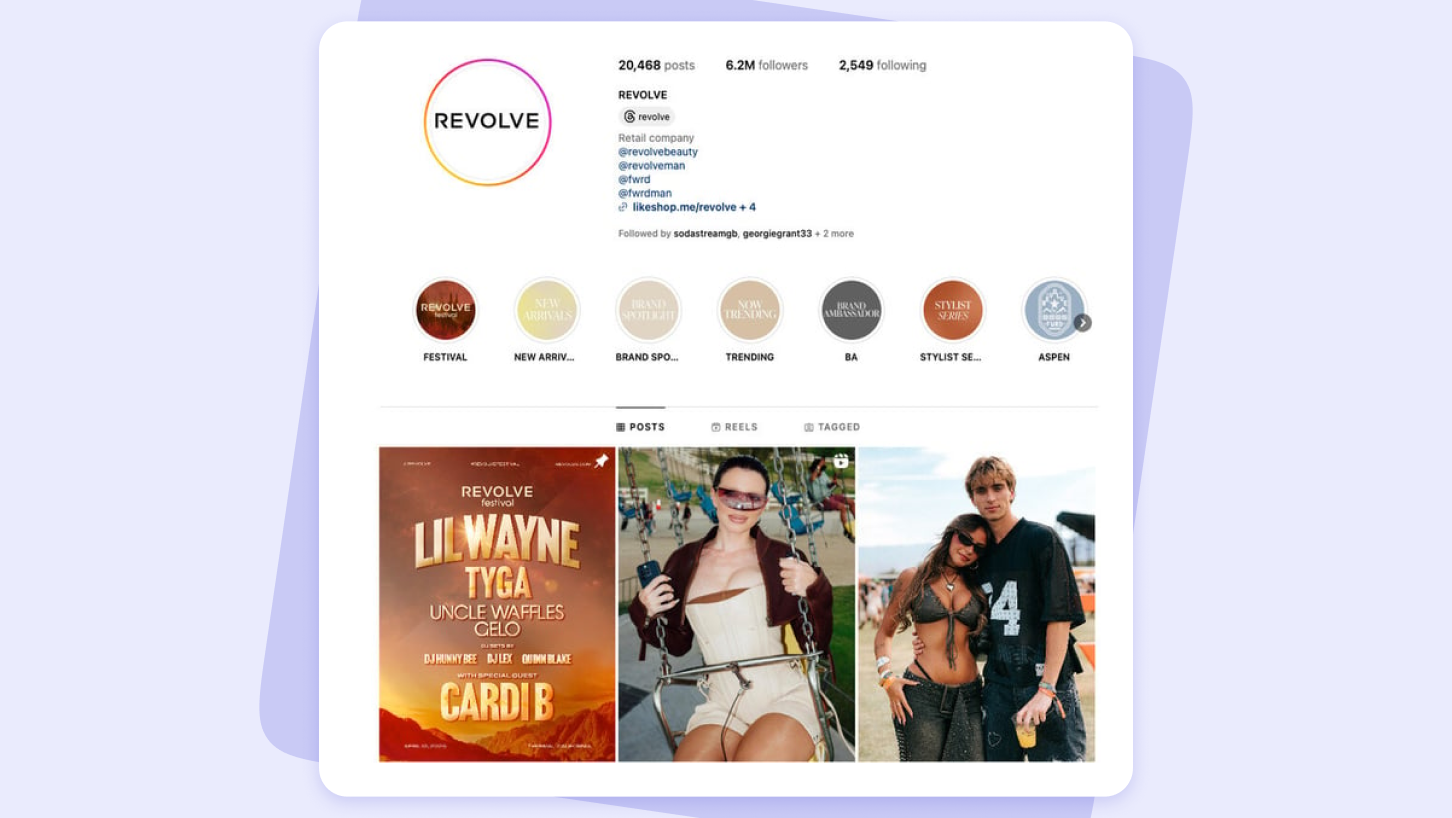
Revolve built one of the most iconic and results-driven influencer strategies in fashion retail. They work with a tightly selected group of high-performing macro and mega-influencers, often tying their brand campaigns to aspirational travel and lifestyle activations.
Their influencer marketing strategy reinforces Revolve’s position as a lifestyle brand and turns casual scrolling into immediate sales.
How their strategy converts to tangible ROI:
- Themed international influencer retreats (Revolve Festival, Revolve Around the World) slash content production costs by generating a massive library of high-end assets at once.
- Shoppable posts and influencer storefronts remove friction, driving higher conversion rates than standard site links.
- Strategic paid boosting of high-performing content ensures media spend only goes toward creator content already proven to sell.
The mix of experience-based content and high-volume reach delivers quick sales today while lowering the cost of finding new customers tomorrow.
Key Metrics to Watch and Tools to Track Them
These supporting metrics help you measure influencer marketing ROI more accurately and understand what drives performance. If you want to demonstrate influencer ROI to leadership, you need two things: the right metrics and the right tools.
Understanding the full impact of an influencer campaign, especially when scaling Instagram influencer marketing, means moving beyond vanity numbers and toward deeper KPIs that tell you what’s really working and where there’s room to optimise.
Metrics
Here are the key metrics marketers should watch when evaluating influencer performance:
- CPA (Cost per Acquisition): How much it costs to acquire each customer through influencer campaigns.
- CPE (Cost per Engagement): Useful for upper-funnel goals like awareness or reach; shows how efficiently you’re sparking audience interaction.
- ROAS (Return on Ad Spend): Total revenue generated from paid influencer placements divided by total spend.
- CAC (Customer Acquisition Cost): Particularly useful when combining influencer efforts with other paid or owned media.
- CLTV (Customer Lifetime Value): Helps determine if influencer-sourced customers are more profitable or loyal over time.
Tools
To effectively calculate and monitor these metrics, a reliable tech stack is essential. Here are some of the most commonly used tools for influencer campaign tracking:
- Google Analytics: For tracking referral traffic, UTM parameters, and conversions.
- Shopify Reports / Ecommerce Platform Analytics: Great for source attribution, discount code tracking, and order value analysis.
- Influencer Platforms (e.g. Mention Me Influencer): Offer end-to-end influencer management, from recruitment and communication through performance reporting.
- Promo code trackers and link shorteners (e.g. Bitly, Rebrandly): For simplified tracking and attribution in stories or bios across platforms.
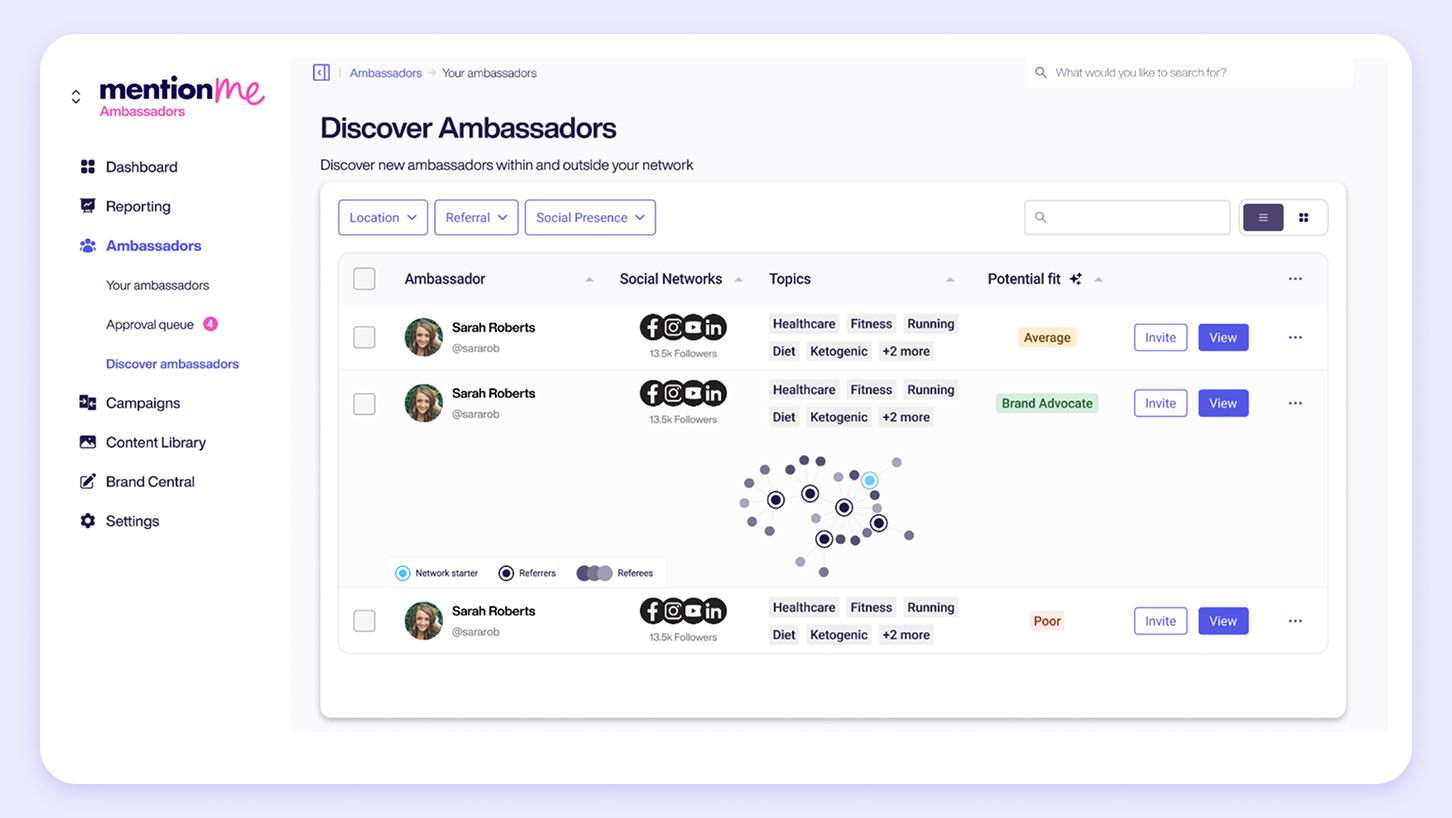
Mention Me Influencer seamlessly reveals micro-influencers within your base
Influencer Marketing ROI Calculator
If you aren't using a dedicated platform yet, you don’t need a complex tool to get started. You can build a simple influencer marketing ROI calculator in a spreadsheet to keep your reporting consistent.
You can do so by creating a dashboard that tracks these variables for every creator:
- Attributed revenue (sales you can move straight back to them via discount codes or tracking links).
- Total costs (everything you spent, including creator fees, the cost of gifted products, and shipping).
- The result (your final ROI percentage, which shows you which creators to hire again).
If you find yourself doing this often, it’s worth building this into a permanent spreadsheet or dashboard to make your monthly reporting a breeze.
Conclusion
Influencer marketing is undoubtedly a business growth engine. But to move from likes to actual revenue, you need a strategy built on clear goals and accurate tracking.
Whether you’re partnering with micro-influencers to drive high-quality traffic or building a global brand moment through major partnerships, real influencer marketing ROI comes down to how well you manage your costs and attribute your sales.
When you stop guessing and start measuring, influencer campaigns become a predictable, scalable part of your budget.
Mention Me Influencer is designed to support this shift. By helping you identify high-performing brand advocates already in your customer base, manage relationships at scale, and confidently track performance without cookies, it turns influencer marketing into a data-driven performance channel.
Whether it’s reach, revenue, or retention: now’s the time to make influencer marketing deliver.
Ready to see how Mention Me Influencer can drive your ROI?
Request your personalised demo today and take the next step toward performance-driven influence.
Dan Barraclough
Read more >
Share:




.png)
Share:

.png)
.png)