

.png?width=1200&height=344&name=cover%20(1).png)

Launching a new product isn’t a case of “if you build it, they’ll come.” To make it successful, you need to move toward a more community-led approach. By using ecommerce influencer marketing properly, you can validate your products before they even hit the shelves.
By launch day, you'll already have an audience ready to buy. So, how do you make it reliable?
Why 90% of New Products Are Destined to Fail
70% to 90% of new products fail within the first year. It’s rarely because there’s something wrong with the product. Usually, the reason is a cold start. When you launch into a vacuum with zero social proof and with customer acquisition costs as high as they are, you gamble.
No history, reviews, rating, or photos of real people using the product lead to the trust gap. Conversions stop dead because there’s no user-generated content to back the launch up.
Stop relying solely on traditional ads and start tapping into your community to build that trust before you go live.
What is Ecommerce Influencer Marketing?
Ecommerce influencer marketing did involve paying for a few shoutouts. Now, customer advocacy marketing covers the entire sales funnel.
Today, brands work with creators to co-develop products and use automated social commerce tools to drive sales. Influencer marketing for product launches is now a core part of selling products.
Why Google Isn’t the Starting Line Anymore
The age of search is over. We’ve moved firmly into the age of trust. People no longer Google answers and click the first ad they see. Instead, they turn to people they follow and respect.
55% of consumers now reckon they get better recommendations on social media than anywhere else. And for the younger generations? Over half of them, 56% to be exact, are hitting the buy button because of a creator they’ve seen online.
Why Your Best Influencers Are Already Buying From You
Where is the industry heading? Businesses are replacing celebrities - boasting a million followers - with customer creator marketing.
The most professional influencers are billboards. They’re pitching a skincare brand on Monday, a meal kit on Wednesday, and a tech gadget on Friday. It’s hard for an audience to take that seriously when the product changes as often as their outfit.
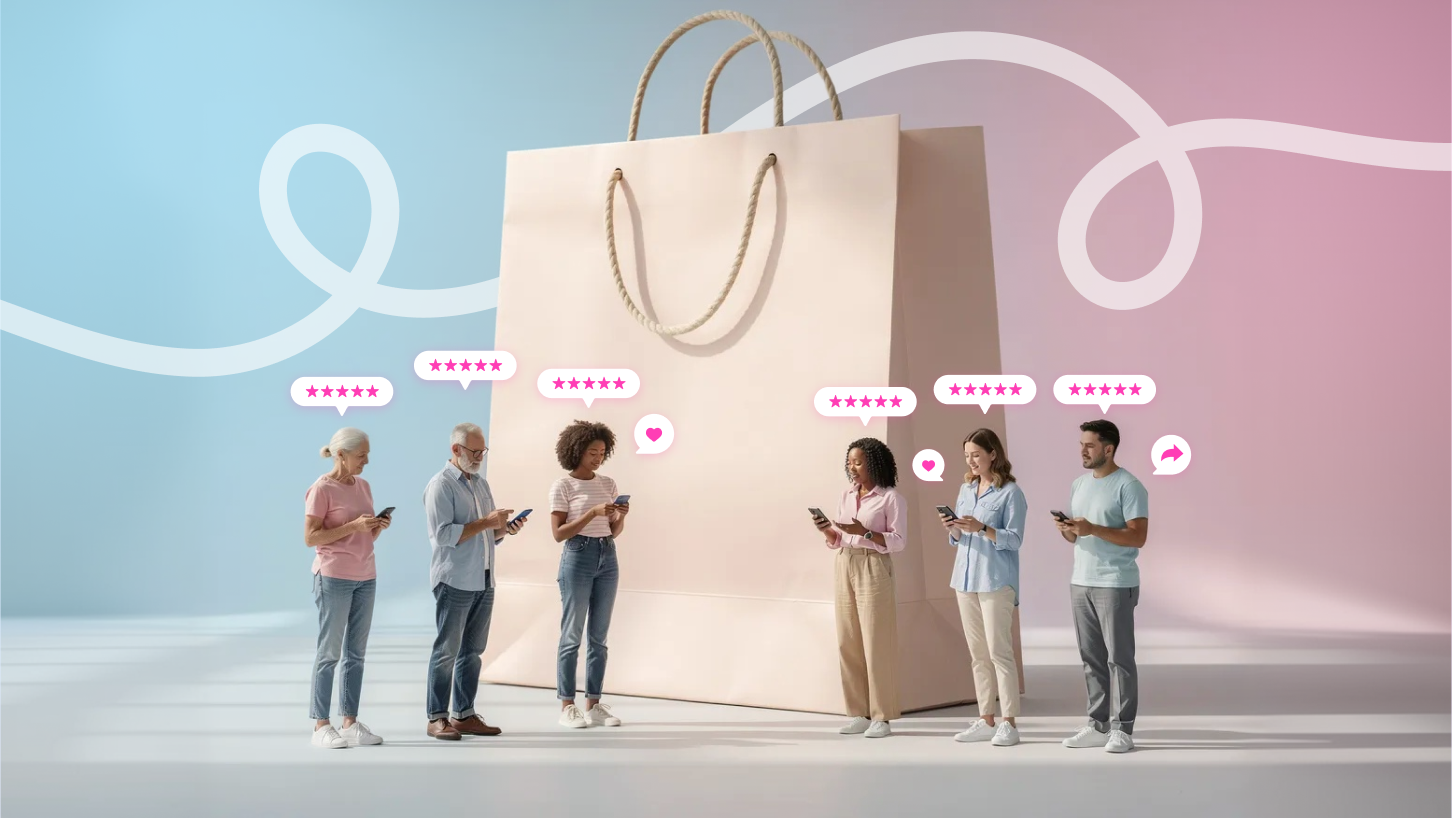
Your CRM is the most reliable source of influencers. It’s those customers who are already obsessed with what you do. They buy from you on repeat, open every email, and tag your brand in their photos without being asked.
When you turn these people into creators, they share their own genuine experience. And the conversion rates you get from a real fan are going to run rings around a paid shoutout from someone who doesn’t use your products.
Is Your New Product a Dud?
Just because you have a slow start it doesn’t mean you have a dud product. But betting your launch budget on a hunch is a quick way to lose money.
Launching Into a Financial Void
With R&D, manufacturing costs, storage, and marketing budget, launching a new product is a massive financial commitment.
It’s easy to get the launch wrong due to:
- Unsold stock draining your margins
- People not buying without social proof
- Customers ignoring corporate ads
Let Creators Do the Talking
These costs are the reason you need a solid SKU launch strategy.
Seed the market with creators well before the big day. You get the products into their hands early and receive real feedback and social proof in return. By the time you officially launch, you’ve already de-risked the process.
Hired Guns or Actual Users?
While celebrity influencers give you massive reach, they usually don’t have the same level of trust as that which a customer creator marketing brings.
.png?width=1452&height=818&name=im%202%20(1).png)
But that’s not the only difference, so let’s look at how they compare overall:
|
Feature |
Paid Mega-Influencers |
Customer Creators / Micro-Influencers |
|
Reach |
Massive (1M+) |
Niche (1k-50k) |
|
Trust level |
Low (seen as paid) |
High (seen as a peer) |
|
Content quality |
Professional & polished |
Authentic and relatable |
|
Cost |
High ($10k+ per post) |
Low (product seeding & performance) |
|
Focus |
Brand awareness |
Conversion |
|
ROI |
Variable |
Higher (11x higher than digital ads) |
The returns are much higher when you work with micro- and nano-influencers, as they’ve got a genuine connection with the people following them.
The Influencer Triad
To nail a launch, you need to stop lumping everyone into one bucket. There are three distinct groups, and each is doing a different job:
- UGC-Creators: These are your content machines. Give them a brief, and they’ll churn out the raw, high-converting video you need for your ads and site.
- Micro-Influencers: Your reach drivers. They’ve got the niche audience that listens, so they’re your best bet for generating buzz and traffic.
- Brand Advocates: Your secret weapon. These are your existing fans that post, recommend, and turn interest into sales.
In short, advocates build trust, influencers bring the eyeballs, and UGC creators feed your ads.
Why Fans Sell New Products Better Than Ads
Because your biggest fans already know and love your brand, their content feels like a mate recommending a new discovery. When they post your new SKU, the audience trusts their word. Ecommerce influencer marketing helps people stop wondering whether a product is worth their money and instead feel confident about the purchase.
How to Build a Customer Creator Strategy for a New SKU Launch
Follow these five steps to successfully implement a micro-influencer ecommerce strategy while launching your product.
Step #1: Find Your Advocates
The best influencers for your launch are already in your database.
Using platforms like Mention Me, you can identify customers who are eager to share and have a history of referring friends. This is your foundation for influencer marketing for product launches.
Step #2: Seed Early
Send early-release versions of the SKU to your top advocates. The goal is to generate UGC for product launches before the product is even available to the public.
Ask them for:
- Honest unboxing
- First impressions
- Styling videos
This way, your product page is already populated with real-life photos and videos on launch day.
Step #3: Ditch the Robotic Brief
Never over-brief your creators. 65% of them would rather have a say in the creative process than read off a cue card. Give them your non-negotiables, some rough talking points, but let them handle the “how.”
They know your audience better than you do, so let them sell it in their own words.
Step #4: Spread the Content
Once live, integrate the content that’s been produced so far:
|
Timing |
Strategy |
Goal |
|
Pre-launch |
Countdown videos |
Build FOMO |
|
Launch week |
Whitelisted ads |
Drive conversion |
|
Post-launch |
Customer photos |
Social proof |
Step #5: Follow the Engagement
Watch what the creators’ audiences love. If everyone’s raving about the blue variant but ignoring the green, adjust your inventory orders fast.
Ecommerce Influencer Marketing ROI
The industry stats for 2025 show that for every dollar you spend on ecommerce influencer marketing, you’re getting back nearly six.
Do You Need Vanity Metrics?
Don’t get blinded by the big numbers, like likes and views. They’re not telling you the real story.
Instead, focus on:
|
Metric |
Why It Matters |
How to Track It |
|
CTR |
Tells you if they actually care |
Unique UTM links |
|
CVR |
Proves the product is a winner |
Pixel/API tracking |
|
CAC |
Keeps your launch out of the red |
Spend vs. new customers |
|
Referral velocity |
Shows if it’s going to go viral |
Attribution software, like Mention Me |
Turn Influence Into Hard Data
Plug your creator activity into your CRM. Give every single creator their own tracking link or discount code. That way, you’re seeing exactly which video turned a browser into a buyer.
Who’s Getting Ecommerce Influencer Marketing Right?
Let’s look at brands who approached the launch right and can inspire your actions:
|
Brand |
Challenge |
Approach |
Key Result |
|
Reward fans without the cost |
AI-led referral programme |
11% boost in new customers |
|
|
Scaling brand advocacy |
Integrated referral data |
6x ROI; fans bringing in fans |
|
|
Expanding in North America |
Word-of-mouth strategy |
Global growth, kept the prestige |
The List of What Not To Do
Stop making these rookie mistakes, and your SKU launch strategy will prove successful:
|
The Mistake |
Why It’s a Mistake |
|
Treating everyone the same |
Your VIPs deserve royal treatment |
|
Over-briefing |
If it looks like a scripted ad, people will bin it |
|
No seeding period |
You’re shouting into the void |
|
Using vanity metrics |
Likes don’t pay your bills, so ignore them |
|
Wasting content |
Feed each piece into your ads and emails |
The Bottom Line
To de-risk your launch, you must build trust. Work with the people who already love your brand, seed your product early, and turn your launch into a predictable win.
FAQ:
What is ecommerce influencer marketing?
It’s partnering with creators to shift products directly through social, which is essential for de-risking your next big product launch.
How do customer creators differ from paid influencers?
Paid influencers are pros hired for reach and looks. Customer creators are your existing, loyal fans. They are more important as they build trust by giving genuine peer-to-peer advice.
How do you use influencer marketing to launch a new product?
Seed the product to top advocates 30 days early. Use that UGC for product launches to prime your site and feed. On launch day, use creators for live demos or countdowns to build hype and flood your new SKU’s page with traffic.
What metrics should I track for influencer marketing in a product launch?
Focus on the bottom-of-the-funnel: Click-Through Rate (CTR), conversion rates, and your Marketing Efficiency Ratio (MER). Also, bank the total volume of UGC, as that’s your long-term social proof.
Can referral marketing support an influencer marketing strategy?
Absolutely. Referral data pinpoints customers with a high propensity to share. They’re the foundation of a sharp micro-influencer ecommerce strategy. Link them up, and you’ve got a sustainable engine for customer advocacy marketing.
Dan Barraclough
Read more >
Share:





Share:

.png)
.png)