



If influencer marketing is supposed to lower CAC, why does it so often make acquisition more expensive?
For many Shopify Plus brands, ecommerce influencer marketing has become a default lever when paid media efficiency starts to slide. The logic is simple: trusted creators drive demand, and trust should convert at a lower cost. In practice, the opposite often happens.
High creator fees, short-term campaigns, and weak attribution make it hard to see which influencers bring customers who buy again. Many programmes optimise for reach, content volume, or clicks, while CAC continues to climb. Brands end up discounting to force conversion, then paying again to re-acquire one-time buyers.
Reducing CAC requires a different approach. One that connects influence to first-party data, tracks customer value beyond the first order, and turns creators and customers into repeat advocates. This guide reviews the top influencer marketing tools for Shopify Plus integrations in 2026, evaluating them on a single question: do they improve customer economics, or just help you run campaigns?
Why Influencer Marketing Tools Often Fail to Reduce CAC
Most influencer marketing tools optimise for creator workflows, not acquisition efficiency. They help teams find creators, manage content, and track surface-level performance. What they rarely do is show whether influencer activity brings in customers who buy again, refer others, or reduce blended CAC over time.
They prioritise campaign metrics over customer economics
Many influencer search platforms and influencer search tools are designed to help brands find creators quickly, not to evaluate the long-term value of the customers those creators bring. Success is measured in impressions, engagement, or attributed clicks, not in LTV:CAC ratios. This encourages “one-and-done” activity where every campaign starts from zero, even if the customers acquired never return.
They push brands back toward paid amplification
Influencer content often performs best when reused across paid social. The problem is that most tools can’t connect that content to organic word-of-mouth or referral behaviour. As a result, brands rely on paid spend to force scale, which increases acquisition costs rather than lowering them.
They can’t close the attribution gap
Brands can use discovery and vetting tools to identify creators, but that doesn’t mean they understand the customers those creators bring. Even with an influencer finder tool or influencer research tool, teams still struggle to connect creators to repeat purchases without first-party customer data.
They can see which creators drove traffic, but not which ones brought in high-value customers, repeat buyers, or advocates. That makes it impossible to identify VIP customers or the creators who attract people like them.
If you can’t link influence to long-term value, you’re not reducing CAC. You’re just moving spend around.
Many brands point to influencer marketing examples that highlight reach or engagement, but rarely show whether those customers return or refer others. The gap between visible campaign success and real acquisition efficiency is where CAC quietly increases.
What Shopify Plus Brands Should Look for in Influencer Tools
For Shopify Plus teams, the conversation around Shopify influencer marketing usually starts with creator discovery and campaign management, but reducing CAC requires looking beyond basic workflow features.
If the goal is to reduce CAC, influencer tools need to be evaluated on outcomes, not features. For Shopify Plus brands operating at scale, the right platform isn’t the one that makes campaigns easier to run; it’s the one that changes who you acquire and how often they come back.
Native Shopify and tech stack integration
At this level, influencer activity can’t sit in a silo. Tools should connect directly with Shopify Plus and core systems like email and SMS, so creator activity feeds into post-purchase journeys, retention, and advocacy. If influence lives outside your CRM, its impact stops at the first order.
First-party data ownership
Cookie-based tracking and affiliate-style links only tell part of the story. Brands need first-party data that ties influence to real customers, real orders, and real behaviour over time. Without that, it’s impossible to separate short-term noise from long-term value.
Revenue and LTV attribution
Clicks don’t pay the bills. The right tools show which creators drive customers who buy again, spend more, and stay longer. That’s the difference between reporting activity and understanding contribution to LTV:CAC.
Turning creators into repeat advocates
One-off campaigns reset value every time. Tools should help brands convert creators and loyal customers into ongoing advocates who bring in similar high-quality buyers, not just a single wave of traffic.
Measurable impact on blended CAC
Every influencer programme should answer a simple question: Does this lower blended CAC over time? If the platform can’t connect influence to repeat acquisition, retention, or referral behaviour, it’s unlikely to move that number.
What this looks like in practice
While many AI tools for influencer marketing automate outreach and reporting, very few help brands understand which relationships actually lower acquisition cost. Some platforms extend beyond campaign management by applying advocacy data across the growth stack. Examples include:
- Native Shopify Plus and CRM integrations that connect influencer activity to email and SMS, allowing brands to nurture advocates using real purchase and behaviour data.
- Advocacy-driven optimisation that uses referral and recommendation signals to improve paid social targeting, rather than relying solely on lookalikes built from one-time buyers.
- Distinguishing between high spenders and high-impact advocates, separating customers who spend a lot from those who bring in other high-value customers, and optimising for both roles differently.
- Automated influencer discovery and onboarding that identifies existing customers with influence and brings them into programmes without increasing manual workload.
When influencer tools operate at this level, they stop being campaign software and start influencing customer economics.
Top 7 Influencer Marketing Tools for Shopify Plus (2026)
Most influencer tracking software focuses on measuring campaign activity rather than customer behaviour after purchase. To make this comparison useful for Shopify Plus teams under acquisition pressure, each platform below is reviewed using the same lens: how it affects customer economics over time. That means looking beyond creator workflows to understand whether a tool can connect influence to first-party data, repeat value, and blended CAC.
Each tool is assessed on:
- who it’s best for
- where it’s strong
- how it impacts CAC in practice
- where it falls short
1. Mention Me
Best for: Shopify Plus brands looking to lower CAC by turning customers and creators into repeat advocates.
Strengths:
- Referral Engineering®: Uses first-party advocacy data to identify high-value customers and advocates, then applies that insight to acquisition and retention.
- Native Shopify Plus and CRM integrations: Connects influencer and referral activity directly to Shopify Plus, email, and SMS, tying influence to real customer behaviour.
- Paid social optimisation: Uses advocacy signals to build audiences based on customers who spend more and refer others, not just one-time buyers.
- Advocate intelligence (VIP vs VIA): Distinguishes between high spenders and high-impact advocates who bring in other high-value customers.
- Automated discovery and onboarding: Identifies existing customers with influence and brings them into advocacy and influencer programmes without increasing manual effort.
Limitation:
- Requires a shift away from short-term, campaign-led influencer thinking toward a longer-term advocacy model focused on customer economics.
CAC impact: High
Improves LTV:CAC by prioritising customers who convert, return, and introduce similar buyers over time.

2. GRIN
Best for: Shopify Plus brands running large-scale influencer programmes that need strong creator management and workflow control.
Strengths:
- Creator relationship management: Centralised tools for recruiting, briefing, contracting, and paying influencers at scale.
- Shopify integration: Connects influencer activity to product catalogues, discount codes, and order data for campaign-level reporting.
- Affiliate-style attribution: Supports links and codes to measure direct conversions tied to specific creators.
Limitations:
- Campaign-level focus: Optimised for managing influencer activity rather than long-term customer value.
- No advocacy intelligence: Does not distinguish between high spenders and high-impact advocates.
CAC impact: Low to medium
GRIN can help control operational costs and measure campaign output, but CAC improvements typically depend on external systems or follow-on paid amplification, rather than native customer value or advocacy signals.
3. CreatorIQ
Best for: Shopify Plus brands looking for enterprise-level influencer management with powerful reporting and analytics.
Strengths:
- Comprehensive creator database: Offers powerful tools for discovering, vetting, and managing influencers at scale.
- Integration with Shopify Plus: Syncs influencer activity with Shopify data, helping measure sales driven by creators.
- Advanced campaign tracking: Provides detailed insights on content performance, engagement, and ROI, offering visibility across multiple campaigns.
Limitations:
- Focus on campaign reporting: Primarily optimised for campaign tracking and performance metrics, rather than long-term customer economics.
- Lack of first-party advocacy tools: Does not focus on turning creators into repeat advocates or leveraging customer data for sustained CAC reduction.
- Limited LTV and VIP identification: Does not provide insights into which creators drive high-value or repeat customers, making it hard to scale based on customer quality.
CAC impact: Medium
While it provides strong performance tracking and attribution for influencer campaigns, it does not fully address the long-term value of influencers or customer retention, limiting its direct impact on reducing blended CAC.
4. Aspire
Best for: Shopify Plus brands focused on scaling influencer partnerships with an emphasis on automation and ease of use.
Strengths:
- Creator discovery and management: Simplifies influencer recruitment, campaign management, and performance tracking with a user-friendly interface.
- Shopify integration: Connects directly to Shopify for tracking sales, referral codes, and influencer-driven conversions.
- Comprehensive content tracking: Allows brands to monitor content performance across multiple channels (social media, blogs, etc.).
Limitations:
- Focus on automation: Designed to simplify workflows, but doesn’t fully address deeper influencer attribution or customer retention.
- No advocacy-driven insights: Does not help convert influencers into repeat advocates or track long-term customer value through referral behaviours.
- Lack of LTV and VIP identification: Offers limited visibility into which influencers bring in high-value customers who make repeat purchases.
CAC impact: Medium to low
While Aspire offers strong tools for scaling influencer operations, its focus is primarily on efficiency and content tracking, with limited functionality for driving long-term, high-value customer acquisition.
5. Modash
Best for: Teams looking for Shopify Plus integrations, especially those getting started with creator partnerships.
Strengths:
- Shopify integration: Direct integration with Shopify, allowing brands to track influencer-driven conversions and sales.
- In-depth analytics: Offers data on influencer performance, including metrics like reach, engagement, and referral sales.
Limitations:
- Primarily campaign-focused: Optimised for influencer search and campaign execution rather than customer retention and long-term advocacy.
- No first-party data utilisation: Does not fully integrate customer advocacy data to improve influencer selection or long-term customer economics.
- Limited LTV visibility: Lacks tools to track which influencers bring in repeat customers or high-value advocates over time.
CAC impact: Low
While Modash is great for influencer discovery and campaign management, its focus on tracking short-term conversions limits its ability to reduce CAC over the long term or build customer loyalty.
6. impact.com
Best for: Shopify Plus brands looking for a comprehensive partnership platform that integrates influencers with affiliate and partner marketing.
Strengths:
- Advanced tracking and reporting: Provides powerful tracking and reporting for influencer-driven sales, including revenue and attribution by channel.
- Customisable commissions and payouts: Allows brands to set specific commission structures for influencers and affiliates, offering flexibility in partner compensation.
- Comprehensive analytics: Offers detailed insights into campaign performance, helping brands optimise partnerships for both short-term sales and long-term growth.
Limitations:
- Affiliate model focus: Strong emphasis on managing affiliate and partnership programmes, with less attention on converting influencers into repeat advocates.
- Lack of first-party advocacy tools: Does not natively incorporate customer advocacy or long-term retention data into influencer strategies.
- Limited visibility into LTV: While it tracks conversions, it doesn’t provide tools for identifying high-value, repeat customers or advocating influencers.
CAC impact: Medium to low
While impact.com excels in partnership management and performance tracking, it’s focused more on measuring direct conversions from influencers rather than long-term advocacy, limiting its direct ability to reduce blended CAC.
7. Shopify Collabs
Best for: Shopify Plus brands looking for a simple, Shopify-native influencer management tool with an emphasis on ease of use and integration.
Strengths:
- Native Shopify integration: Seamlessly connects with Shopify Plus to track influencer-driven sales and manage influencer payments directly through the platform.
- Easy creator discovery: Offers a simple interface for discovering and recruiting micro-influencers, leveraging Shopify’s customer data for better influencer selection.
Limitations:
- Basic functionality: Focuses on ease of use, but lacks advanced features for measuring long-term customer value, repeat purchases, or advocacy.
- Limited LTV and advocacy tracking: Does not provide tools to track customer lifetime value or convert influencers into repeat advocates who bring high-value customers.
- Campaign-centric: Primarily designed for running short-term campaigns rather than fostering ongoing influencer relationships or optimising long-term growth.
CAC impact: Low
While Shopify Collabs is a straightforward, easy-to-use tool for managing influencer campaigns, its limited analytics and lack of focus on customer retention or advocacy make it less effective for reducing blended CAC over time.
Influencer Marketing Tools Comparison: CAC Impact
|
Tool |
Shopify Plus Ready |
First-Party Data |
CAC Reduction Impact |
|
Mention Me |
✅ |
✅ |
High |
|
GRIN |
✅ |
❌ |
Low to Medium |
|
CreatorIQ |
✅ |
❌ |
Medium |
|
Aspire |
✅ |
❌ |
Medium to low |
|
Modash |
✅ |
❌ |
Low |
|
impact.com |
✅ |
✅ |
Medium to low |
|
Shopify Collabs |
✅ |
❌ |
Low |
Why Advocacy-Led Tools Cut CAC Better Than Influencer Platforms
Influencer platforms are typically designed to manage short-term campaigns, measuring success in terms of one-off engagement or sales. But when campaigns reset with each new push, so does your customer acquisition cost. This results in inflated CAC over time because brands are constantly chasing new buyers rather than nurturing repeat advocates.
Owned vs. Rented Influence
Influencer platforms often "rent" an audience: brands pay for access to a creator’s following, but once the campaign ends, the relationship ends. The value you gain from the influencer’s audience is fleeting and transactional.
In contrast, advocacy-led tools focus on converting influencers and loyal customers into owned advocates. These advocates are more than just one-off buyers—they're repeat customers who continue to advocate for the brand long after the campaign ends. This creates a compounding effect where the value of each advocate builds over time, reducing reliance on paid channels.
Sustainable Organic Growth
Rather than resetting each time a new campaign goes live, advocacy-led tools focus on sustainable organic growth. By leveraging genuine word-of-mouth, brands create a flywheel where customers refer others, often without any additional spend. This makes growth more predictable and cost-effective over time.
Superior Conversion
Advocacy-driven recommendations consistently convert at higher rates compared to influencer campaigns. For instance, Huel successfully converted 60% of recommendations into new customers, a conversion rate far beyond what most influencer platforms can achieve. These high-quality, repeat customers not only drive down CAC but also increase LTV, as they tend to return for repeat purchases and refer others into the brand ecosystem.
Unlike campaign-based platforms, advocacy-led tools foster an ecosystem of returning customers, where each advocate brings more value, reducing CAC and increasing your brand's equity.
How Shopify Plus Brands Actually Reduce CAC With Influence
Advocacy tools enable Shopify Plus brands to make influence a sustainable, cost-effective asset. Instead of relying on short-term influencer campaigns, brands use advocacy data to compound customer acquisition, turning influencers and loyal customers into long-term advocates who bring in more high-value buyers over time.
Lookalike Audience Power
Brands can harness advocacy data to find future best customers by targeting lookalike audiences. For example, HMV used advocacy data to create lookalike audiences for their paid Meta campaigns, reducing Meta costs by 60% and improving their ROAS. By targeting customers who shared similar profiles to their top advocates, they were able to lower costs and boost performance.
By excluding existing customers and focusing on lookalikes from their top referrers, HMV targeted new customers who spent 42% more than non-referred customers in their first 6 months. This approach dramatically improved their paid social performance.
Referral-to-Retention Loops
Advocacy tools don’t just stop at acquisition; they help integrate with retention strategies. By engaging advocates through platforms like Klaviyo, brands can turn a one-time acquisition into a repeat customer. This reduces the need for re-acquisition spend, making each new customer more valuable over time.
Through their integration with Meta and the Audience Builder feature, the menswear brand Moss was able to target high-quality customers by leveraging insights from their referral programme. This drove a 90% increase in ROAS and improved their conversion rate by 275%. The referral-to-retention loop turned their initial customer acquisition into long-term, sustainable growth.
High-Value Acquisition
Advocacy tools help brands target high-value advocates who are likely to bring in high-spending friends. By focusing on these advocates, brands ensure that the initial acquisition cost is offset by multiple high-value customers. These tools enable brands to track and prioritise advocates who not only spend but convert others into loyal customers.
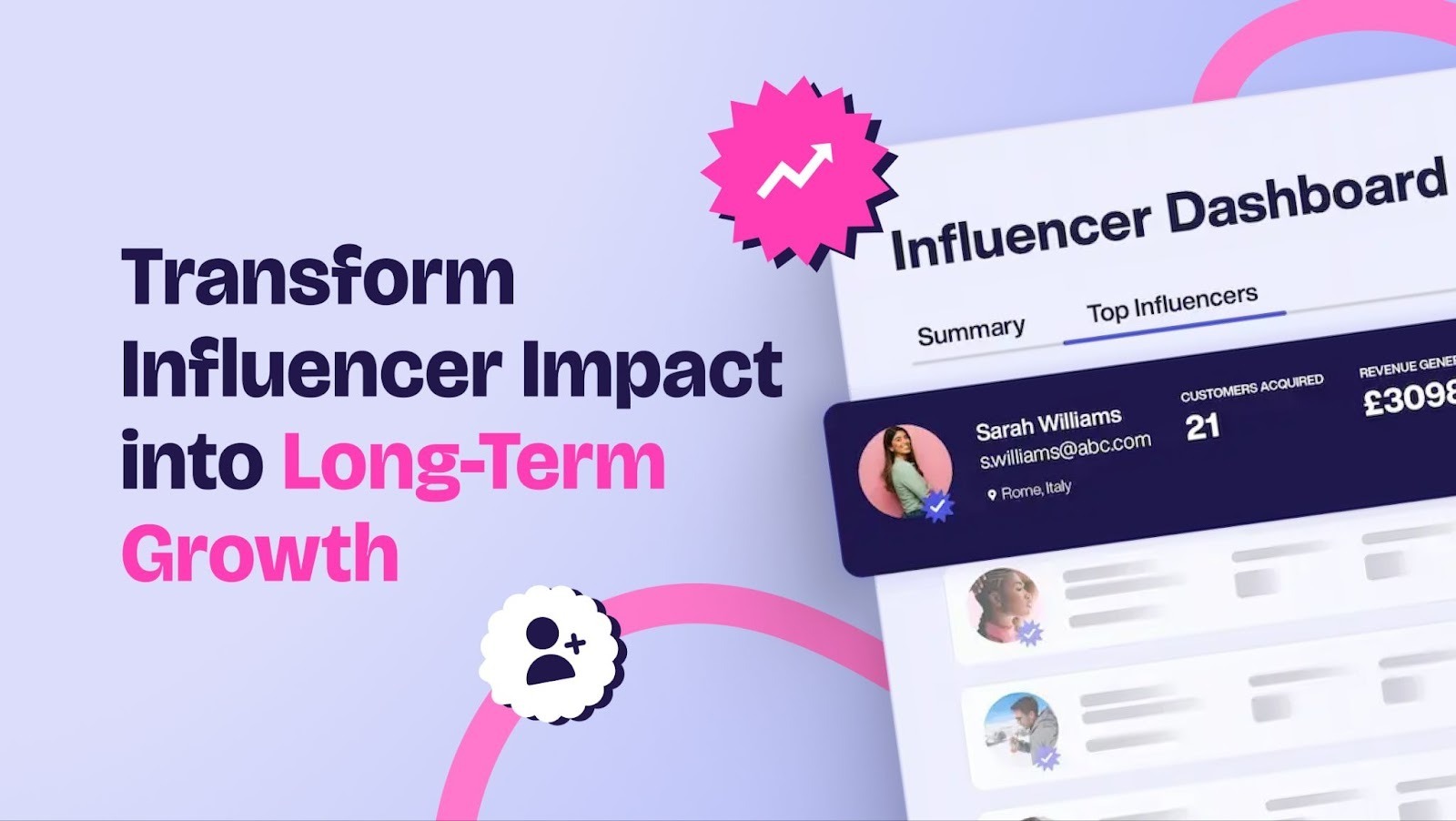
In summary, influencer marketing can be a powerful tool for reducing CAC, but only when brands focus on long-term value instead of one-off campaigns. Influencer marketing KPIs should go beyond basic metrics like reach and engagement — they need to measure customer retention, LTV, and referral-driven growth. By shifting to advocacy-led strategies, brands can turn influencers into repeat advocates, generating compounding value that lowers CAC over time.
Mention Me is great for this, helping Shopify Plus brands connect influencer marketing benefits to sustainable growth by harnessing first-party data and driving organic, high-value acquisition. Instead of resetting with every new campaign, you can build an ongoing, self-sustaining growth engine that keeps delivering results.
Ready to make your influencer marketing work harder for you? Let’s turn influence into owned advocacy.
FAQ: Influencer Marketing Tools for Shopify Plus
How to measure influencer marketing success?
You should measure success through long-term customer value (LTV), repeat purchases, and referrals rather than short-term metrics like reach or impressions.
Which influencer marketing tool is most effective?
The most effective tools are those that connect influencer activity to owned customer data, enabling long-term tracking of repeat buyers and advocacy-driven growth.
How do you measure influencer CAC?
Measure CAC by tracking the cost of acquiring repeat, high-value customers who were influenced by creators, rather than just initial conversions.
Can influencer marketing really reduce CAC?
Yes, when done right. Focusing on owned advocacy and first-party data allows you to target customers who stay loyal, refer others, and increase LTV, all while reducing blended CAC.
Are influencer tools being replaced by advocacy platforms?
Not entirely, but advocacy platforms are becoming more important. They turn influencers into repeat advocates, creating sustainable growth and lowering customer acquisition costs over time.
Dan Barraclough
Read more >
Share:





Share:
.png)
.png)
.png)