10 Best Referral Marketing Software for Growth and CRM Teams in 2026
By Dan Barraclough —
Quick Summary
Mention Me is the best referral marketing software for mid-market and enterprise brands, using data from 500+ brands to show exactly where to cut your CAC. Need enterprise-grade compliance for a regulated industry? Buyapowa is built for it. On a budget and want something live on Shopify today? Smile.io is the fastest route. Here are our top 3 picks:
Tool
Best For
Mention Me
Mid-market to enterprise brands wanting benchmarked data on where to cut CAC
Buyapowa
Regulated industries like telecom, insurance, and financial services needing compliance-first referral
Smile.io
Small to mid-market Shopify brands wanting fast, low-cost, self-serve setup
MentionMe Makes Referral Marketing Easy
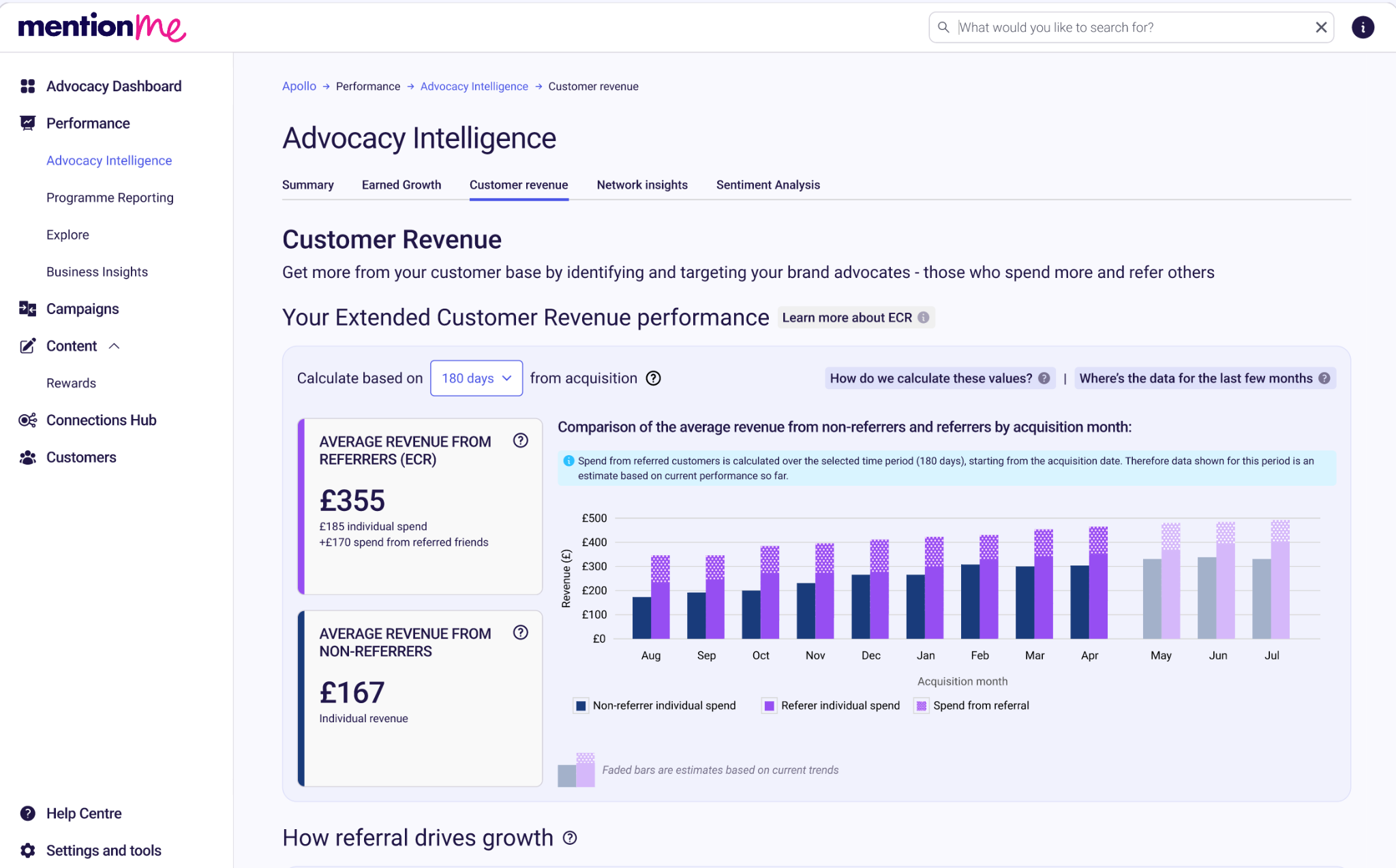
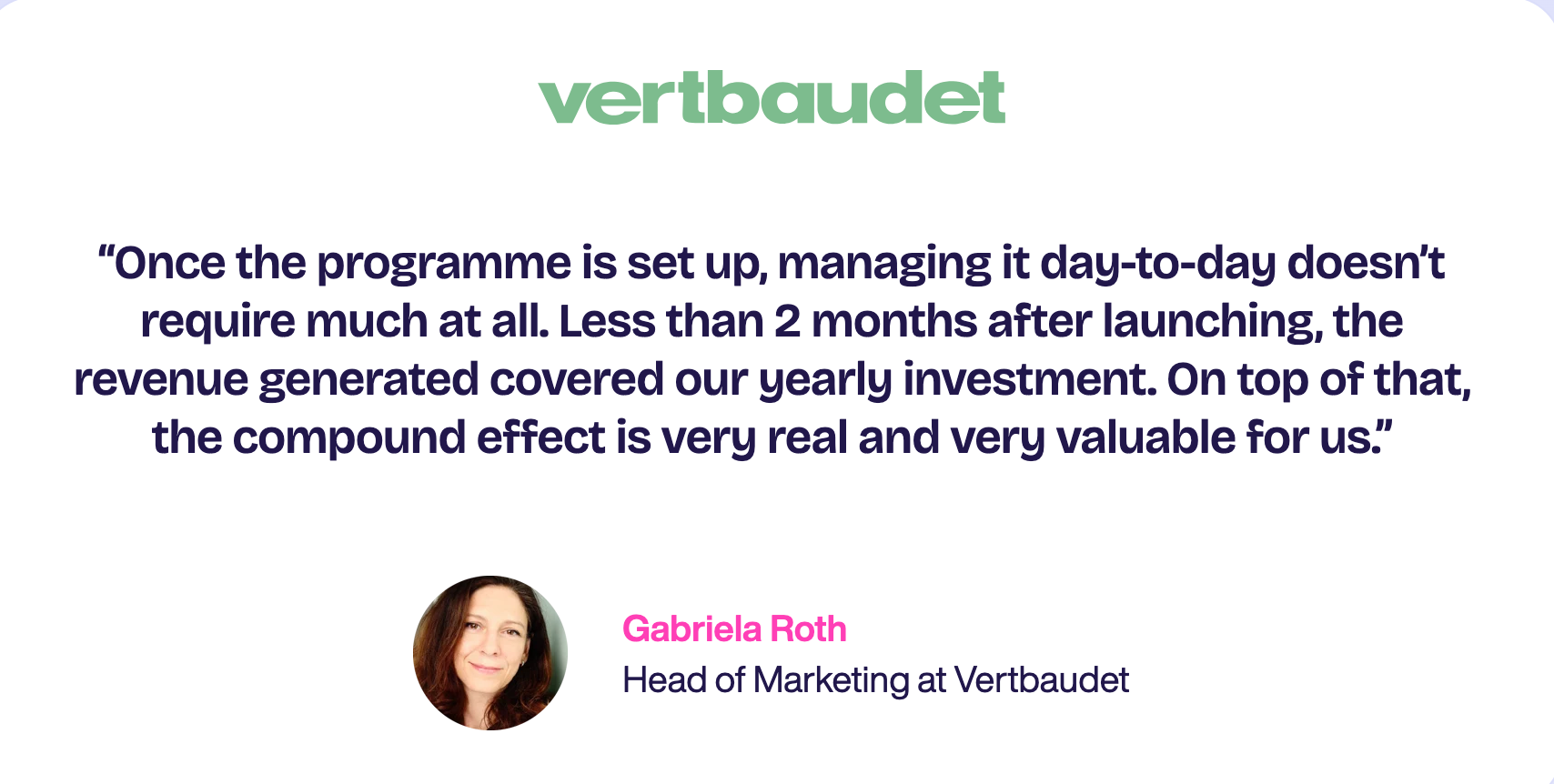
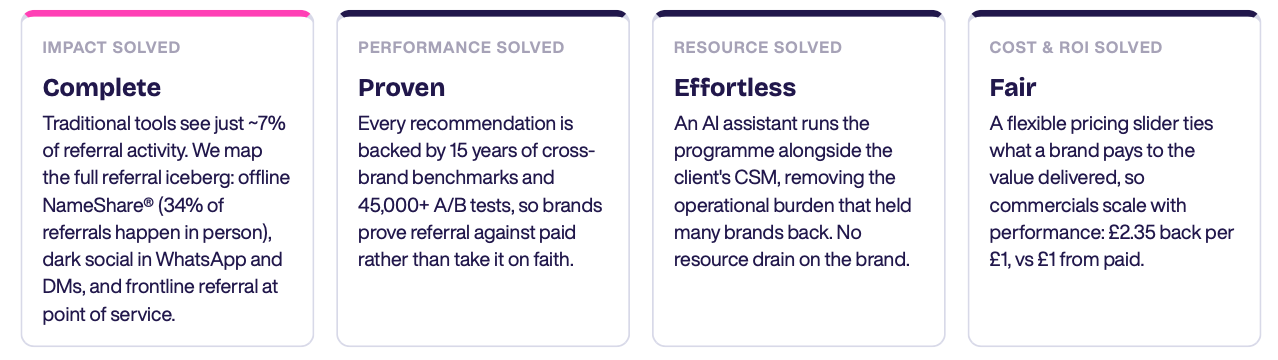
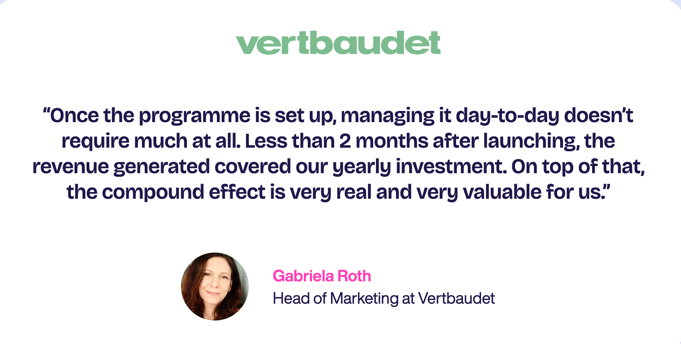
As the referral platform behind over a decade of data from 500+ brands, Mention Me knows what a competitive CAC actually looks like. Puma, for example, sees 6x ROI from its referral programme, with 10% of referrals converting into new customers. Clients running referral programs through Mention Me typically see 10 to 15% of new customers acquired via referral, with CAC running 30 to 50% lower than paid channels.
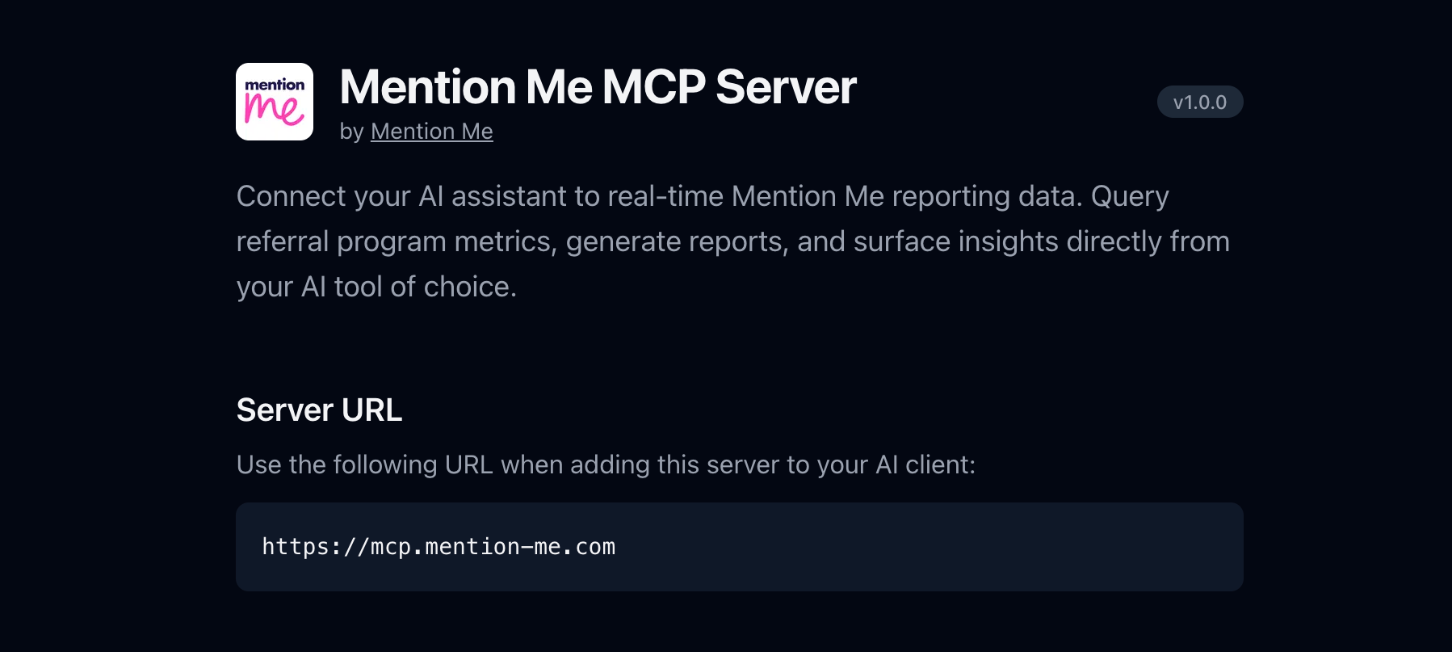
Checking performance works the same way. Instead of logging into a dashboard, senior marketers can ask Claude or another AI assistant, "How did referral revenue trend this year versus last?", and get the answer in seconds. It's read-only and limited to aggregate reporting data. Nothing about the programme changes, just how easy it is to check.
That benchmark data is what shaped this list. The comparison below covers each platform's key differentiator, integrations, and pricing, so you're not left guessing at what "good" looks like.
The 10 Best Referral Marketing Software Platforms
Tool
Ideal Company Size
Key Differentiator
Core Integrations
Pricing
Mention Me
Mid-market to enterprise (£50M–£250M+ revenue)
Referral intelligence plus benchmarking against 500+ brands
Klaviyo, dotdigital, major CRMs
Custom
Extole
Enterprise retail, banking, telecom
Event-tracking architecture linking first-party data to referrals
Shopify, Braze, Klaviyo, CDPs
Custom quote only
Referral Rock
B2B, professional services, non-ecommerce brands
Serves B2B and service businesses outside the Shopify-native world
Salesforce, HubSpot, Shopify
Free (limited), $200/month + $400 setup fee
Talkable
Mid-market to enterprise ecommerce
Decade of fraud data with $110M+ prevented
Shopify, Salesforce, Klaviyo, Segment
Custom quote, plus a one-month implementation fee
Yotpo
Mid-market to enterprise already using Yotpo Reviews
Referral bundled with reviews and loyalty in one vendor
Shopify, BigCommerce, Klaviyo
Free (no referral), $199–$799/month
LoyaltyLion
Shopify and Shopify Plus DTC brands
Referral as one point-earning action among several
Shopify POS, Klaviyo, 50+ tools
From ~$159/month
Impact.com
Large enterprise
Partnership platform unifying affiliate, influencer, and referral partner types
Salesforce, Shopify, WooCommerce, Adobe Commerce
$30–$500+/month, custom Enterprise, plus 2.5% commission tax
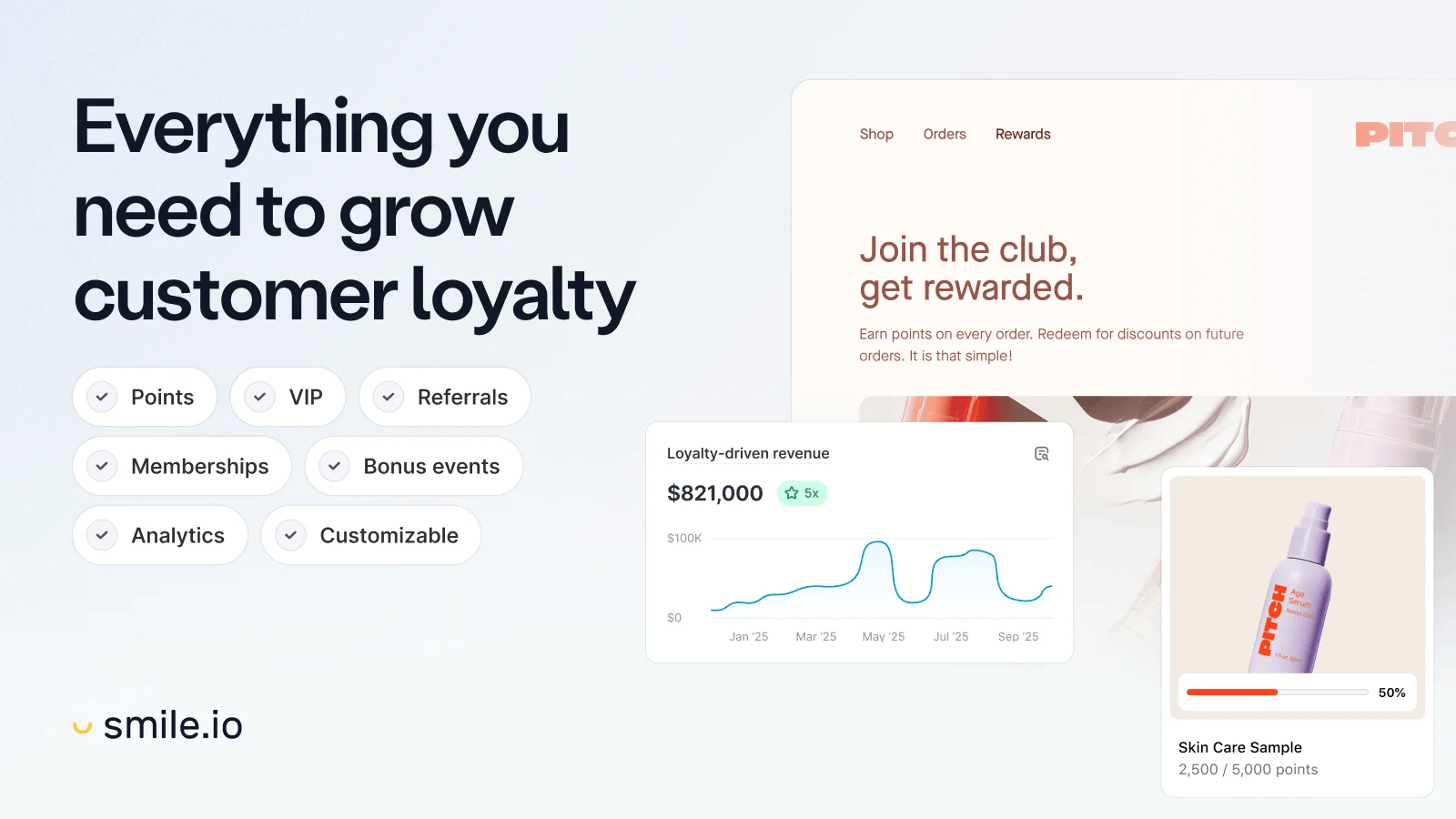
Smile.io
Small to mid-market Shopify
Free tier with referral built in
Shopify, Klaviyo, Gorgias
Free, $15–$999/month
Annex Cloud
Large enterprise
Deepest ERP and CRM integration (SAP, Oracle, Salesforce)
125+ enterprise connectors
$50K–$250K+/year
Buyapowa
Enterprise (regulated industries)
Compliance-first design for cooling-off periods and eligibility rules
Salesforce, HubSpot, SAP, Workday
License-based, zero-commission, custom quote
1. Mention Me: The Referral Intelligence Platform for Mid-Market and Enterprise Brands
Mid-market and enterprise brands running referral programs hit the same gaps with a standard refer-a-friend widget:
No way to know if the program is actually competitive
No way to capture word-of-mouth without a discount code attached
No way to pass procurement without workarounds
No way to check performance without logging into another dashboard
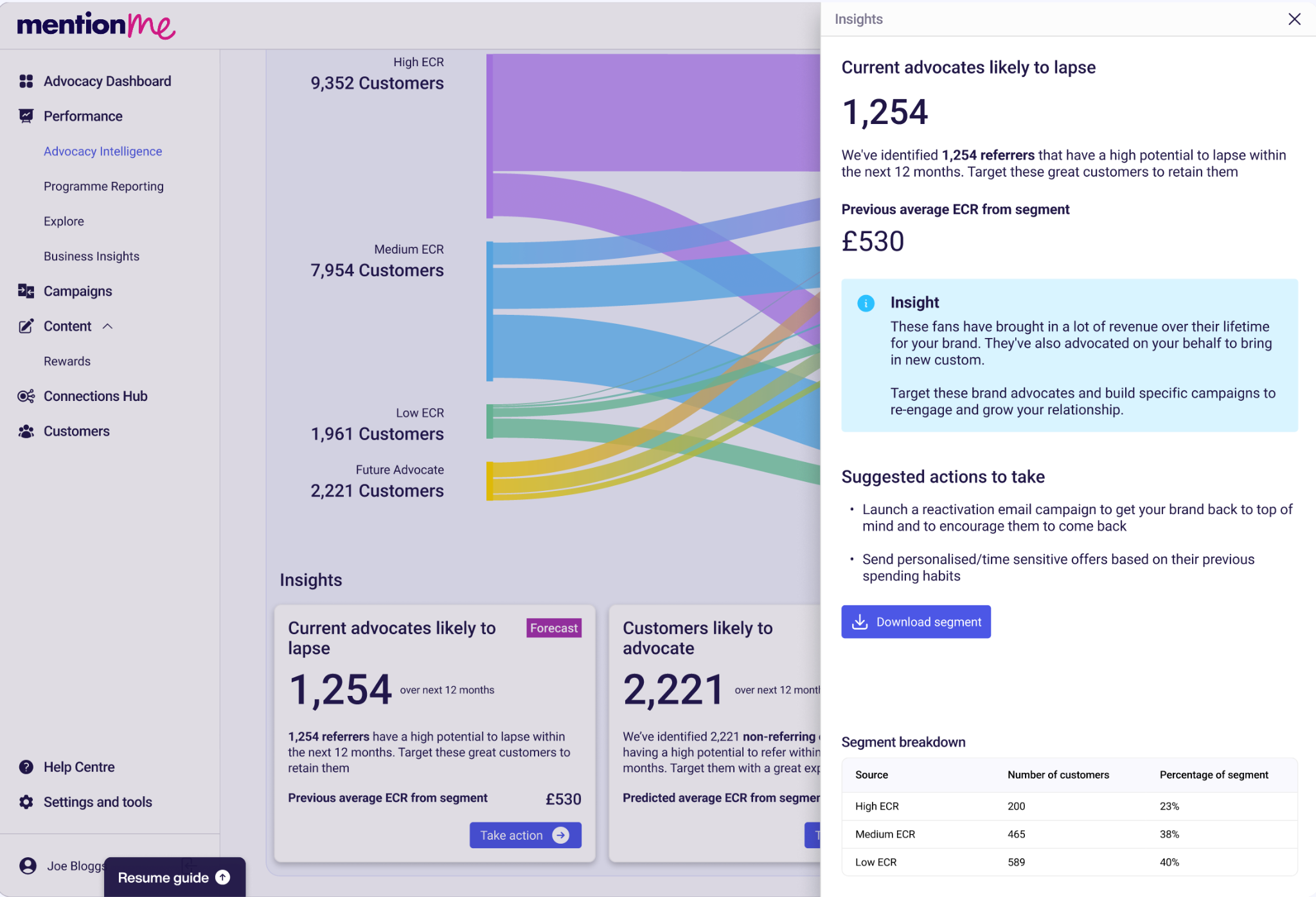
Mention Me closes all four gaps with a referral intelligence layer benchmarked against a network of over 500 brands, so every client program is measured against real data instead of guesswork. Referred customers also carry 16%+ higher lifetime value than non-referred customers, showing that referral quality holds up well beyond the first purchase. Compliance and multi-brand support are built in for enterprise procurement
Pros:
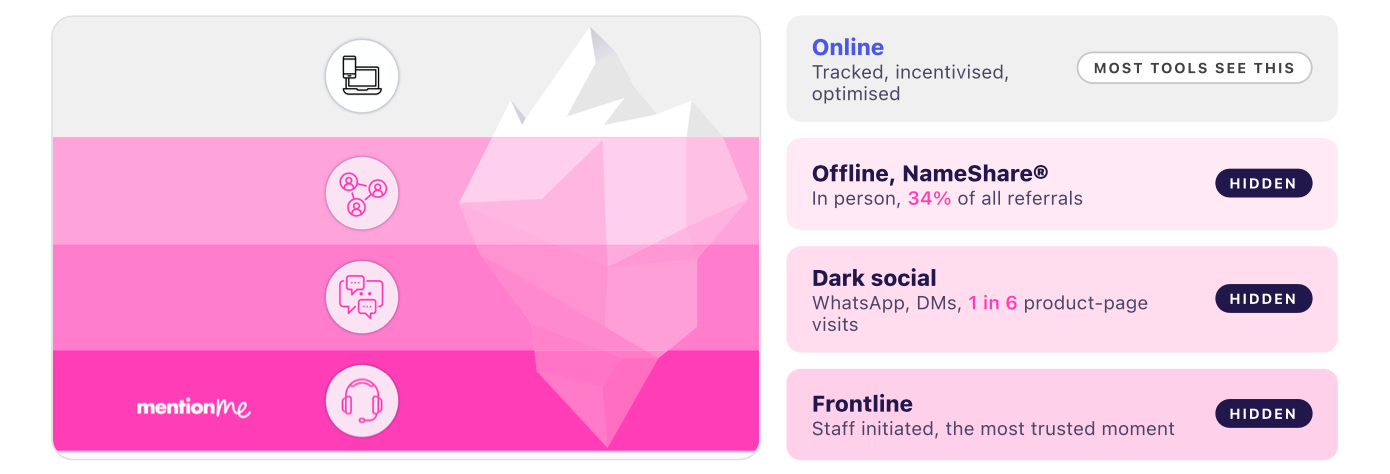
Name Share mechanic captures unincentivized, organic referrals most tools miss
Gaming and velocity controls flag suspicious activity (shared IPs, duplicate cookies) so support teams can decline fraud fast
Clients typically cut CAC by 30 to 50% compared to paid channels
45,000+ A/B tests run across 4,000+ programmes, boosting performance up to 6x
Cons:
Not a fit for small or early-stage brands without a mid-market-scale referral budget
Pricing isn't published; brands need a conversation with sales to get a number
Best for:
Mid-market to enterprise brands (£50M–£250M+ revenue) that want a referral program measured against real performance data.
Pricing:
Custom.
2. Extole
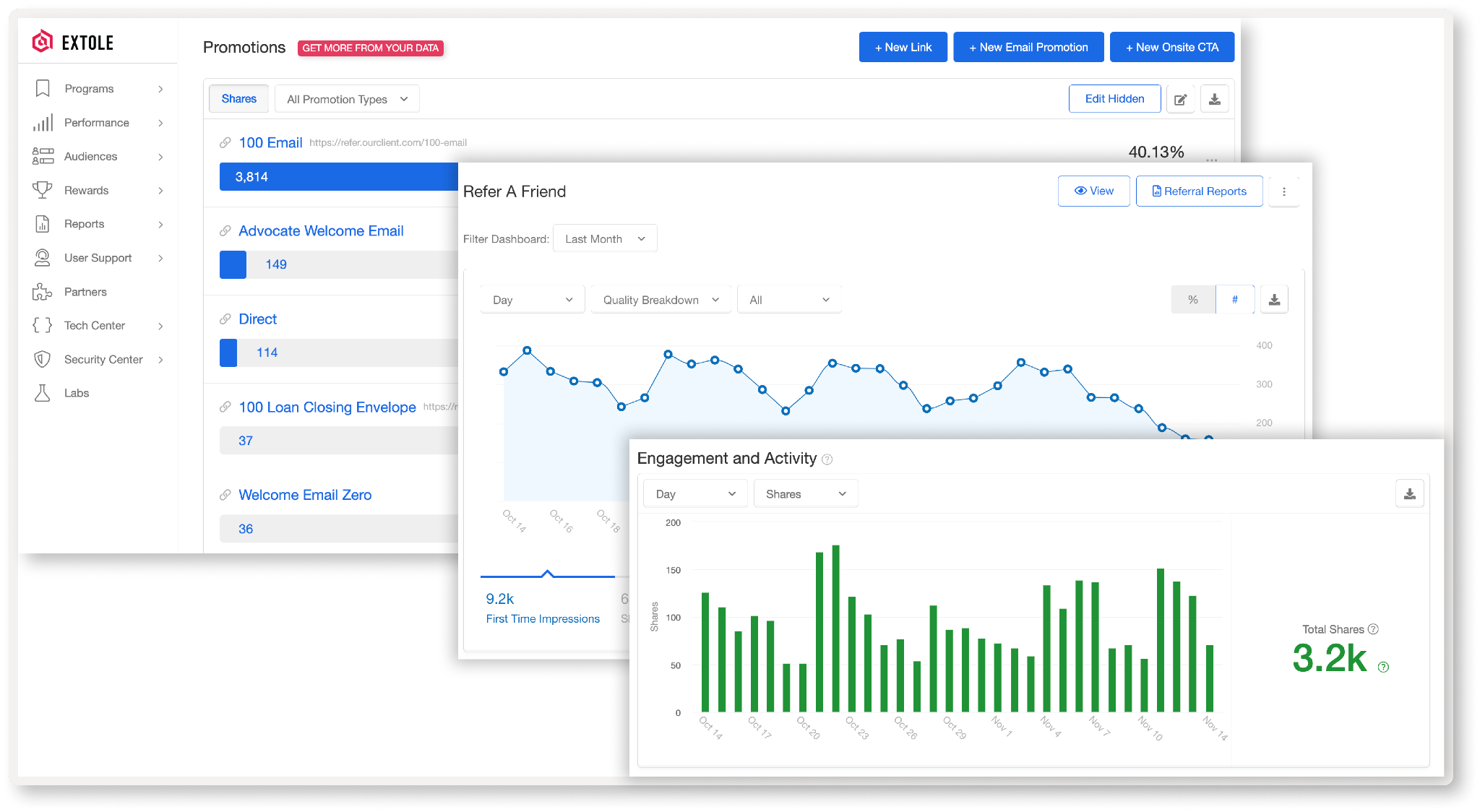
Extole is an enterprise referral platform for retail, financial services, and telecom brands that need referral activity connected to first-party customer data. Teams with data already in a CRM or CDP can fold referral directly into their existing customer view instead of tracking it separately.
Pros:
Event-tracking ties referral activity to customer behavior data
Low-code Flow Builder speeds up launches without heavy dev work
Strong reputation for consultative account management
Cons:
Built for large programs; smaller brands may find it too much platform
Some users report CRM integration gaps
Best for:
Enterprise retail, financial services, and telecom brands that want referral tied to broader customer data.
Pricing:
Custom quote only.
3. Referral Rock
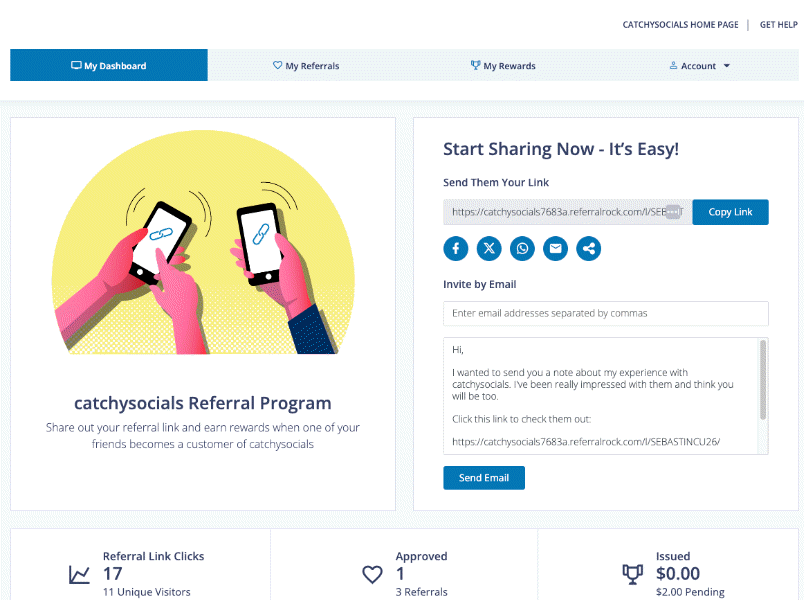
Referral Rock is a standalone referral, affiliate, and partner platform built for professional services, B2B, and non-Shopify brands. Most referral tools track a single checkout moment, a poor fit for longer B2B sales cycles. Referral Rock's CRM-native sync with HubSpot and Salesforce closes that gap, tracking referrals through lifecycle and pipeline stages instead.
Pros:
Native CRM sync with HubSpot and Salesforce
Flexible reward structures, including cash, credits, and gift cards
Free tier available for testing
Cons:
Interface feels dated compared to newer platforms
Built for lifecycle stages, better suited to B2B sales cycles than checkout-based ecommerce
Best for:
B2B, professional services, and other non-ecommerce brands with longer sales cycles.
Pricing:
Free tier (limited); Professional from $200/month plus $400 setup.
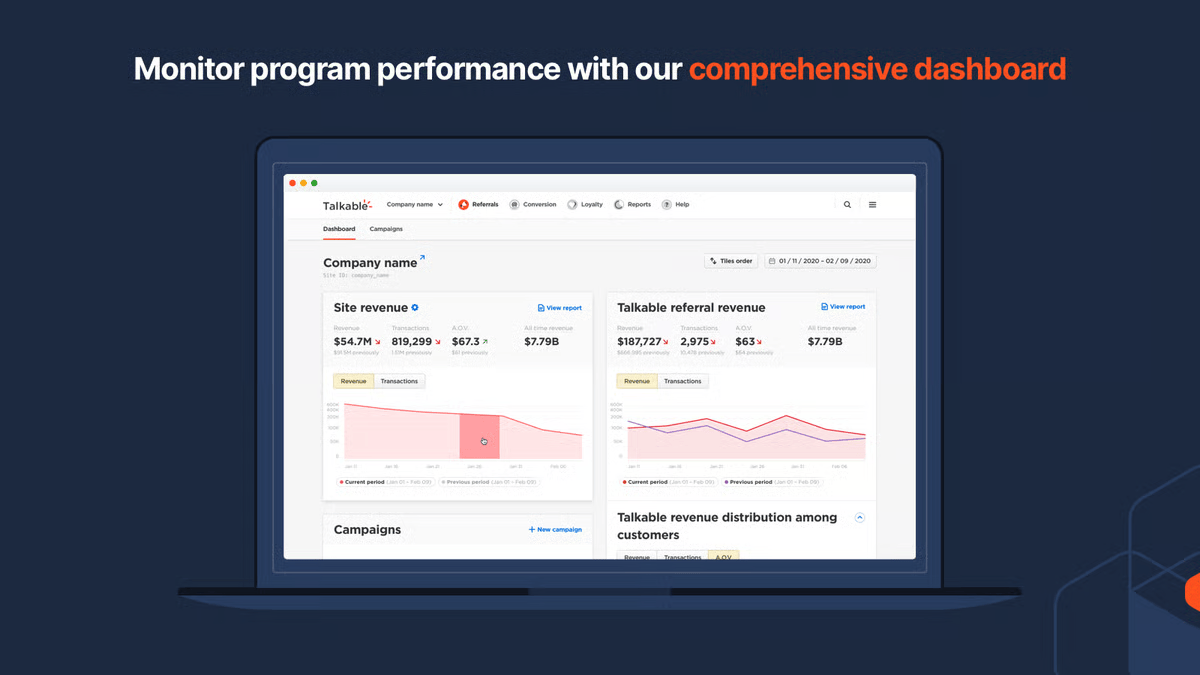
4. Talkable
Talkable positions itself as infrastructure for referral revenue, built for mid-market and enterprise ecommerce brands that want ongoing optimisation, not a set-and-forget program. Fraud tends to surface as a program scales, self-referrals, coupon stacking, duplicate accounts, and Talkable's detection has had over a decade to mature against that pattern.
Pros:
Over a decade of fraud management data, with $110M+ prevented for clients
Strong A/B testing suite covering offers, segments, and placements
Dedicated CSMs who actively suggest tests and campaigns
Cons:
Not built for small or early-stage brands still testing product-market fit
Pricing is custom, plus an implementation fee on top of monthly cost
Best for:
Mid-market and enterprise ecommerce brands wanting referral as a performance channel with heavy testing and fraud control.
Pricing:
Custom quote; flat monthly fee plus one-month implementation fee.
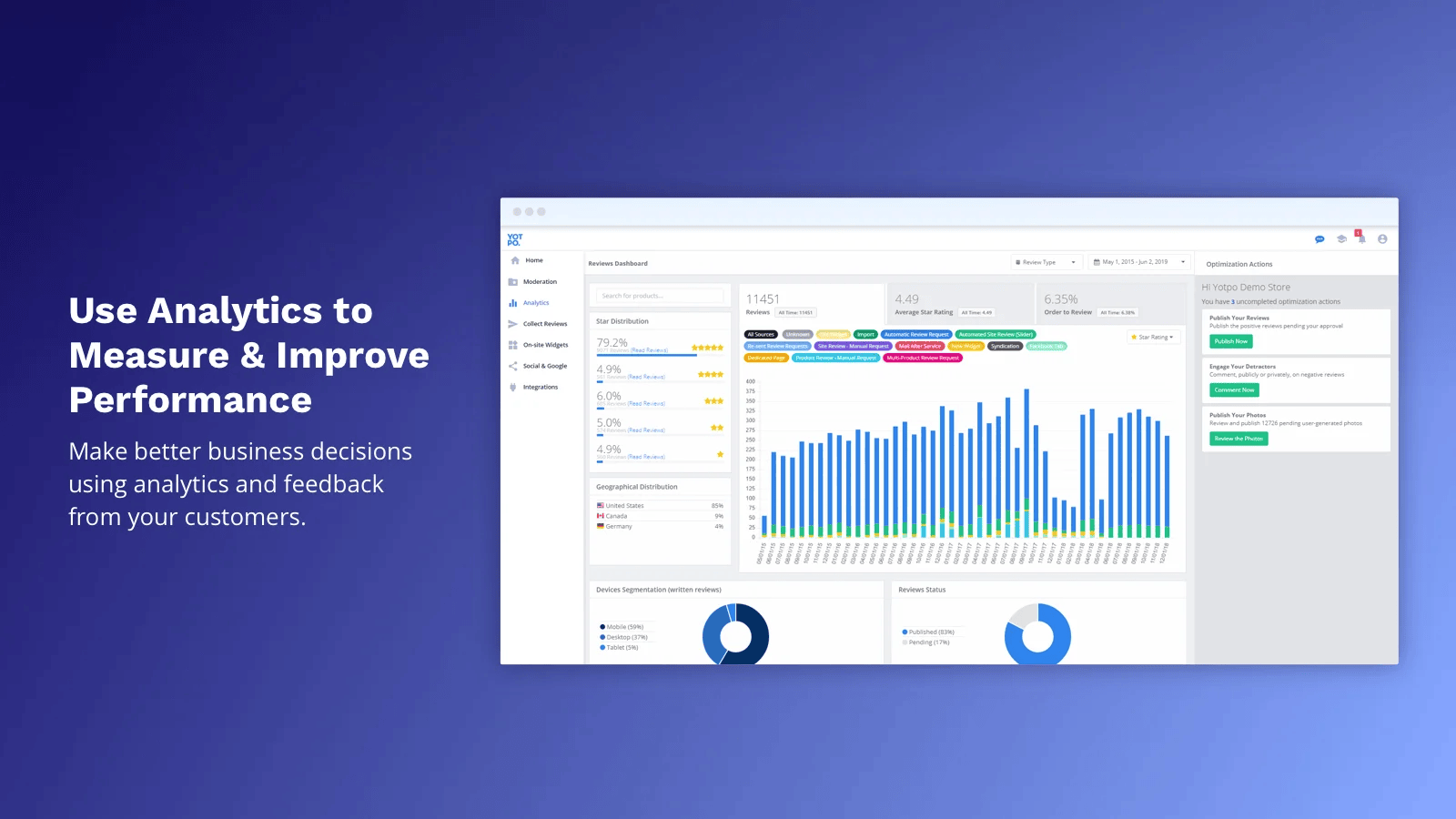
5. Yotpo
Yotpo bundles referral inside its broader Loyalty & Referrals product, built for brands already using Yotpo Reviews that want retention tools under one vendor. Referral, points, VIP tiers, and reviews sit in one connected system, so a customer's review history can shape their loyalty tier, and that tier can shape their referral offer, all without exporting data between tools.
Pros:
20+ pre-built earning campaigns speed up setup
Native Shopify checkout integration for redemption
Customer data flows across reviews, loyalty, and referral without manual exports
Cons:
Pricing stacks quickly once Reviews and Loyalty are added
Priced around the full suite, so referral alone costs more than a standalone tool
Best for:
Brands already using Yotpo for reviews or SMS that want referral in the same platform.
Pricing:
Free (no referral), Pro $199/month, Premium $799/month, custom Enterprise.
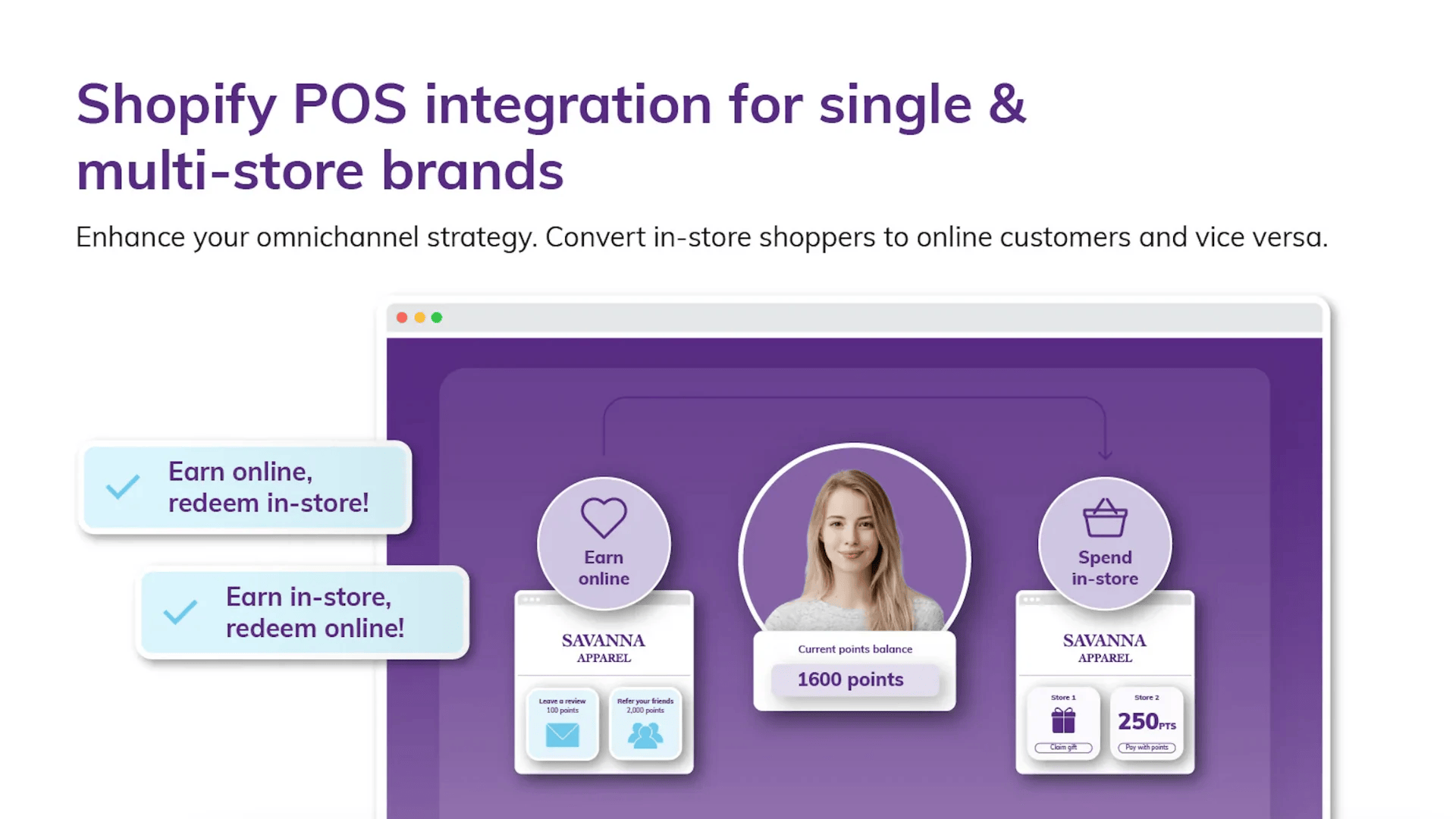
6. LoyaltyLion
LoyaltyLion is a loyalty-first platform for Shopify and Shopify Plus brands where customers earn points through referral, reviews, purchases, and social engagement. Its predictive analytics track retention, ROI, and referral together, so a brand can compare a referred customer's lifetime value against one who joined through a purchase or review.
Pros:
Referral links come with built-in fraud protection
Predictive analytics cover retention, ROI, and referral performance together
Strong AI-assisted campaign recommendations on higher plans
Cons:
Referral is one of several earning mechanics alongside points, reviews, and purchases.
Custom earn rules and API access are separate add-ons, often around $1,000/month each
Best for:
Shopify and Shopify Plus brands that want referral folded into a broader loyalty strategy.
Pricing:
From ~$159/month, scaling with order volume; custom features priced separately.
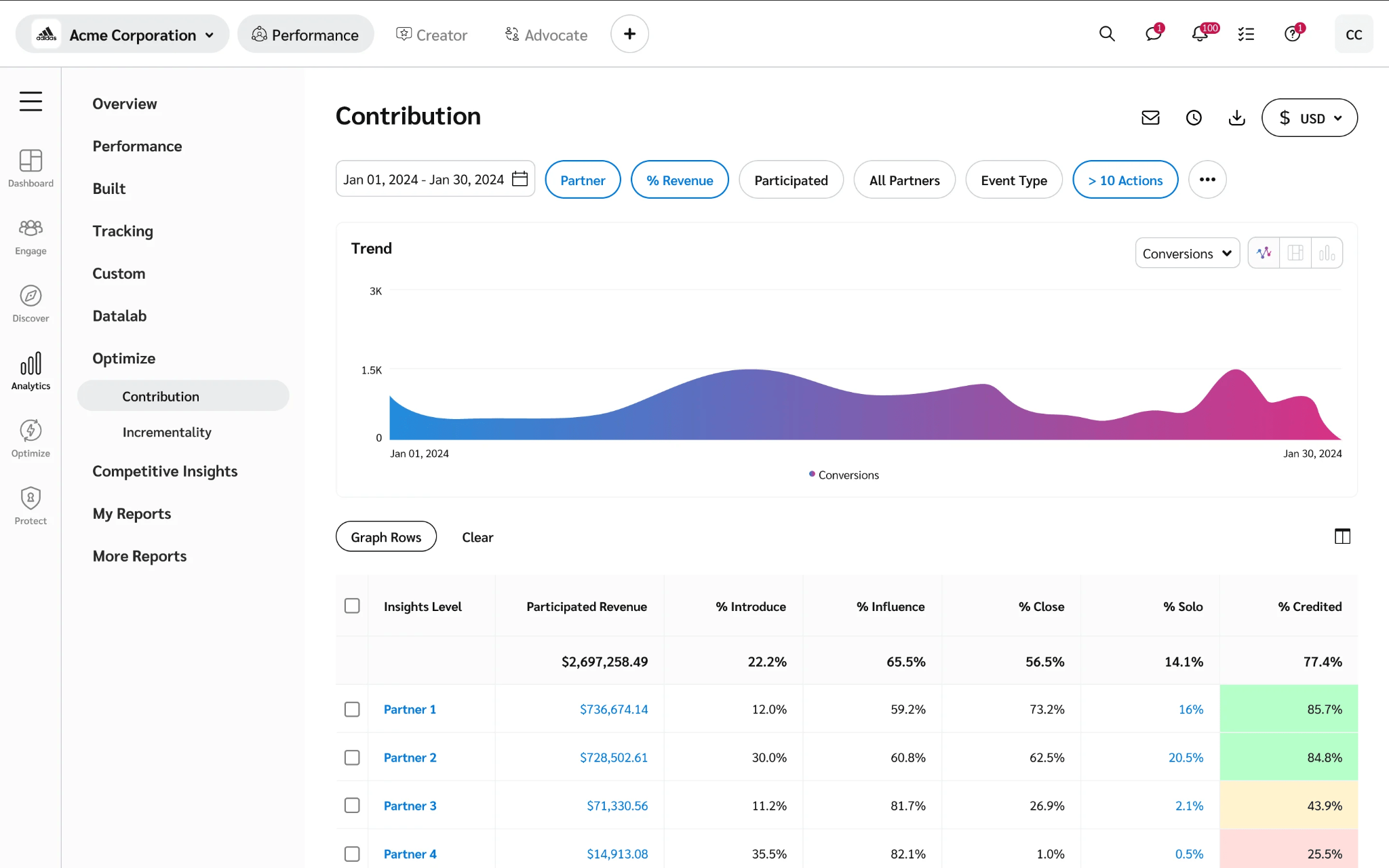
7. Impact.com
Impact.com is a partnership management platform that runs affiliate, influencer, and referral programs together in one dashboard. It's built for brands managing partnerships at a scale beyond a single-purpose referral tool.
Pros:
Unifies affiliate, influencer, and referral partner types in one platform
Access to a marketplace of 330,000+ vetted partners for recruitment
Strong fraud detection and compliance monitoring across all partner types
Cons:
Referral shares the platform with affiliate and influencer programs rather than being Impact.com's primary specialty.
Enterprise deployment can take 3 to 6 months
Best for:
Enterprise brands running affiliate, influencer, and referral partnerships together in one platform.
Pricing:
Starter from $30/month, Pro from ~$500/month, custom Enterprise, plus a 2.5% network tax on commissions.
8. Smile.io
Smile.io is a low-cost, self-serve loyalty platform for small to mid-market Shopify brands, with referral built into every plan, including free. A store can test whether referral drives new customers before committing to a paid tier, though the same threshold that keeps the plan free also caps growth before extra costs apply.
Pros:
Genuinely free plan for stores under 200 monthly orders
Fast setup with no developer required
Referral, points, and VIP tiers included from Standard up
Cons:
Referral customization is more limited than dedicated referral platforms
API access and advanced reporting locked behind the $999/month Plus plan
Best for:
Small to mid-market Shopify brands that want referral bundled into a loyalty program without a developer or a sales call.
Pricing:
Free (200 orders/mo), Essential $15, Standard $79, Growth $199, Plus $999/month.
9. Annex Cloud
Annex Cloud is an enterprise loyalty and referral platform for large organisations that need referral wired directly into SAP, Oracle, Salesforce, or Microsoft Dynamics. This depth of integration makes the platform genuinely enterprise-grade. It's also why implementation takes real time, connecting referral data to systems as complex as SAP or Oracle isn't a same-day setup.
Pros:
125+ pre-built enterprise connectors, the deepest ERP and CRM integration in this category
Referral, loyalty, reviews, and UGC combined in one platform
Marketer-independent campaign launches without heavy IT involvement
Cons:
Pricing sits among the highest on this list, typically $50K to $250K+ per year.
Implementation can take 8 to 16 weeks with heavy professional-services dependency
Best for:
Large enterprises that need referral integrated directly into existing ERP and CRM systems.
Pricing:
Custom annual contract, typically $50,000 to $250,000+ per year.
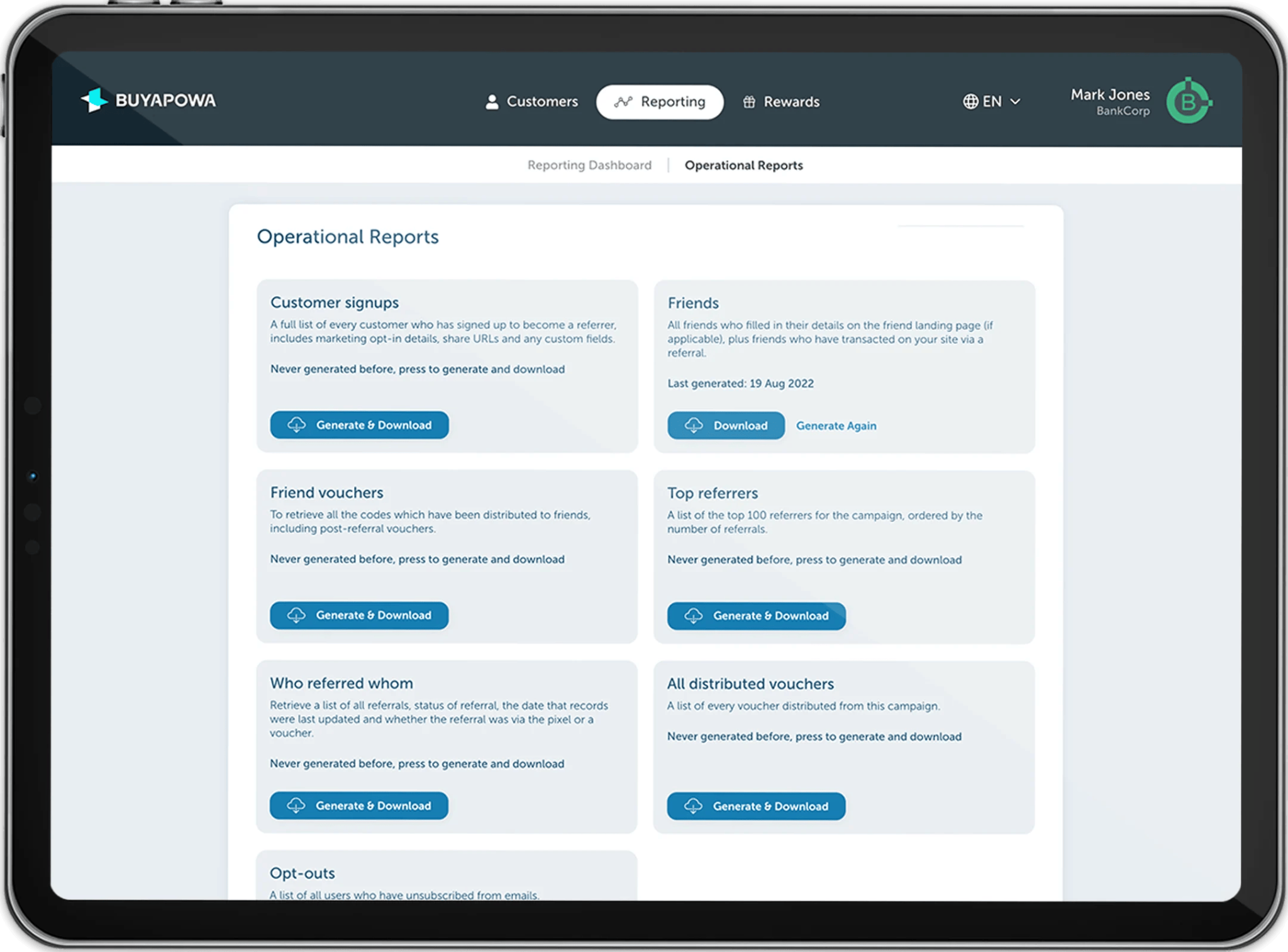
10. Buyapowa
Buyapowa is built specifically for regulated, high-consideration industries, telecom, energy, insurance, financial services, and gaming, where compliance, eligibility rules, and cooling-off periods shape every referral. The platform charges a license fee instead of the commission-based pricing most referral tools use, so cost doesn't climb every time the program succeeds.
Pros:
Purpose-built for regulated markets where most referral tools aren't designed to operate
License-based, zero-commission pricing with no cap on incentivized acquisitions
Strong fraud prevention, including self-referral detection and IP filtering
Cons:
Less suited to standard ecommerce or DTC use cases outside regulated sectors
Funnel-comparison reporting is less developed than on more ecommerce-focused platforms
Best for:
Regulated industries like telecom, insurance, financial services, and energy that need compliance-first referral.
Pricing:
Custom annual license fee based on brands, products, and territories involved.
How to Choose the Right Referral Marketing Software
Start with what's actually driving the decision:
CAC reduction is the priority: Prioritize platforms with benchmarking data, like Mention Me. Knowing your share rate is one thing; knowing if it's competitive against 500 similar brands is what makes a program defensible.
You're already running Shopify loyalty: A bundled option like Yotpo or LoyaltyLion cuts tool sprawl, though referral stays secondary rather than specialised.
Bandwidth for testing is limited: A dedicated CSM matters more than price. Self-serve tools like Smile.io launch fast but leave optimisation to you.
Fraud is a known risk: High AOV, subscriptions, or coupon abuse warrant checking fraud detection depth before you shortlist anything. Talkable brings over a decade of fraud data, with $110M+ prevented for clients.
You're in a regulated industry: Telecom, energy, insurance, or financial services all carry compliance needs standard ecommerce tools weren't built for. Buyapowa is purpose-built for that.
Turn Word-of-Mouth Into a Measurable Growth Channel with Mention Me
Every platform on this list can get a referral link in front of a customer. Most stop there, a link goes out, a discount gets redeemed, and the program grows or it doesn't, with no real way to know why.
Mention Me closes that gap between live and working. Benchmarking against 500+ brands turns a raw share rate into an answer: competitive, or not. A dedicated team runs the testing most brands don't have bandwidth for. And Name Share captures referrals that never touch a link or discount code, the word-of-mouth that was always happening but never counted.
When a CEO, a CFO, or the board asks how the programme is doing, the answer is one question away in whatever AI tool the team already uses. No login. No export. No wait.
For a mid-market or enterprise brand that wants that level of visibility into a channel the board actually trusts,get in touch for a benchmarking review of what your program could be doing differently.
Frequently Asked Questions
1. What is the difference between a dedicated referral platform and a loyalty platform with referral built in?
A dedicated referral platform treats referral as the core product, share tracking, attribution, and reward payouts. A loyalty platform is built around retention, with referral as one of several ways customers earn points alongside purchases and reviews. Both can drive new customer acquisition. The practical difference is depth: whether referral gets its own optimisation, or shares infrastructure with a broader points program.
2. How is referral marketing software typically priced?
Pricing generally follows a flat monthly fee, a fee that scales with order volume, or a custom annual contract. Self-serve Shopify apps commonly use the first two, starting free and scaling to under $1,000/month as volume grows. Enterprise platforms use custom contracts instead, reflecting dedicated support, benchmarking, and compliance that don't fit a standard pricing page, typically starting in the tens of thousands per year.
3. What is the difference between an incentivized and unincentivized referral?
An incentivized referral rewards a customer, and often the friend they refer, with a discount, credit, or gift card. An unincentivized referral happens with no financial reward, a customer simply telling a friend about a brand by name, with nothing tracked or paid out. Most referral software only captures incentivized referrals, since they route through a trackable link or code. Unincentivized referral needs a different mechanism entirely, since there's no link to trace back.
4. Do referral marketing platforms integrate with email service providers like Klaviyo?
Most established referral platforms integrate with major ESPs, since referral invitations and reward notifications typically run through existing email flows. Enterprise platforms extend that integration further into CDPs, CRMs, and ERPs, connecting referral data to a company's broader customer records.
5. Does referral marketing drive incremental revenue, or just repeat purchases?
Control groups answer this, assumptions don't. Mention Me usesSmart Experiments to measure a customer's propensity to refer against a control group that never saw the referral prompt, isolating revenue referral actually drove from revenue that would've happened anyway. Skipping this step means estimating incrementality instead of measuring it.



 That benchmark data is what shaped this list. The comparison below covers each platform's key differentiator, integrations, and pricing, so you're not left guessing at what "good" looks like.