
Quick Summary
Mention Me is the best Shopify referral program app for premium DTC brands, capturing the offline referrals that leave most Shopify apps missing 1 in 6 product-page conversions. Yotpo stands out for bundling referral with reviews and loyalty, and Rivo for a commission-free entry point. Here are our top 5 picks:
|
Tool |
Key Features |
Best For |
Pricing |
|---|---|---|---|
|
Mention Me |
Name Share® captures offline and dark social referrals, backed by 500+ brand benchmarking |
Premium DTC brands ready to run referral as a primary channel |
Custom |
|
Rivo |
Native Shopify checkout and Flow integration with built-in loyalty |
Fast-growing DTC brands wanting deep Shopify integration |
Free plan, then $49 to $499/month |
|
Friendbuy |
Built-in A/B testing with white-glove onboarding |
Growth-stage DTC brands scaling referral fast |
Custom |
|
Yotpo |
Referral bundled with reviews and loyalty |
Brands wanting reviews, loyalty, and referral under one vendor |
Free tier, then $199 to $799/month |
|
ReferralCandy |
Straightforward setup with unlimited referrals |
Brands wanting a proven, standalone referral engine |
From $39/month, plus 3.5% to 10.5% commission |
Mention Me: The Best Referral Software for Shopify Sites
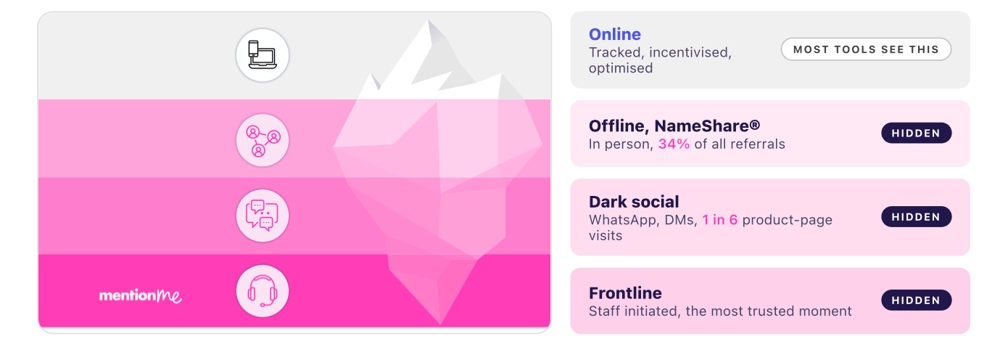
Most Shopify referral apps track one thing well: a link. That method alone captures about 7% of actual referral activity, per Mention Me's benchmark data. The rest splits into two blind spots: dark social in WhatsApp and DMs, touching 1 in 6 product-page sessions, and offline referrals that never touch a tracked link. Standard analytics logs all of it as "direct" traffic, and it never reaches a report.
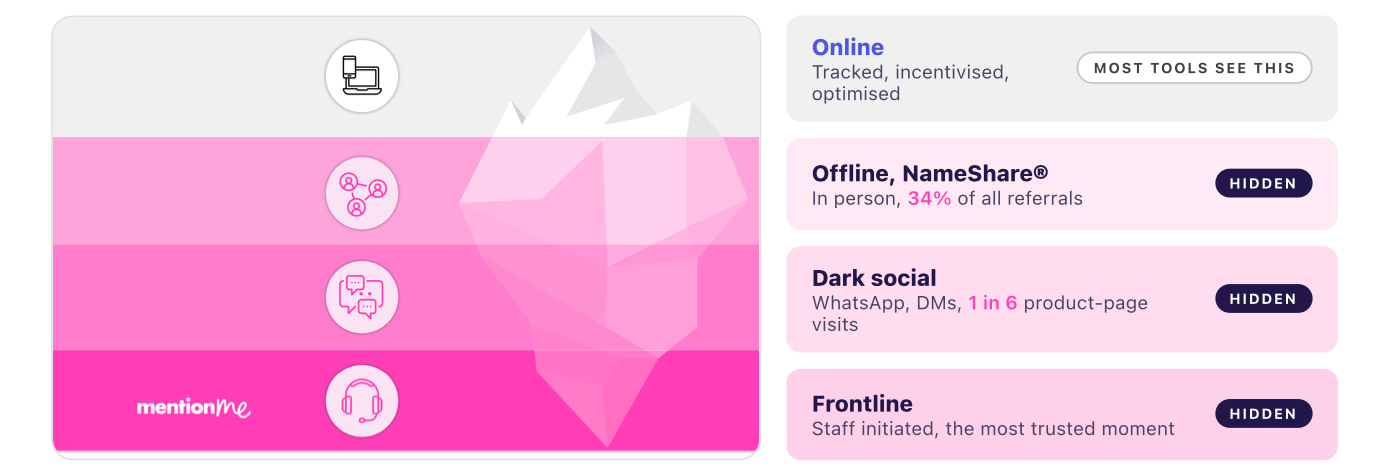 Mention Me is built to close that gap. Name Share® captures organic, unincentivized referrals when a customer shares their name at checkout instead of a discount code, something a standard refer-a-friend widget on Shopify cannot do. Roughly 34% of all referrals happen this way, a layer most platforms never see. Emma Bridgewater saw 35% of referred customers come through Name Share® within six months of launch.
This capture is backed by an intelligence layer built on over a decade of referral data across 500+ brands, so a Shopify merchant knows whether their programme is performing well. 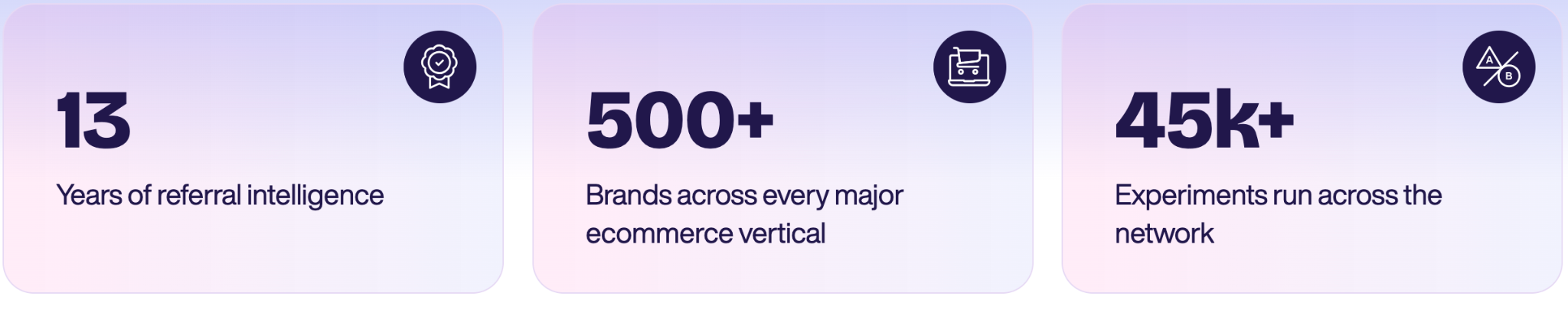 That scale of testing translates directly into results:
- 10 to 15% of new customers come through referral, with top performers hitting 20%+
- The platform returns 2.35x what brands pay for it, against 1x from paid acquisition
- Referred customers show 16%+ higher lifetime value than non-referred ones
Every client also gets a dedicated CSM and ongoing A/B testing, so the programme keeps improving after launch instead of running unattended.
The Top 5 Shopify Referral Program Apps
1. Mention Me
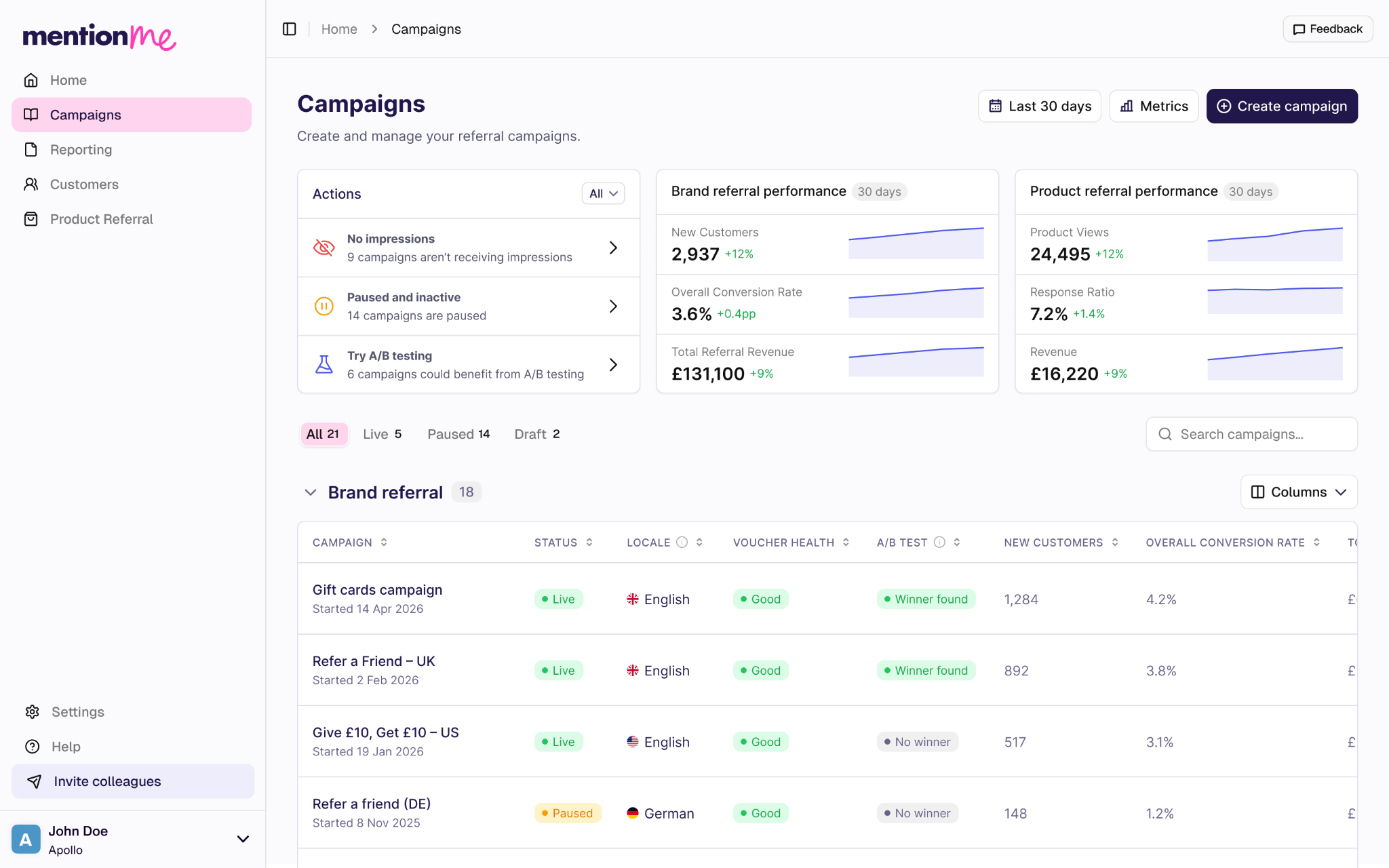
Mention Me treats referral as a core growth channel. An intelligence layer built on 45,000+ tests across 4,000+ programmes optimises timing, offer, and audience for each client, and Name Share® captures the in-person referrals a standard Shopify referral widget cannot track.
Pros:
- Captures dark social and frontline referral most Shopify apps miss
- Name Share® captures unincentivized in-person sharing at checkout
- Referred customers show 16%+ higher lifetime value than non-referred ones
- Benchmarked against 500+ brands to show what good performance looks like
- An AI assistant handles day-to-day testing and optimisation alongside a dedicated CSM
- Multi-site architecture supports groups running several storefronts or regions
Cons:
- Custom pricing, no published rate card
- Not a loyalty platform, so points or VIP tiers need a separate tool
- Best suited to brands ready to run referral as a primary channel
Best for:
Premium DTC brands that want referral treated as a primary growth channel.
Pricing:
Custom.
2. Rivo
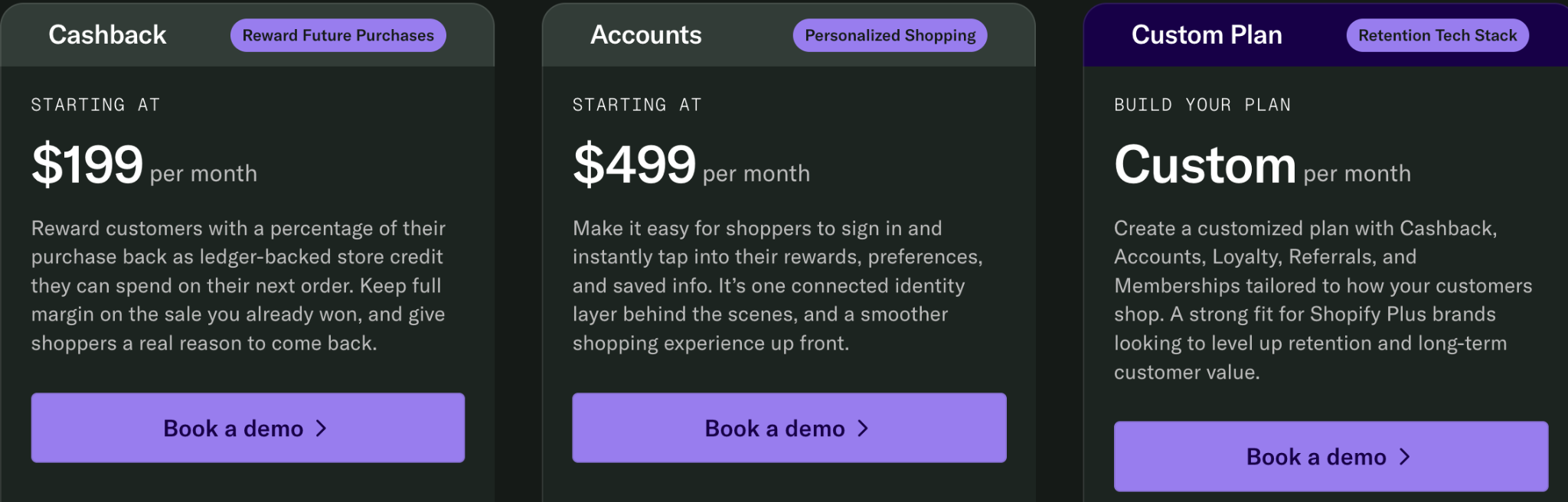
Rivo is built specifically for Shopify, which shows in how tightly it integrates with Shopify customer accounts, checkout, and Shopify Flow. Merchants can create unique referral links per customer and reward both sides with discounts or points. Campaigns can also be tied to specific products or collections.
Pros:
- Free plan available for stores under 200 monthly orders
- Combines referral with loyalty points and VIP tiers in one app
- Connects with 100+ apps including Klaviyo, Gorgias, and Recharge
- Built-in fraud and anti-gaming controls on referral campaigns
Cons:
- Limited support for multi-tier or complex reward structures
- No offline or dark social capture
- Plans are capped by monthly order volume
- No dedicated benchmarking or intelligence layer to show how a programme performs against other brands
Best for:
Fast-growing DTC brands that want referral and loyalty running natively inside Shopify.
Pricing:
Free plan, then $49 to $499+/month depending on order volume.
3. Friendbuy
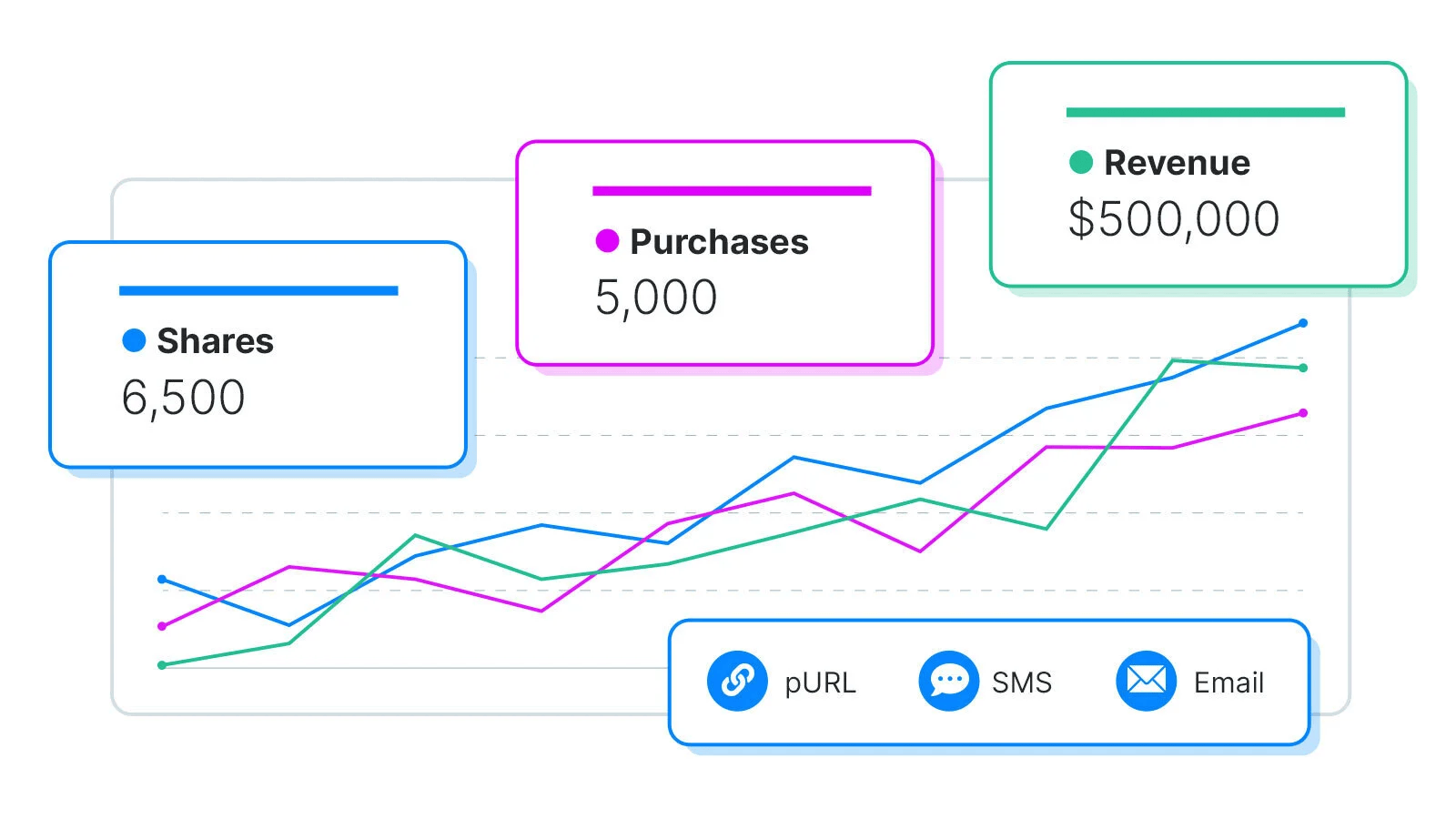 Friendbuy tracks referral through links, email, text, and social shares, with strong A/B testing built across the lifecycle. Offline referral sits outside the system, and Friendbuy's own guidance is to log it manually, using something like an in-store coupon code as proof.
Pros:
- No success fee on referred sales
- White-glove onboarding from a dedicated team
- Friendbuy reports up to 25% of new customer acquisition through referral for top performers
- Built-in A/B testing at every stage of the referral lifecycle
Cons:
- No automated capture for offline referrals
- No published pricing
- Limited on-site customisation, per user reviews
- No benchmarking or cross-brand intelligence layer to show how a programme compares
Best for:
Growth-stage DTC brands scaling referral fast and wanting hands-on onboarding.
Pricing:
Custom, no published rate card.
4. Yotpo
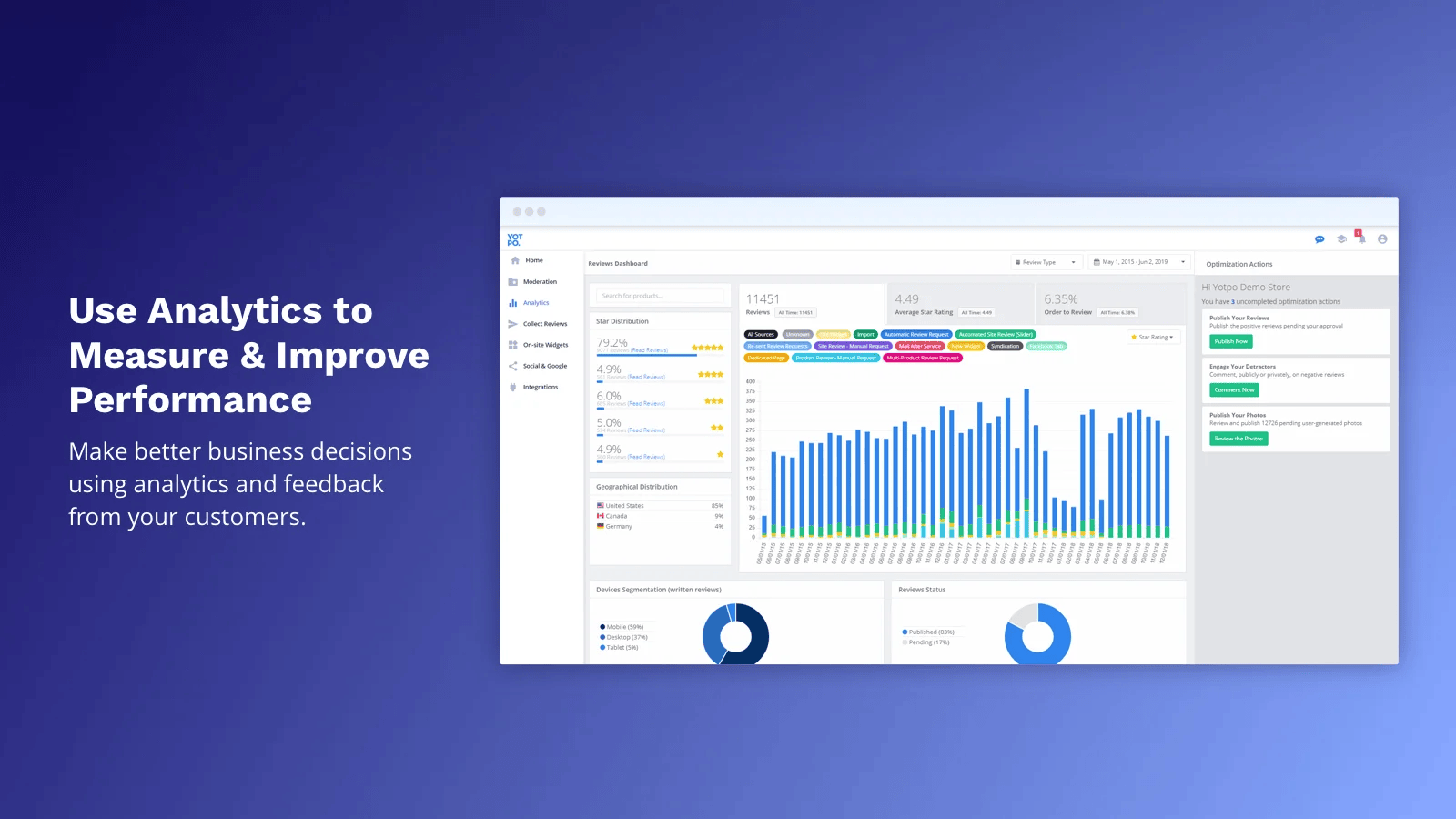
Yotpo positions its referral tool as part of a broader suite with reviews, UGC, and loyalty. That suite-first design means referral capture stays link and cookie-based, with nothing built for offline or dark social sharing.
Pros:
- Reviews and loyalty data connected in one vendor
- Native tie-in with Yotpo Reviews, so a review can trigger a loyalty action automatically
- Yotpo reports referrals drive 25% higher retention than other acquisition channels
- Visual programme builder with no developer needed to launch
Cons:
- Tracking runs on shared links and cookies only
- Referral rewards only unlock on the $199/month Pro plan
- Referral runs as an earning rule inside loyalty, not as its own dedicated engine
- No benchmarking or cross-brand comparison to show how a programme performs
Best for:
Brands already using or planning to use Yotpo Reviews that want loyalty and referral under the same vendor.
Pricing:
Free tier (no referral), Pro $199/month, Premium $799/month, Enterprise custom.
5. ReferralCandy
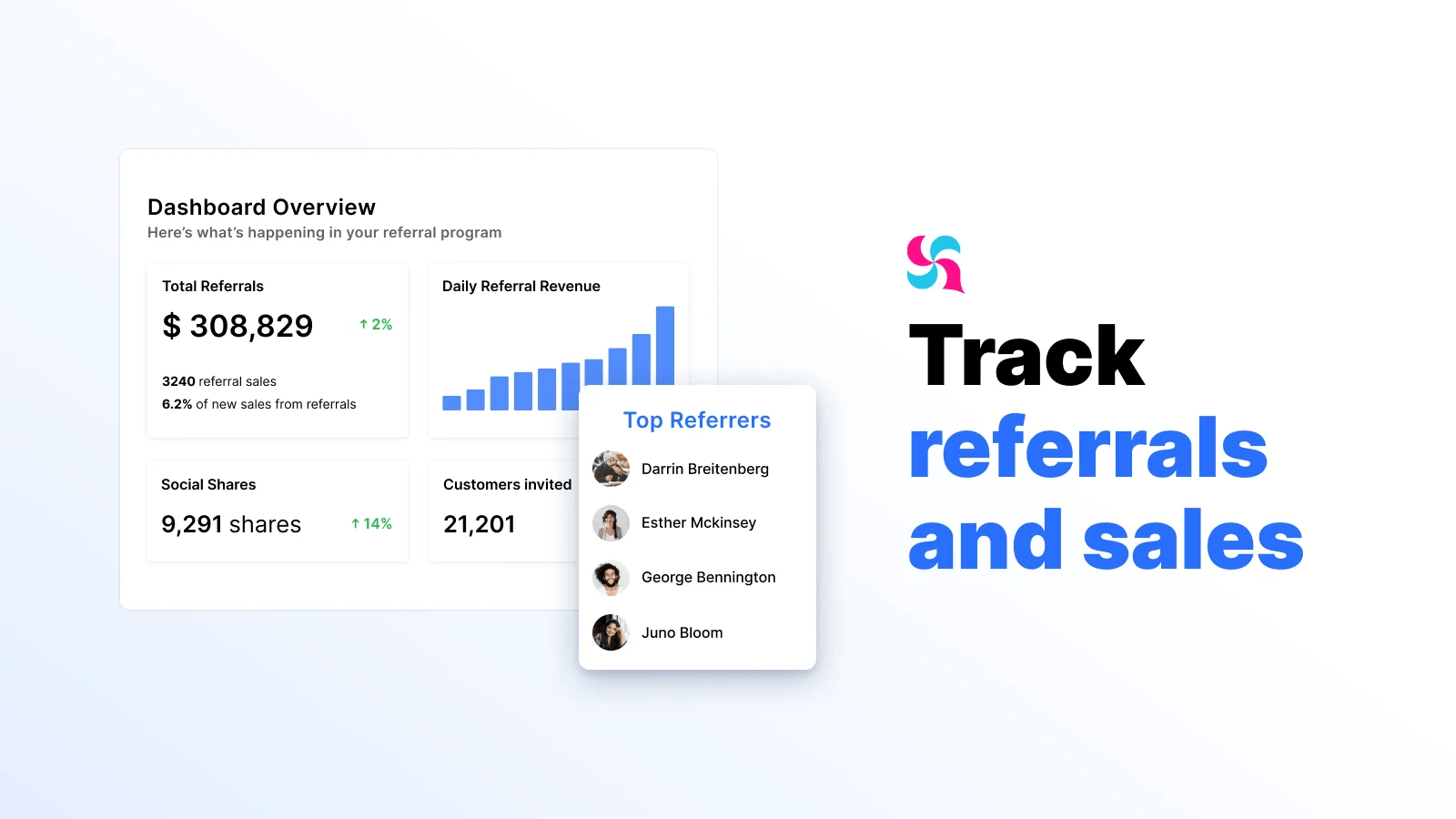
ReferralCandy has run Shopify and Shopify Plus referral programmes since 2010. The app ships with a set of pre-built A/B test templates, like money versus percentage-off rewards, so a merchant can test common offer variations without building campaigns from scratch.
Pros:
- Unlimited referrals and an analytics dashboard on every plan
- Powers referral programmes for 3,000+ brands
- No dedicated team required to launch or run a programme
- Free trial available before committing to a plan
Cons:
- Success fees apply on every plan, cutting into margin as referral volume grows
- Reward costs come out of the merchant's pocket, separate from the platform fee
- Email templates and referral flows offer limited customisation
- No benchmarking or cross-brand comparison to show how a programme performs
Best for:
DTC brands wanting a proven, standalone referral engine without deep customisation needs.
Pricing:
From $39/month plus 3.5% to 10.5% commission on referred sales, scaling down to 0.25% on Enterprise.
Choosing the Right Shopify Referral Program App
Every app on this list can track a referral link. Most stop there, capturing only about 7% of actual referral activity. The rest never reaches a dashboard: offline referrals, dark social in WhatsApp and DMs, activity most apps simply can't see.
Beyond that capture gap, a few other factors decide which app fits, including pricing model, where referral sits in the vendor's product, and how much ongoing testing is left to your own team. Here's what to compare closely as you shortlist:
- Pricing model: ReferralCandy and Rivo scale with the programme's success, a commission on referred sales or a plan tied to order volume, which can turn into a real margin hit once referral starts working. Friendbuy and Yotpo run on flat or tiered subscription pricing. Mention Me's commercials scale with what the programme returns.
- Where referral sits in the stack: Rivo and Yotpo bundle referral with loyalty, points, or reviews, which suits a brand wanting one vendor for retention broadly, but referral gets less dedicated attention than it would from a platform built around it. Mention Me and Friendbuy treat referral as the core product.
- Level of ongoing management: Some apps, like ReferralCandy, run with minimal input after setup. Others are built to be actively managed and optimised over time. Weigh how much of that optimisation the vendor actually does versus what falls to your own team.
- Purchase type: A low-consideration impulse product doesn't need the same offline and dark social capture as a considered purchase. The more a customer weighs the decision, the more a friend's recommendation carries weight, and the more it matters to see who's driving referrals rather than who simply clicked a link.
The apps on this list either bolt referral onto loyalty or reviews, or treat it as the core product. Mention Me falls into the second group, running on an intelligence layer built on over a decade of referral data:
- Unincentivized referrals captured through Name Share®, activity a standard Shopify widget has no way to log
- Programme performance benchmarked against 500+ brands
- Ongoing optimisation from a dedicated CSM
- Performance data available directly in Claude and other AI assistants via the Mention Me MCP connector
Book a demo to see how Mention Me handles referral capture and intelligence end to end.
FAQ
Do Shopify referral apps charge more than the listed monthly fee?
Some do. ReferralCandy charges a commission on referred sales, and Rivo scales through order-volume tiers, both manageable at low volume but a real cost once a programme starts working. Friendbuy and Yotpo run on flat or tiered subscription pricing instead. Mention Me's commercials also scale with what the programme returns, but the terms are negotiated and custom rather than published.
How is Name Share® different from a standard refer-a-friend widget?
A standard widget only logs a referral once someone clicks a shared link. Name Share® works differently: a customer credits a friend by name at checkout, no discount code or tracked link required, capturing the in-person referrals a link-based widget can't see.
That matters most where a customer thinks harder before buying, since that's exactly the moment Name Share® is built to capture.
What should I check before choosing a Shopify referral program app?
A few questions worth asking as you shortlist:
- Does the cost scale with referral volume, or stay flat?
- Is referral the core product, or bundled inside a loyalty or reviews suite?
- Does the app capture offline referrals, or only tracked links?
- Who runs testing and optimisation, you or the vendor?
- Do you need loyalty points or VIP tiers, or just referral?
Do I need a separate loyalty app alongside a referral app?
It depends on the app. Rivo and Yotpo bundle referral with loyalty points and VIP tiers in one product. Mention Me and Friendbuy focus specifically on referral, with no built-in loyalty features.
A bundled app cuts down on vendor management if loyalty and referral are both priorities. A dedicated referral tool goes deeper if referral is the priority and loyalty is secondary or already handled elsewhere.
Dan Barraclough
Read more >
Share:





Table of contents
Share:
.png)