A Guide to Effective Customer Engagement Strategies (With Real Brand Examples)
By Sophia King — January 15, 2026
Customer engagement is now shaped by shifting consumer expectations, post-pandemic behaviour, and the rise of advocacy-led growth.
Brands must deliver value, relevance, and emotional connection across every interaction, and create systems that turn buyers into active participants, co-creators, and even marketers through referral and influencer-led engagement.
Why customer engagement matters
Amid economic pressure and shrinking budgets, prioritising retention and engagement is more profitable than chasing acquisition alone. Genuinely engaged customers buy more often and stay longer, lifting lifetime value, reducing churn, strengthening loyalty and fuelling advocacy.
They create and share user-generated content, refer friends, follow and act on creator endorsements, and join communities where your brand becomes part of their everyday conversations. Ultimately, brand affinity now rests on experience and emotional connection, not just price.
Companies that improve engagement can increase cross-sell revenue by 22%, up-sell revenue by 38% and order size by 5 to 85%. Engage with your customers in the right ways, and you can turn one-off transactions into loyal brand advocates. Into customers who love your brand so much, they aren’t interested in looking anywhere else (even if they could find similar products cheaper).
Customers who actively recommend your brand, introducing friends who are statistically more likely to spend more and buy again.
Customers with high lifetime value who drive significant long-term revenue for your business, in tough times and beyond.
Here's how you can do just that.
The benefits of implementing a customer engagement strategy
These are the biggest benefits of starting effective customer engagement strategies for your business:
Higher retention and repeat purchase rates: Customer engagement strategies keep customers active between purchases with timely, personalised touchpoints, increasing purchase frequency and average order value.
Increased CLV: A robust customer engagement strategy nurtures relationships over time, driving upsell and cross-sell, extending tenure, and lifting overall customer lifetime value.
More emotionally connected customers: Consistent, relevant experiences build emotional connection, making customers less price-sensitive and more resilient to competitor messages.
Stronger advocacy and organic acquisition: Customer engagement strategies encourage reviews, UGC, and community participation, turning loyal buyers into advocates who influence peers and attract new customers organically.
Lower CAC through referral marketing: By incentivising referrals and leveraging creator partnerships, a customer engagement strategy turns existing customers into a low-cost acquisition engine, reducing reliance on paid media and lowering blended CAC.
High-impact examples that demonstrate financial impact: Personalised post-purchase journeys (email, SMS, in-pack inserts) that boost repeat rates; loyalty tiers tied to exclusive experiences that lift AOV; and UGC-led campaigns that outperform standard ads on engagement and conversion, all showing how customer engagement strategies translate directly into revenue gains.
How to create a winning customer engagement strategy
Ready to build a customer engagement strategy that turns intent into loyalty and growth? Use the blueprint below to segment with predictive insight, map high‑value moments, personalise across channels, integrate referral and influencer activity into one ecosystem, and measure what matters so you can scale what works.
Understand your customers through segmentation and predictive insights
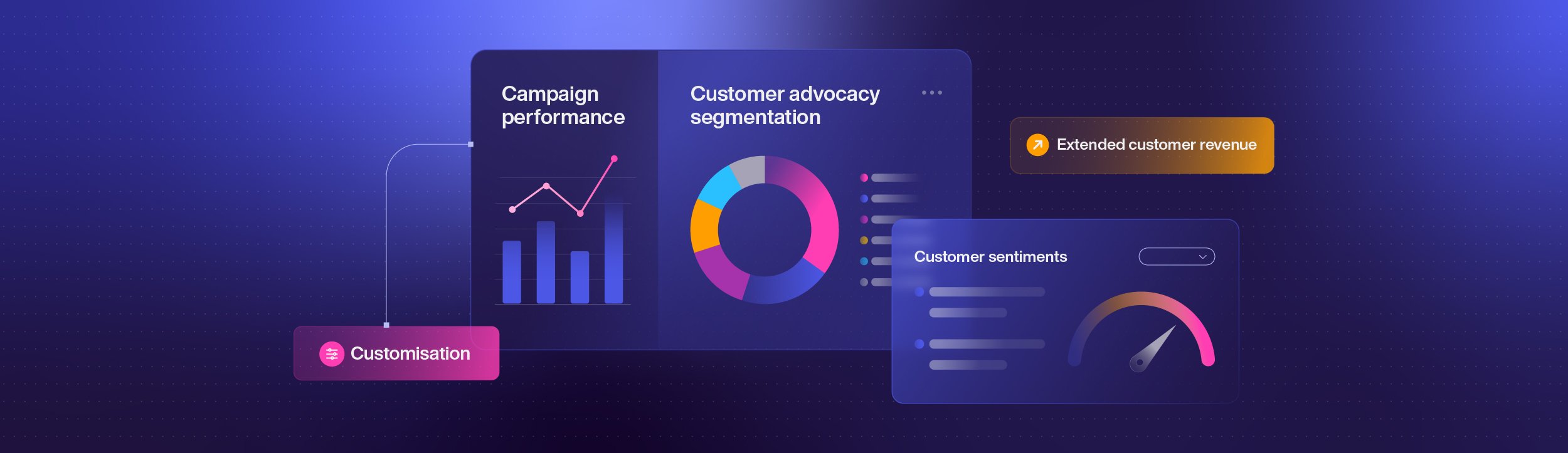
Start by segmenting customers by value, behaviour, lifecycle stage, and advocacy potential. Use predictive signals to guide your focus: Mention Me’s ECR helps you identify customers with high future value and advocacy impact, predicted advocacy highlights who is most likely to refer, and sentiment patterns reveal how different cohorts feel about your brand.
What motivates each segment to purchase again, and what would prompt them to recommend you to a friend? Combine first-party data with zero-party preferences to build clear hypotheses you can test quickly.
Map the customer journey to identify high-value engagement touchpoints
Chart the full journey from discovery to loyalty and map the moments that matter to CLV and advocacy. Where does intent spike, and where does friction appear? Pinpoint triggers that influence future value, such as the first successful delivery, post-purchase delight, milestone orders, positive reviews, and high NPS moments.
Tie each touchpoint to an outcome like time to second purchase, repeat rate, or referral activity, then design interventions that remove friction and amplify delight.
Personalise experiences across channels using data-led engagement
Deliver consistent, relevant messaging across email, SMS, on-site, app, paid media, and even in-pack inserts. Consistency reinforces memory and increases conversion, so ensure your offer, creative, and copy align wherever customers encounter you.
Use dynamic content, product recommendations, and preference centres to keep interactions timely and personal. Could a follow-up message that mirrors an on-site prompt be the simple nudge that turns interest into action?
Integrate referral marketing and influencer marketing into your engagement ecosystem
Blend referral programmes with influencer marketing to unlock customer-led growth. Creators spark discovery and trust, while referrals turn that trust into cost-effective acquisition.
Repurpose creator content across CRM and landing pages, surface referral prompts at high-intent moments, and reward both the advocate and their friend to maximise participation. What happens when every great experience becomes a story shared with a friend or follower?
Measure engagement using churn, LTV, referral activity, and retention KPIs
Build a measurement framework that connects engagement to commercial impact. Track retention rate, repeat purchase rate, time to second order, CLV, AOV, and churn alongside advocacy metrics such as referral share rate, invite-to-conversion rate, K-factor, and UGC volume.
Layer in sentiment shifts and ECR movement to understand the quality of growth. Are you lifting lifetime value, reducing churn, and lowering blended CAC through advocacy, or simply buying short-term revenue?
14 customer engagement strategies (with real brand examples)
1. Unite digital and physical experiences
In 2018, Nike opened a concept store for its NikePlus members. It used their data – buying patterns, app usage and other trends – to determine decisions like which products to stock.
While such a feat may feel more aspirational than achievable for your brand right now, it highlights how you can combine on and offline activity to create seamless customer experiences.
A good starting point for bringing the two together is by showing consistent, personalised content across touchpoints. A customer is far more likely to engage with an offer they see multiple times, particularly if at points of delight.
Imagine your customer has just placed an order. They see a message encouraging them to buy again within two weeks for a complimentary gift. They’re feeling excited about their new order but not quite ready to spend more money. Later that day, they get an email from your brand showing the same offer. This time, they browse your website but exit before checking out. A few days later, their order arrives. Excitedly, they open it and find an insert showing the same offer for a third time. This time, they make it all the way to check out and become a repeat customer.
Customers see countless messages online everyday, but rarely do they see the same message multiple times in both digital and physical form. A personalised in-pack insert enhances the unboxing experience and increases the likelihood of your customers taking desired actions.
To push this further, add referral call-to-actions across digital and physical channels to increase engagement and repeat purchases. In-pack referral inserts, like your Figleaves example, create memorable post-purchase moments that prompt sharing with friends.
Influencer-led store launches or creator-curated product drops amplify both online and in-person engagement. Could a creator-hosted launch be the spark that turns a great unboxing into a shared experience and a referral?
2. User-generated content
Social media can be incredibly powerful, but it’s also incredibly saturated with brands competing for consumer attention. User-generated content (UGC) is one of the most powerful forms of engagement because people trust peers more than brand advertising.
If you sell everyday products like clothing or furniture, it’s likely your products are already in thousands of posts shared online. The trick is to make sure customers tag you in these posts and use your chosen hashtag. You can encourage this by using incentives, such as competition entry or the chance to feature on your website.
Not only will this engage your customers sharing online, but it’ll also build awareness of your brand and support new customer acquisition. Websites with user-generated content typically increase return visitors by 20%.
Better yet, user-generated content via micro-influencer marketing offers an alternative to traditional advertising at a time when you’ve likely had to postpone or cancel photoshoots. Sharing images of real people using your products in their everyday lives offers a powerful alternative to professional models and slick photography. You may even find it yields better returns – and it doesn’t cost a penny.
UGC also fuels referral marketing, when advocates actively share your brand authentically with friends and family, leading to new, engaged customers.
3. Newsletter subscriptions
Email CRM probably already plays a big role in your marketing activity. But does it play a big role in your customer retention strategy?
Email is a core advocacy trigger: once subscribers become repeat customers, you can introduce personalised refer-a-friend invitations powered by a referral platform, boosting both retention and acquisition. You can also segment highly engaged subscribers to receive influencer content, product drops, or community invitations.
Connecting your email activity with onsite touchpoints is an effective way to encourage customers to return. For example, customers invited to subscribe to your newsletter when they've just placed their order are significantly more likely to do so than at other points in their journey. Once they’ve subscribed, you can build engagement with regular email updates that show you understand them and motivate them to buy again.
4. Personalised customer journeys
Personalisation now extends across email, onsite messages, loyalty rewards, referral incentives, and influencer recommendations. Use AI-powered recommendation engines to surface the right products at the right time, tailor referral journeys to each customer’s behaviour and lifecycle stage, and offer creator-curated style edits for specific segments that mirror their tastes.
When every touchpoint reflects who the customer is and what they value, why would they go anywhere else?
5. Advocacy and referral marketing
This is where Mention Me’s differentiation shines. Referral marketing is not just an acquisition channel. It's a customer engagement engine that strengthens emotional loyalty because people share brands they love, drives repeat engagement as referrers check reward status and share again, and lifts CLV because referred customers often buy more and stay longer.
Behavioural tools within a referral platform help you spot high-value advocates, then engage them with personalised incentives, contextual prompts, and rewards that motivate another share at exactly the right moment.
6. Influencer marketing as an engagement amplifier
Influencers, especially micro-influencers, engage audiences through storytelling, lived product experiences, and credible social proof. The result is higher trust, faster engagement among new audiences, and a steady stream of creator content that can be repurposed as UGC across your channels, making it one of the most effective customer engagement strategies.
Integrate influencers with your referral programme so your strongest advocates can graduate into micro-influencers and bring their communities along with them.
7. Build social communities
Create spaces where customers can connect, learn, and showcase how they use your products. Positive support experiences and active community management turn satisfied customers into promoters, the very people most likely to join your referral programme and share with friends. Host AMAs, early product previews, and member spotlights to reward participation. Could your community become the place where product ideas, testimonials, and advocates all emerge?
8. Proactive support and two-way communication
Move from reactive service to proactive care. Anticipate needs with order updates, setup tips, and timely check-ins, then invite feedback through surveys, reviews, and social replies. Use live chat, messaging apps, and community forums to keep conversations open, and close the loop by showing what you changed based on customer input. When customers feel heard, they come back and they recommend you.
9. Exclusive early access
Offer early access and VIP moments to deepen engagement and reward loyalty. Think priority drops, invite-only events, and member-only edits that make customers feel part of something special. Influencer partnerships and ambassador programmes can help shape culture within these communities by hosting previews, styling sessions, or co-created releases. Sephora Insider and fashion launch moments show how early access drives excitement, repeat visits, and social sharing.
10. Social challenges and gamification
Design challenges that invite participation, creativity, and sharing. Campaigns like #ShotOniPhone and TikTok challenges show how simple mechanics can spark widespread UGC, introduce your brand to new audiences, and drive measurable lifts in traffic and sales.
Add progress trackers, badges, or rewards to keep momentum high and make participation feel rewarding. What could your version of a simple, irresistible challenge look like?
11. Loyalty rewards and recognition-based engagement
Combine points, tiers, and recognition to motivate repeat behaviour. Tiered loyalty with meaningful benefits, exclusive pricing windows, early access, and experiential rewards signals to customers that their commitment is valued. Recognition matters as much as rewards, so celebrate milestones, feature top members, and personalise offers to each tier to lift frequency and average order value.
12. Review, rating, and testimonial loops
Invite reviews and ratings at the right moments, respond thoughtfully, and showcase testimonials across your site and CRM. When customers see their feedback reflected in product updates or highlighted in marketing, they feel heard and valued. This customer engagement strategy creates a virtuous loop of trust, content, and conversion that attracts new buyers and reassures existing ones.
Use onsite signals to guide customers with timely prompts. Surface assistance during browsing, offer rescue messages for abandonment, and deliver tailored content post-purchase to drive second orders and referrals. Align these triggers with your email, SMS, and in-pack messaging so customers encounter consistent offers wherever they are in the journey.
14. Advocacy-led growth
Bring referral, community, and UGC together to create a compounding flywheel. Great experiences spark shares, shares bring high-intent customers, and those customers join your community and create content that fuels the next wave of growth. With the right incentives and measurement, advocacy becomes a scalable customer engagement strategy that reduces acquisition cost while lifting lifetime value.
Customer engagement examples from leading global brands
So what does standout customer engagement look like right now? These brands don’t just talk about connection. They build it into everyday moments.
Nike: unified journeys
Nike’s apps are a great place to start. Nike Training Club workouts link seamlessly to product recommendations, while membership unlocks early access to drops both online and in store. Scan a product in store. Save it to your app. Get follow up content later. It all feels like one continuous journey. Why would customers want to shop anywhere else?
Sephora: loyalty plus personalisation
Sephora’s Beauty Insider programme keeps evolving. Members get personalised product picks based on past purchases, shade matching via the app and early access to limited launches. Birthday gifts feel genuinely thoughtful. The experience says we know you and we value you. Isn’t that what loyalty should feel like?
Glossier: community and user generated content
Glossier still puts its community front and centre. Product launches regularly feature real customer reviews, social posts and before and after images. On Instagram and TikTok, fans shape the conversation. When a brand lets customers co create, engagement stops feeling like marketing and starts feeling like belonging.
Starbucks: emotional loyalty
Starbucks Rewards taps into habit brilliantly. The app remembers your usual order, suggests it at the right time of day and makes paying effortless. Seasonal launches like the Pumpkin Spice Latte turn into shared cultural moments. It’s familiar, comforting and just a little bit indulgent.
Rothy’s: eco advocacy
Rothy’s makes sustainability tangible. Customers can see how shoes are made from recycled plastic bottles and how many have been repurposed so far. Limited edition colours sell out fast, driven by purpose as much as style. Buying feels like doing something positive.
Proven closer to home
Mention Me clients, like SodaStream, boosted revenue by 200% through its referral customers via Mention Me. Huel turn customers into advocates through referral challenges. PUMA uses exclusive drops to reward its most engaged fans. Db builds loyalty with creator collaborations and product stories. Symprove educates first and sells second. Different tactics. Same outcome. Engagement that people actually want to be part of.
How to measure customer engagement effectively
If engagement really matters, you need to prove it. But which signals actually tell the story of your customer engagement strategy?
Engagement rate - Look beyond opens and clicks in isolation. Are people interacting with your content, your app or your loyalty programme regularly? Frequency and depth matter more than vanity metrics.
Repeat purchase rate - One off buyers are easy to win. Returning customers are earned. A healthy repeat purchase rate shows your experience is doing its job after the first conversion.
Referral share rate - How many customers are willing to recommend you to friends? This metric cuts straight to trust. If people are sharing, they believe in your brand.
Onward referrals - The real magic happens when referred customers go on to refer others. That’s engagement compounding. Few metrics are more powerful.
Influencer content performance - Not all reach is equal. Track saves, comments and click throughs, not just views. Strong engagement here shows your brand story is resonating beyond paid media.
Sentiment data - What are people actually saying about you? Reviews, social comments and customer feedback reveal how your brand makes people feel. Emotion drives engagement more than logic ever will.
NPS and ECR - Net Promoter Score shows intent to recommend. Engagement Conversion Rate shows what happens next. Together, they connect advocacy to real commercial impact.
Common mistakes that weaken customer engagement
Why do customer engagement strategies fall flat? Often, it’s not what you do. It’s what you miss.
Inconsistent communication - Mixed messages across email, social and onsite create friction. If your tone or value proposition keeps changing, trust erodes quickly.
Low personalisation - Generic content gets ignored. Customers expect relevance based on their behaviour, preferences and history. If everything looks the same, why pay attention?
Poor lifecycle timing - Great messages sent at the wrong moment still fail. Engagement depends on context. Are you talking to new customers, loyal fans or lapsing buyers in the same way?
Only focusing on acquisition - Winning new customers is exciting. Keeping them is profitable. Brands that neglect post purchase engagement leave long term value on the table.
No advocacy layer - If you’re not activating referrals, influencers or communities, you’re missing your most credible growth engine. Your happiest customers should never be silent.
Conclusion
Customer engagement isn’t about channels. It’s about connection. The brands that win create meaningful, personal and emotionally resonant experiences that people want to return to and talk about. Do that well, and passive buyers don’t just convert. They become active brand fans.
How to Drive Customer Retention with Advocacy Marketing
Learn how customer advocacy fuels retention and unlocks deeper insights into your consumer base. This guide explains advocacy marketing strategies to identify high-value customers, personalise communication, and improve customer experiences for sustained business growth.