


The fast answer: What actually drives customer retention today
Trust, experience and relevance drives customer retention today. Customers stay with brands that consistently deliver smooth, personalised experiences and reinforce those interactions with social proof they can believe in. And it matters.
Retention is far cheaper than acquisition, making it one of the most efficient levers for lasting, profitable growth. The strongest driver of all? Advocacy. When customers actively recommend your brand, they don’t just return themselves - they become your most reliable retention mechanism.
What is customer retention?
Customer retention is the practice of keeping customers engaged and coming back after their first purchase. While acquisition focuses on attracting new customers, retention sits later in the customer lifecycle, after acquisition and activation, and is about nurturing relationships over time.
The goal isn’t simply to prevent churn, but to turn first-time buyers into repeat, loyal, high-value customers who ultimately progress into advocacy, where they actively recommend your brand to others. The customer loyalty vs customer retention debate confuses many marketers, so it's important to understand the difference. Unlike retention, loyalty typically refers to customer sentiment, not just buying decisions.
Why customer retention matters more than ever in 2026
Customer retention matters more in 2026 because the economics and the market have changed. It’s still far cheaper to retain an existing customer than to acquire a new one, and repeat customers consistently spend more over time. Better yet, satisfied customers return and recommend, becoming advocates who drive incremental growth without incremental spend.
The reality is that acquisition is harder than ever. Paid channels are more expensive and crowded, attribution is increasingly unreliable, and customers have more choice, and less patience, than at any point before. It’s never been easier for them to switch, and never harder for brands to stand out on ads alone.
That’s why retention has become a strategic priority, not a nice-to-have. Strong retention improves profitability, stabilises revenue, and makes acquisition more efficient by turning loyal customers into your most credible growth channel. To make retention work in practice, you need the right metrics and the right strategies.
Key customer retention metrics you need to track
Retention is measurable. It's not a 'feeling'. The right metrics help you understand not just who’s staying, but why they stay, how valuable they become over time, and where advocacy is accelerating growth. Here are the core customer retention metrics that matter, and the decisions each one informs.
Customer Retention Rate (CRR)
CRR shows the percentage of customers who continue buying from you over a given period. It’s your clearest signal of how well your product, experience and messaging are working together. A falling CRR flags friction in the customer journey; a rising one validates your retention strategy.
Churn Rate
Churn is the inverse of retention: the percentage of customers who stop buying. Tracking churn helps you spot where customers are dropping off and prioritise fixes, whether that’s onboarding, service issues, or post-purchase engagement.
Customer Lifetime Value (CLV / LTV)
CLV measures the total revenue a customer is expected to generate over their relationship with your brand. It informs how much you can sustainably spend on acquisition and retention, and highlights which customer segments are worth investing in most.
Repeat Purchase Rate
This metric tells you how many customers come back after their first purchase. It’s especially useful for identifying whether your early lifecycle experience is strong enough to convert first-time buyers into repeat customers.
Purchase Frequency
Purchase frequency tracks how often customers buy within a given timeframe. It helps you optimise timing for communications, offers and product launches, and indicates whether customers see your brand as a one-off or a habit.
Advocacy & Referral Metrics
Retention doesn’t stop at repeat purchases. Advocate rate, share rate, referral conversion and revenue from referred customers show how effectively loyalty turns into word of mouth. These metrics reveal which customers are actively promoting your brand, and how much revenue that advocacy drives.
Together, these metrics connect directly to Extended Customer Revenue (ECR): the total value a customer generates through their own purchases and the customers they bring with them. When combined with predictive signals, they also enable Predicted ECR, helping you identify future high-value advocates early and invest accordingly.
The takeaway is simple: retention is measurable, and advocacy belongs in your analytics, not just your brand strategy.
5 core customer retention strategies to grow your business
Hitting repeat on retention is all about strategy. Nope, not luck. Here are five proven approaches that turn first-time buyers into loyal customers and advocates.
1. Show customers you truly understand them
Understanding your customers goes far beyond basic purchase data. The brands that win retention segment by behaviour, value, and preferences, combining transactional insights with qualitative feedback like surveys, NPS, CSAT, and reviews. A/B testing messages, channels, and timing helps identify what resonates with each group.
The result? Tailored customer journeys that make individuals feel truly seen, understood, and valued. When customers experience relevance at every touchpoint, they’re more likely to return and to spend more over time, driving higher lifetime value.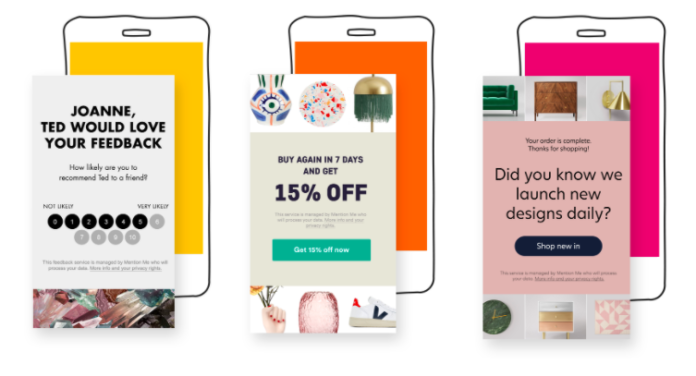
Mention Me presents the right message to the right person, every time
2. Reward customer loyalty (without destroying your margins)
Loyalty programmes aren’t just about points or discounts. They’re about recognition. Tiered rewards, early access, exclusive events, and personalised perks show your best customers that their loyalty matters.
The best programmes also generate actionable insights. By tracking which offers and experiences resonate, you can make future marketing more relevant and effective, all without eroding profit margins. Done well, loyalty programmes reward your most valuable customers, reinforce repeat behaviour, and create a positive feedback loop of engagement and revenue. Overall, loyalty and advocacy are the most effective ways to drive customer retention.
3. Provide frictionless, proactive customer service
You’re five times more likely to lose customers because of your service than product.
Yep, you read that right. Five times.
Retention today demands frictionless, proactive support across channels - email, chat, social, and phone - with a consistent context so customers don’t have to repeat themselves.
Fast first response times and proactive follow-ups after purchases or known issues turn service into a retention driver. NPS and CSAT shouldn’t just measure satisfaction, they should trigger personalised journeys: encourage promoters to refer, invite detractors to share feedback, and resolve pain points before they escalate. Excellent service doesn’t just retain customers; it can increase willingness to pay and lifetime value.
Strategy 4: Present memorable USPs and consistent brand experiences
Products are easy to copy. Your USPs and brand personality are what stick. Articulate what makes your brand meaningfully different - mission, values, quality, ethics, community - and ensure this consistency across website, emails, support, packaging, and even microcopy.
Tone matters: playful and fun on order confirmations, clear and sincere on delays or issues. Brands that maintain a consistent identity see measurable returns - up to 23% revenue uplift -because customers know what to expect and trust what they experience.
5. Build a brand community and turn customers into advocates
Your most powerful marketers are your customers. Communities, whether loyalty clubs, online groups, offline events, creator-led content, or challenges, give customers a sense of belonging. Brands like Nike, Lego, and Notion show how engaged communities amplify advocacy.
Community + satisfaction = advocacy. Members not only stick around longer themselves, they talk about your brand, bring in friends, and turn positive experiences into exponential word-of-mouth growth. By nurturing community, you’re not just retaining customers - you’re turning them into your strongest retention mechanism.
The Trouva retention case study shows how the brand used advocacy to increase retention, LTV and repeat purchases from its community.
How advocacy and refer-a-friend programmes boost retention
Referrals and refer-a-friend programs do more than bring in new customers. They strengthen the bond with existing ones by giving advocates a reason to engage and share, creating a cycle of loyalty and growth. When customers refer friends, they reinforce their own relationship with your brand while introducing new customers who already trust the recommendation.
Referred customers tend to stick around longer and spend more, while advocates who refer are more engaged and loyal than average. By harnessing this dynamic, brands can turn word-of-mouth into a measurable retention engine, nurturing both repeat business and brand advocacy without relying solely on paid channels.
A practical framework for building your retention strategy
Building retention into your business doesn’t have to be complicated. Here’s a simple five-step framework to turn insights into action:
1. Diagnose your current performance
Start by measuring the basics: retention rate, churn, CLV, repeat purchase rate, and advocacy metrics. Understanding where you stand provides a baseline for improvement.
2. Identify drivers of loyalty and churn
Look beyond the numbers. Combine transactional data with customer feedback - surveys, reviews, NPS - to uncover patterns that explain why customers stay or leave.
3. Design a retention and advocacy playbook
Select two to three core strategies from your retention toolkit and layer in a refer-a-friend or advocacy program. Make sure each strategy clearly supports both loyalty and revenue growth.
4. Personalise and A/B test journeys
Segment your customers and experiment with incentives, messaging, and timing. Tailored journeys help each group feel valued and understood, improving both retention and advocacy.
5. Measure LTV and cohort uplift, then iterate
Track revenue and behaviour over time rather than one-off metrics. Use cohort analysis to see which strategies drive the highest lifetime value and advocacy, then refine your playbook based on what works.
Real-world customer retention examples
Seeing retention strategies in action makes the benefits tangible. Here are three examples of how brands have used advocacy and referrals to drive loyalty, repeat purchases, and lifetime value.
Feel Good Contacts: Rewarding Loyalty to Boost Retention
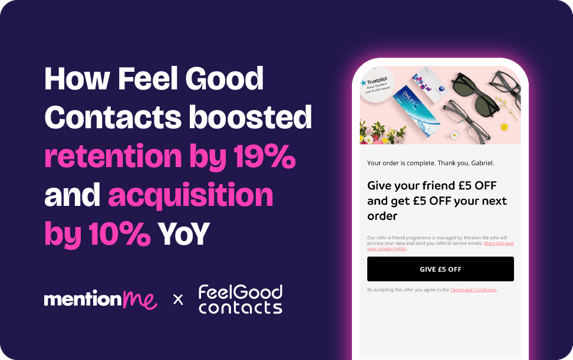
Situation: Feel Good Contacts (FGC), a UK-leading eyewear brand, wanted to reward loyal customers rather than rely on new-customer discounts. With 65,000 reviews, they already had a happy, engaged base to leverage.
Action: Partnering with Mention Me, FGC used referral incentives and A/B testing to identify the most effective ways to reward loyal fans. They shifted from third-party vouchers to direct incentives, aligning rewards with customer behaviour.
Impact: Retention rose by 19%, new customer acquisition increased by 10% year-over-year, and referred customers introduced four times more people. The referral program also provided insights that will feed into FGC’s mobile app and broader personalisation strategies.
Vertbaudet: Turning Advocates into Repeat Shoppers
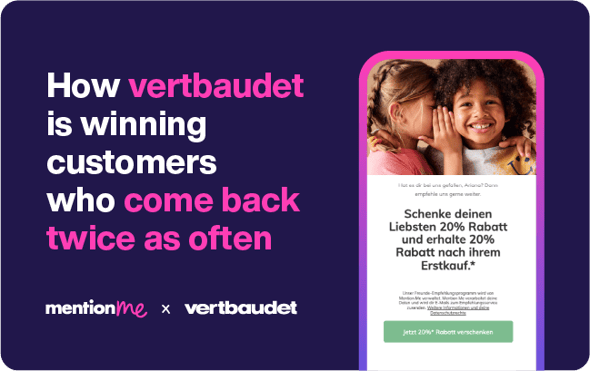
Situation: Vertbaudet, an online children’s retailer, wanted to activate its loyal fanbase to acquire high-value customers more efficiently. Their target audience of young mothers highly values trusted recommendations.
Action: Using Mention Me’s AI-powered referral platform, Vertbaudet launched a referral programme in Germany and Austria. Features like Name Share allowed customers to use friends’ names at checkout, creating natural, trust-based referrals. The team optimised journeys with A/B testing and segmented incentives.
Impact: Referred customers were twice as likely to purchase again, generated a 22% uplift in average order value, and acquisition cost was nearly half that of traditional paid channels. Additionally, 31% of referees went on to share the programme themselves, creating a self-sustaining advocacy loop.
Common customer retention mistakes and how to fix them
Even the best retention strategies can stumble if common pitfalls aren’t addressed. Many brands focus too much on attracting new customers and overlook the levers that keep existing ones loyal. By recognising the mistakes that most often erode retention, you can take practical steps to fix them, strengthen customer relationships, and boost long-term revenue.
1. Focusing only on acquisition metrics
Brands that measure success only by new customer numbers miss opportunities to grow existing relationships. This leads to higher churn and wasted marketing spend. Fix by tracking retention, repeat purchases, and lifetime value alongside acquisition.
2. Treating all customers the same
One-size-fits-all messaging frustrates customers and lowers engagement. Fix by segmenting your audience by behaviour, value, and preferences, then personalise journeys and incentives.
3. Relying purely on discounts
Discounts can drive short-term sales but erode margins and fail to build loyalty. Fix by offering value-based rewards such as exclusive access, loyalty points, or personalised experiences.
4. Not measuring churn, LTV, or advocacy
Without these metrics, it’s impossible to know which retention strategies are working or where customers are slipping away. Fix by implementing a simple analytics framework to monitor retention and advocacy performance.
5. Keeping referrals separate from retention
Treating refer-a-friend programs as only an acquisition tool overlooks their loyalty potential. Fix by integrating advocacy programs into your retention strategy to reward both repeat behaviour and successful referrals.
How Mention Me helps you turn retention into a growth engine
Mention Me gives you the tools to turn loyal customers, who form part of your Tru-Promoters™ cohort, into your most powerful growth channel. The platform identifies your advocates and high-value customers, making it easy to reward and engage them in ways that strengthen loyalty.
You can build and optimise referral and advocacy programmes, track incremental revenue, measure LTV uplift, and analyse cohort performance to see what works. Predictive data and Extended Customer Revenue insights allow you to target the right customers with the right retention and advocacy journeys, ensuring every interaction drives both loyalty and growth.
With Mention Me, retention becomes more than a metric. It becomes a repeatable, measurable engine for long-term business success.
Conclusion: Retention grows faster when your customers lead your growth
Retention is no longer optional. In 2026, it forms the foundation of profitable, sustainable growth. The strongest retention playbooks combine a deep understanding of customers, meaningful loyalty rewards, frictionless service, memorable USPs, and engaged communities that encourage advocacy.
When these elements work together, happy customers drive repeat business and become your most credible growth engine. Brands that want to make customer-led growth predictable and measurable need the right data and the right advocacy platform powering their strategies. Book a Mention Me demo today.
Sophia King
Read more >
Share:





Share: